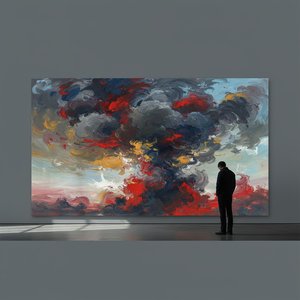
1992. Acrylic On Canvas. Inter-American Development Bank.

§ 1Catalogue data


본 작품은 저작권법의 보호를 받습니다.
이 페이지에 표시된 작품은 저작권법의 보호를 받으며, 이에 따라 동일한 복제품을 제작하거나 판매하는 것은 법으로 금지되어 있습니다. 이러한 권리 보호는 다음과 같은 국제 협약에 따라 시행됩니다. 베른 협약 또한 다음에서 명시하는 법률을 포함한 국내법에 의해 보호됩니다. 미국 저작권법 제17조.
저희는 존중을 담은 합법적인 대안으로서, 원작에서 영감을 받은 맞춤형 수제 유화 작품을 제공합니다. 저희의 숙련된 전문 화가들은 원작의 스타일, 분위기, 예술적 정수를 면밀히 연구하여, 그 자체로 독창적인 창작물이면서도 원작과 동일한 감동을 불러일으키는 새로운 작품을 만들어냅니다.
이 방식은 저작권 보호를 받는 예술 작품을 복제하거나 그대로 재현하는 것이 아니기에 저작권 규정을 완벽히 준수합니다. 대신, 이는 창의적인 재해석의 과정을 거칩니다. 즉, 원작에서 영감을 받되 원작과 동일하지 않은 새로운 회화 작품을 의미합니다.
 상세 보기
상세 보기§ 2Abstract
컬렉션 상세 정보
작가 소개
Fernando de Szyszlo (1925-2017) was a pivotal Peruvian abstract artist who fused European modernism with pre-Columbian themes & Incan motifs. Explore his paintings, sculptures, and legacy as a key figure in Latin American art.
§ 3Commentary
Fernando de Szyszlo: Bridging Ancient Echoes and Modern Expression
Fernando de Szyszlo (1925-2017) stands as a monumental figure in Peruvian art history, recognized for his pioneering role in establishing abstract expressionism within Latin America while simultaneously honoring the profound legacy of Andean culture. Born in Lima to a Peruvian mother of Spanish-Indian descent and a Polish father, Szyszlo’s formative years instilled in him an appreciation for both European intellectual traditions and indigenous heritage—a duality that would profoundly shape his artistic vision. This confluence of influences is palpable throughout his oeuvre, resulting in canvases that resonate with a unique blend of formal innovation and symbolic depth. Szyszlo's journey into art began at the National University of Engineering but was swiftly redirected by an irresistible passion for architecture before he decisively embraced the School of Plastic Arts of Pontifical Catholic University of Peru. Graduating in 1948, he embarked on a transformative voyage across Europe, immersing himself in the groundbreaking works of masters like Rembrandt and Titian—artists who championed dramatic chiaroscuro and psychological realism. These encounters ignited Szyszlo’s imagination and fueled his determination to forge a path distinct from established artistic conventions. His stylistic evolution culminated in the embrace of abstract expressionism during the mid-1950s, marking a pivotal moment in Peruvian art. Rejecting representational accuracy, Szyszlo sought to convey emotion and experience directly onto the canvas through spontaneous gestures and bold color palettes—a technique championed by artists like Jackson Pollock and Willem de Kooning. However, unlike his contemporaries who often prioritized purely formal experimentation, Szyszlo consistently incorporated elements of Andean iconography and symbolism into his paintings. Recurring motifs such as llamas, condors, and geometric patterns hark back to the rich artistic traditions of Peru’s pre-Columbian past, grounding his abstract explorations in a tangible connection to Peruvian cultural heritage. The painting "Duino-Nueve (Orrantia/92)" exemplifies Szyszlo's distinctive approach. The image depicts a solitary figure wielding a knife—a potent symbol representing both vulnerability and decisive action—against a dark backdrop punctuated by flashes of intense color. The artist’s meticulous attention to detail, particularly in capturing the texture and contours of the hand holding the blade, underscores his commitment to conveying palpable physicality alongside conceptual ideas. Furthermore, Szyszlo's masterful use of pigment creates an atmosphere of dramatic tension, mirroring the psychological complexities inherent in the subject matter. Szyszlo’s artistic legacy extends beyond stylistic innovation; he served as a crucial catalyst for fostering dialogue between Peruvian art and Andean culture—a contribution that continues to inspire artists and scholars alike. His unwavering dedication to exploring the expressive potential of abstraction combined with his reverence for indigenous traditions solidified his position as one of Peru's most influential visual artists, ensuring that his work remains relevant and captivating for generations to come.- Artist: Fernando de Szyszlo
- Born Year: 1925
- Death Year: 2017
- Birth City: Lima
- Birth Country: Peru
Historical Context
Szyszlo’s artistic endeavors unfolded during the formative years of Peruvian art history—a period marked by burgeoning interest in European modernism alongside an increasing awareness of Andean cultural identity. The influence of Surrealist artists like René Magritte and Salvador Dalí can be discerned in Szyszlo's exploration of dreamlike imagery and subconscious symbolism, reflecting a broader artistic preoccupation with psychological depth and imaginative vision.Style & Technique
Szyszlo’s signature style—abstract expressionism infused with Andean motifs—characterized by spontaneous brushstrokes, bold color combinations, and textural layering—represents a radical departure from traditional Peruvian painting practices. He skillfully manipulated pigment to create luminous surfaces that capture the essence of emotion and experience, mirroring the expressive dynamism found in the works of European masters like Willem de Kooning and Franz Kline.Symbolism
Recurring motifs such as llamas, condors, and geometric patterns—elements drawn from Andean iconography—serve as powerful symbols representing resilience, spiritual aspiration, and connection to ancestral traditions. Szyszlo’s deliberate incorporation of these visual cues underscores his commitment to honoring Peruvian cultural heritage while simultaneously elevating abstract expressionism beyond purely formal considerations.Emotional Impact
“Duino-Nueve (Orrantia/92)” evokes a profound sense of contemplation and unease—a reflection of Szyszlo’s masterful ability to convey psychological complexity through visual language. The painting's dramatic chiaroscuro contrasts heighten the tension between vulnerability and determination, prompting viewers to confront existential questions about human experience and artistic expression.질의응답
Fernando de Szyszlo의 "Duino-Nueve (Orrantia/92)"의 대비(contrast) 수준은 어느 정도인가요?
Fernando de Szyszlo의 "Duino-Nueve (Orrantia/92)"의 대비 수준은 Serene입니다.
Fernando de Szyszlo의 "Duino-Nueve (Orrantia/92)"을(를) 다른 조명 아래에서 볼 수 있을까요?
Fernando de Szyszlo의 "Duino-Nueve (Orrantia/92)"의 X선 분석 페이지는 엑스레이 스타일의 뷰를 포함하여 작품 이미지의 11개 광학 레이어를 슬라이드하며 살펴볼 수 있는 인터랙티브 뷰어를 제공합니다.
"Duino-Nueve (Orrantia/92)"은(는) Fernando de Szyszlo의 다른 작품들과 어떤 공통점을 지니고 있나요?
"Duino-Nueve (Orrantia/92)"은(는) Fernando de Szyszlo의 다른 작품들과 마찬가지로 Abstract Expressionism 양식과 더불어 european modernism, andean heritage, symbolic imagery, exploring identity, central role라는 작가의 반복되는 주제 의식을 공유합니다.


 프린트 판매로 전환


 가로 또는 세로 중 어느 한 면이라도 105cm(약 41인치)를 초과하는 작품이나 복제화의 경우, 프레임은 분해된 키트 형태로 배송됩니다. 이는 안전한 배송을 보장하고 운송 중 발생할 수 있는 손상을 방지하기 위함입니다.