100일 환불 보장 전 세계 무료 배송
449,587작품들 30,613아티스트들 4,660박물관 32언어 설정
통화
    언어
      아틀리에 · 2015년 설립 · 프랑스 파리
      AllPaintingsStore
      allpaintingsstore.com
      Catalogue entry

      Small Horse Study

      1905. Oil, 27.0 x 31.0 cm.

      Fig. 1. 프란츠 마크, Small Horse Study, 1905. Shown as the reproduction you are specifying: , .

      § 1Catalogue data

      § 2Abstract

      컬렉션 상세 정보

      A soulful brown horse captured with expressive brushstrokes defines this 1905 German Expressionist masterpiece by Franz Marc, inviting you to experience the profound spiritual beauty of his iconic vision.

      작가 소개

      Franz Marc는 독일 표현주의의 선구자로서 그의 대표작과 예술적 스타일을 강조하며 미술사에서 중요한 위치를 차지합니다. 그는 자연과의 깊은 연결과 영적인 의미를 전달하기 위해 동물 그림에 강렬한 색상을 사용했으며, 특히 황소와 같은 동물을 통해 인간의 본질과 정신 세계를 탐구했습니다. 그의 작품은 현대 미술사에 대한 영감을 불어넣고 있으며 오늘날에도 감동과 사색을 불러일으키는 예술가로 기억됩니다.

      § 3Commentary

      A Window into the Expressionist Soul

      In the quiet intimacy of Franz Marc’s “Small Horse Study,” painted in 1905, we encounter more than a mere study of equine anatomy; we step into the burgeoning consciousness of German Expressionism. At first glance, the viewer is met with a scene of profound stillness—a brown horse, tethered beside a rustic structure, captured in a moment of suspended animation. Yet, beneath this seemingly simple composition lies the heartbeat of an artist striving to transcend the physical world. Marc, a pioneer of the Der Blaue Reiter movement, utilized this small-scale work to begin his lifelong quest to distill spiritual essence into visual form, moving away from the rigid constraints of academic realism toward a more visceral, emotional truth.

      The technique employed in this piece reflects a masterful transition between late Impressionism and the raw energy of Expressionism. Rather than focusing on hyper-realistic textures, Marc utilizes a palette of muted browns, ochres, and earthy tones that ground the subject in a sense of natural reality, while his brushstrokes remain loose and evocative. There is an immediacy to the paint application that suggests the artist was capturing not just the light hitting the horse's coat, but the very atmosphere of the moment. This deliberate lack of precise, clinical detail allows the viewer’s imagination to fill the gaps, fostering a deeper, more personal connection with the subject.

      Symbolism and the Spirit of Nature

      To understand “Small Horse Study,” one must understand Marc’s profound spiritual connection to the animal kingdom. For Marc, animals represented a state of purity and innocence that humanity had lost through the complexities of industrialization and rationalism. The horse, positioned with its head turned slightly toward the left, evokes a sense of deep contemplation and introspection. This subtle posture invites the observer into a shared space of quietude, where the boundaries between the viewer and the natural world begin to blur. The harness, while a sign of human presence and utility, does not disrupt the serenity; instead, it anchors the creature within a tangible, earthly existence, creating a poignant tension between domesticity and wild spirit.

      For the discerning collector or interior designer, this artwork offers a unique opportunity to introduce a sense of calm, intellectual depth, and historical significance into a space. The subdued color palette makes it an incredibly versatile piece, capable of complementing both contemporary minimalist settings and more traditional, classic interiors. It serves as a sophisticated focal point that does not demand attention through loudness, but rather commands respect through its quiet, enduring strength. Owning a reproduction of such a pivotal work is not merely about decorating a wall; it is about curating an atmosphere of reflection and honoring the legacy of one of the most visionary minds in modern art history.

      질의응답

      "Small Horse Study"의 작가인 프란츠 마크는 다른 이름으로도 알려져 있나요?

      프란츠 마크은(는) 프란츠 모리츠 빌헬름 마크(으)로도 알려져 있습니다.

      프란츠 마크의 "Small Horse Study"의 방문객들은 어디에서 오나요?

      "Small Horse Study"에 대한 통계 페이지가 존재합니다. 이 페이지에는 해당 작품과 작가의 다른 작품들에 대한 월별 방문자 수가 국가 및 언어별로 상세히 표시됩니다.

      "Small Horse Study"의 규격과 크기는 어떻게 되나요?

      프란츠 마크의 "Small Horse Study"은(는) 원작 기준 27 x 31 cm 크기의 Landscape 구성입니다.
      § 4The artist

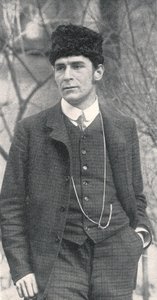
      프란츠 마크

      프란츠 마크

      1880 - 1916, 독일

      Quick facts about 프란츠 마크

      • Artistic Movement Or Style: 표현주의 예술 운동
      • Artists Who Influenced This Artist:
        • 빈센트 반 고흐
        • 로베르 뒤뇌
      • Date Of Birth: 2월 8일
      • Date Of Death: 3월 4일
      • Full Name: Franz Moritz Wilhelm Marc
      • Nationality: 독일인
      • Notable Artworks:
        • 타호르
        • 붉은 사슴
      • Place Of Birth: 뮌헨 독일

      작가 소개

      Franz Marc (1880-1916): Pioneer of German Expressionism and the Soulful Vision of Color

      Franz Moritz Wilhelm Marc, born on February 8, 1880, in Munich, was a painter whose brief but intensely focused career irrevocably altered the course of German Expressionism. His story is one of profound spiritual seeking translated into a vibrant visual language—a quest to understand the essence of life through the purity he found in the natural world, particularly within the animal kingdom. Initially influenced by his father, Wilhelm Marc, a landscape painter who instilled in him a love for observation and detail, young Franz’s artistic path wasn't immediately certain. He briefly contemplated theology, grappling with questions of faith and existence before ultimately dedicating himself to art at the Academy of Fine Arts in Munich—a decision that would shape his entire artistic trajectory. These early explorations into religious thought would remain deeply embedded within his work, informing his belief that art could serve as a conduit for spiritual experience.

      Early Influences and Artistic Training

      Marc’s formative years were marked by exposure to influential artistic figures and movements. His father's dedication to landscape painting instilled in him a fundamental appreciation for the beauty of nature—a perspective that would become central to his artistic vision. Simultaneously, he engaged with the intellectual currents of his time, exploring philosophical ideas alongside literary classics. Notably, he studied theology intensely, driven by a desire to reconcile faith and reason—a preoccupation that would permeate his oeuvre. His enrollment at Munich University provided him with a grounding in humanist thought, while his studies at the Academy of Fine Arts honed his technical skills under esteemed instructors like Gabriel von Hackl and Wilhelm von Diez. These formative experiences established the foundation for his artistic development, shaping his stylistic preferences and intellectual convictions.

      The Encounter with Van Gogh and the Birth of Expressionism

      A pivotal moment in Marc’s artistic evolution arrived during his visits to Paris in 1903 and 1907—experiences that profoundly impacted his worldview and artistic style. He was captivated by Vincent van Gogh's expressive use of color and raw emotion, recognizing in him a kindred spirit who shared his conviction that art could convey profound spiritual truths. Van Gogh’s bold brushstrokes and emotionally charged canvases served as an inspiration, liberating Marc from the constraints of academic naturalism—a liberation that fueled his artistic experimentation. He embraced Impressionist techniques, incorporating loose brushwork and vibrant hues into his compositions—a stylistic shift that signaled a decisive break from traditional conventions. This encounter with Van Gogh solidified his belief in the artist’s role as a conduit for inner experience—a conviction that would become paramount to his artistic endeavors.

      Der Blaue Reiter: A Philosophical Revolution

      Marc's artistic journey culminated in the founding of *Der Blaue Reiter* (The Blue Rider) in 1911 alongside Wassily Kandinsky—a collaborative venture that represented a radical departure from prevailing artistic trends. This journal wasn’t merely a platform for showcasing artwork; it was a manifesto articulating a philosophical revolution aimed at transcending representational art and expressing spiritual truths through abstraction and symbolic color. Marc and Kandinsky envisioned a new aesthetic paradigm rooted in intuition and emotion—a vision that challenged the dominant intellectual currents of their era. They sought to liberate art from the shackles of rational thought, prioritizing feeling over observation—a stance that aligned with Symbolist ideals and foreshadowed the avant-garde movements of the coming decades. *Der Blaue Reiter* became a crucible for artistic innovation, fostering dialogue between artists and disseminating groundbreaking ideas about color theory and spiritual symbolism.

      Marc’s Artistic Style: Color, Abstraction, and Animal Imagery

      Marc's distinctive artistic style is characterized by its masterful manipulation of color—particularly bold hues that conveyed emotional intensity and symbolic meaning. Rejecting Impressionist descriptiveness, he imbued color with spiritual significance—believing it to be capable of communicating profound truths about the human condition. He developed a sophisticated system of color psychology, associating blue with masculinity and spirituality, yellow with femininity and joy—a framework that informed his compositional choices and artistic vision. Furthermore, Marc’s preoccupation with animal imagery—particularly horses, deer, and foxes—became central to his oeuvre—reflecting his conviction that animals embodied innocence, harmony, and a connection to the natural world that humanity had lost. He simplified forms—reducing figures to their essential shapes—emphasizing the underlying spiritual essence he sought to capture—a stylistic hallmark that distinguishes his work from more conventional artistic representations. Paintings like *The Tower of Blue Horses* (1913) exemplify this approach, conveying a sense of awe and reverence for the natural world through striking color palettes and evocative compositions. ## Legacy and Influence Franz Marc’s untimely death in 1916—during the Battle of Verdun—marked the tragic end of a brilliant artistic career but cemented his place as a pivotal figure in modern art history. Despite his brief life span, Marc exerted an enduring influence on subsequent generations of artists—inspiring them to explore abstraction and symbolic color—and fostering a renewed appreciation for the spiritual dimension of artistic expression. His paintings continue to captivate audiences with their emotional depth and philosophical resonance—serving as reminders of the transformative power of art to transcend the material realm and engage with something deeper within the human spirit. Marc’s legacy extends beyond his individual artworks; it resides in his pioneering contribution to German Expressionism—a movement that irrevocably altered the course of artistic history—and in his unwavering belief that art could illuminate the path toward spiritual enlightenment. His work remains a testament to the enduring power of imagination and emotion—a timeless masterpiece that continues to inspire contemplation and wonder.

      § 5Comparanda

      § 6Questions

      주요 정보

      • Movement: Expressionism
      • Dimensions: 27 x 31 cm
      • Notable elements or techniques: Muted colors; Stillness & contemplation
      • Medium: Oil on canvas
      • Year: 1905
      • Artist: Franz Marc

      아트 퀴즈

      각 질문의 정답은 하나뿐입니다.

      문항 1:
      What artistic movement is Franz Marc’s ‘Small Horse Study’ associated with?
      문항 2:
      The painting utilizes muted colors primarily to convey what emotion?
      문항 3:
      Who co-founded the Der Blaue Reiter movement alongside Franz Marc?
      문항 4:
      Where can visitors see ‘Small Horse Study’ and other works by Franz Marc?
      문항 5:
      What is the horse's posture in ‘Small Horse Study’ indicative of?

      § 7Cite this entry

      AllPaintingsStore.com, “프란츠 마크, Small Horse Study (1905)”, https://allpaintingsstore.com/ko/art/franz-marc-small-horse-study-8BWPUP-en/ (accessed 2 10월 2026).

      § 8The reproduction

      핸드메이드 유화 복제화

      작가가 직접 캔버스에 손으로 그린 유화 작품으로, 원하는 크기와 액자로 맞춤 제작해 드립니다. ( 프린트 판매로 전환 디지털 이미지 판매 채널로 전환)

      It is specified on the order sheet in the margin; the present state of that sheet reads as follows.

      Small Horse Study

      재현 매체

      복제본 규격

      -

      최정상급 시니어 아티스트

      더욱 세밀한 묘사와 정교함, 그리고 충분한 제작 시간

      -

      복제화 액자 옵션

      -

      -

      가로 또는 세로 중 어느 한 면이라도 105cm(약 41인치)를 초과하는 작품이나 복제화의 경우, 프레임은 분해된 키트 형태로 배송됩니다. 이는 안전한 배송을 보장하고 운송 중 발생할 수 있는 손상을 방지하기 위함입니다.

      전문가 조립 권장 - 본 제품은 DIY용이 아닙니다.
      해당 키트는 숙련된 전문 프레임 제작자가 목공용 풀(별도 구매), 캔버스 스트레칭 플라이어 및 풀이 마르는 동안 나무 틀의 수평을 유지할 클램프를 사용하여 캔버스를 팽팽하게 고정하고 조립해야 합니다. 잘못된 조립이나 불균형한 캔버스 장력은 작품에 영구적인 손상을 입힐 수 있으며, 이로 인한 손상은 보증 범위에 포함되지 않습니다.

      • 모든 고형목재 부재가 포함되어 있으며, 정확한 크기로 정밀하게 재단되었습니다.

      • 제공된 나사를 사용하여 조립하며, 모서리 접합부용 목공용 풀은 포함되어 있지 않으므로 제작자께서 별도로 준비해 주셔야 합니다.

      • 전문가용 도구가 필요하며 키트에 포함되어 있지 않습니다: 캔버스 스트레칭 플라이어(텐셔너)와 접착제가 마르는 동안 나무 틀의 수평을 유지하기 위한 클램프가 필요합니다.

      주의사항:
      모서리 접합부에는 목공용 풀이 필요하며, 풀이 완전히 마를 때까지 클램프로 바(bar)를 고정해야 합니다. 또한 조립된 프레임에 캔버스를 팽팽하게 당기려면 캔버스 스트레칭 플라이어가 필요합니다. 이 제품들 중 어느 것도 키트에 포함되어 있지 않습니다. 이 사이즈를 주문하시기 전에 숙련된 전문 액자 제작업체를 미리 섭외하시기 바랍니다.

      캡션

      -

      -

      보호용 바니시

      유광 바니시(색감을 선명하게 하며 빛과 습기로부터 보호함)

      -

      내 작품 맞춤 설정

      변경 가능한 예시: 얼굴을 고객의 사진으로 교체, 반려동물 추가(예: 고양이를 강아지로 변경), 배경에 숨겨진 메시지 삽입, 배경 풍경 또는 요소 변경.

      -

      긴급 배송

      전 세계 배송()은 기존 5주의 표준 기간 대신 3~4주 내에 완료됩니다. (30 10월). 품질에는 어떠한 타협도 하지 않습니다.

      -

      빠른 배송

      지역 일반 배송: 약 5주 소요 (6 11월).

      기본 배송비 포함

      총 결제 금액

      ₩ 350808

      Included with every order

      • 전 세계 무료 특급 배송
      • 고품질 린넨 캔버스
      • 배송 전 과정 보험 적용
      • 관세 환급 보장 서비스
      • 원본 색상 일치 보장
      • 제조 결함 발견 시 100일 이내 반품 가능
      • 100% 환불 보장
      • 다량 구매 할인 혜택
      Order sheet