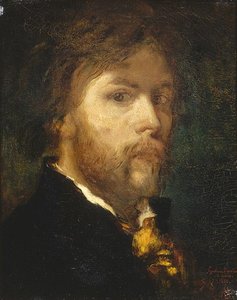
1854. 캔버스에 유채, 75.0 x 96.0 cm. Städelsche Kunstinstitut.

§ 1카탈로그 정보

- 75.0 x 96.0 cm


§ 2추상
수집품 상세 설명
Experience Gustave Moreau's poignant "Pieta" (1854). This Symbolist masterpiece captures Mary’s grief and divine connection with stunning detail & emotional depth. Explore its rich symbolism at the Musée Gustave Moreau in Paris.
 더 보기
더 보기
§ 3해설
A Dream Weaver’s Lament: Gustave Moreau's Pieta
Gustave Moreau’s “Pieta,” painted in 1854, isn’t merely a depiction of the Virgin Mary cradling the lifeless body of Christ; it’s an immersion into a realm of potent symbolism and deeply felt sorrow. More than just a religious scene, this work stands as a cornerstone of the Symbolist movement, revealing Moreau's profound interest in exploring the hidden currents of myth, spirituality, and the human psyche—a fascination that permeated his entire artistic career. Housed within the Stadelsches Kunstinstitut in Frankfurt, it’s a painting that continues to resonate with viewers over a century after its creation, inviting contemplation on themes of loss, devotion, and the eternal bond between mother and son.
Moreau, born into a Parisian bourgeois family steeped in artistic tradition—his father an architect and archivist—was never content with the prevailing Realist or Impressionist trends. He sought instead to unlock the mysteries of the subconscious, translating subjective emotions and spiritual yearnings into a visual language uniquely his own. This pursuit led him away from objective representation towards a world of dreamlike imagery, rich symbolism, and an intense emotional charge – qualities powerfully evident in the “Pieta.” The painting’s genesis lies within Moreau's personal reflections on faith and mortality, filtered through his intensely imaginative mind.
Composition and Symbolism: A World of Shadows
Measuring a modest 75 x 96 cm, the “Pieta” is executed in oil on canvas with meticulous detail. The composition immediately draws the eye to Mary’s figure, positioned centrally within the frame, her face etched with an unbearable grief. Christ's body, rendered with a delicate realism that belies its lifelessness, rests gently in her arms. However, it’s not simply a portrait of mourning; Moreau masterfully employs color and light to heighten the emotional impact. The dominant palette is dark—deep blues, purples, and browns—creating an atmosphere of profound solemnity. This darkness is dramatically contrasted by the fiery red sky that dominates the background, evoking both the agony of Christ’s crucifixion and the impending doom of his death.
Adding to the scene's complexity are two ethereal angels positioned on either side of the composition. These figures aren’t merely observers; they represent divine presence and a sense of sorrowful acceptance. Their placement subtly reinforces the narrative, suggesting a higher power witnessing and bearing witness to this profound human tragedy. The intricate details—the folds of Mary’s robe, the texture of Christ's skin, the subtle expressions on the angels’ faces—are hallmarks of Moreau’s meticulous technique, reflecting his dedication to capturing not just likeness but also mood and emotion.
The Language of Symbolism: More Than Meets the Eye
Moreau’s Symbolist style is deeply intertwined with religious iconography, yet he deliberately subverts traditional representations. The red sky, for instance, isn't a literal depiction of the heavens at the time of Christ’s death; it’s a symbolic representation of divine judgment and sorrow. Similarly, Mary’s expression—a mixture of grief, acceptance, and profound love—is far more nuanced than simple sadness. She embodies not just maternal mourning but also a spiritual connection to her son, reflecting the core tenets of Christian faith.
The painting is rich with allusions to classical mythology and medieval art, further enriching its symbolic depth. The angels, reminiscent of figures from Byzantine mosaics, evoke a sense of timelessness and spiritual authority. Moreau’s use of muted colors and dramatic lighting creates an atmosphere of mystery and invites viewers to interpret the scene on a deeply personal level. It's a testament to his ability to infuse religious subject matter with a distinctly Symbolist sensibility—a blend of dreamlike imagery, psychological insight, and profound emotional resonance.
A Legacy of Emotion: Reproductions and Inspiration
Gustave Moreau’s “Pieta” remains a powerfully evocative work of art, captivating viewers with its intense emotion and symbolic depth. Its influence can be seen in the works of artists who followed, including Matisse and Rouault, demonstrating Moreau's pivotal role in shaping the Symbolist movement. Today, AllPaintingsStore offers meticulously crafted hand-painted reproductions that faithfully capture the painting’s beauty and emotional intensity. These reproductions provide a unique opportunity to experience this masterpiece firsthand, bringing its profound symbolism and haunting atmosphere into your home or studio.
Whether you are an art enthusiast, collector, or simply seeking inspiration, Moreau's "Pieta" offers a timeless meditation on grief, faith, and the enduring bond between mother and son. Explore our collection of high-quality reproductions to bring this iconic artwork into your world.
질의응답
"Pieta"의 Symbolist Painting에는 어떤 국가적 배경이 담겨 있나요?
Symbolist Painting 양식의 작품 "Pieta"은 프랑스 출신의 작가에 의해 탄생했습니다.
"Pieta"은(는) 언제 제작되었나요?
"Pieta"은(는) 1854년에 제작되었습니다. 이 시기는 거스타브 모로아의 예술적 경력과 당시의 시대상을 잘 보여줍니다.
거스타브 모로아의 "Pieta"과(와) 비슷한 느낌의 작품을 어떻게 찾을 수 있나요?
거스타브 모로아의 "Pieta"과(와) 유사한 작품들은 해당 작품의 유사한 작품들 페이지에서 모아 보실 수 있습니다.


 프린트 판매로 전환


 가로 또는 세로 중 어느 한 면이라도 105cm(약 41인치)를 초과하는 작품이나 복제화의 경우, 프레임은 분해된 키트 형태로 배송됩니다. 이는 안전한 배송을 보장하고 운송 중 발생할 수 있는 손상을 방지하기 위함입니다.