

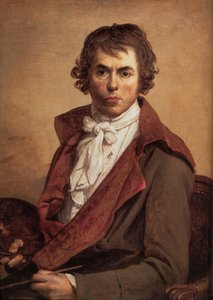
1778. Acrylic On Canvas, 123.0 x 172.0 cm. Musée Fabre.

§ 1Catalogue data

- 123.0 x 172.0 cm


§ 2Abstract
컬렉션 상세 정보
 상세 보기
상세 보기
작가 소개
Jacques-Louis David는 프랑스 로코코 시대의 화려함과 대비되는 고전적 엄격함과 질서를 구현하며 네오클래식 미술의 선구자로 자리매김했습니다. 그의 대표작인 ‘호라티우스의 서약’, 마르 뒤카스와 나폴레옹 크로스 오버스는 프랑스 혁명 정신과 영웅적인 이미지를 담아낸 작품들입니다. 이 화가는 예술가로서 역사적 의미를 지닌 작품들을 통해 후대에 영감을 불어넣었습니다.
§ 3Commentary
A Study in Mortality and Moral Weight: Jacques-Louis David’s *Hector* (1778)
Jacques-Louis David's *Hector*, painted in 1778, is not merely a depiction of a fallen warrior; it’s a profound meditation on death, duty, and the burgeoning moral anxieties of late 18th-century France. This arresting image, rendered with the meticulous precision characteristic of David’s Neoclassical style, immediately confronts the viewer with a scene of brutal realism juxtaposed against an almost unnerving stillness. The subject, identified as Hector from Virgil's *Aeneid*, lies prone on the ground, his naked body a stark canvas for the crimson stain of blood – a visceral reminder of violent conflict and irreversible loss. The composition is deliberately austere, dominated by the figure’s physicality and the surrounding landscape, stripped of extraneous detail to amplify the emotional intensity.
Neoclassical Composition and Dramatic Lighting
David's mastery of Neoclassicism shines through in *Hector*. He consciously rejected the frivolous ornamentation of Rococo painting, favoring instead a structured composition rooted in classical ideals. The figure is positioned centrally within a shallow space, drawing immediate attention to his vulnerability. Notice how David employs dramatic chiaroscuro – the stark contrast between light and shadow – to sculpt the body, emphasizing its musculature and highlighting the wounds inflicted upon it. This technique wasn’t simply for aesthetic effect; it served to heighten the sense of pathos and underscore the tragic nature of Hector's demise. The carefully chosen rocks scattered around him aren’t decorative elements but rather anchors within this scene, grounding the figure in a desolate reality.
- Color Palette: Dominated by earthy tones – ochres, browns, and reds – reflecting the grim subject matter and the naturalistic approach.
- Brushwork: Precise and controlled, indicative of David’s commitment to anatomical accuracy and a deliberate rejection of loose brushstrokes favored in earlier styles.
- Spatial Arrangement: The limited depth and flattened perspective contribute to the painting's sense of immediacy and emotional impact.
Symbolism and Allusion – Echoes of Virgil and Revolutionary Sentiment
*Hector* is deeply layered with symbolic meaning, drawing heavily from classical mythology but resonating powerfully within the context of 1778 France. As a hero felled in battle, Hector embodies duty, honor, and sacrifice—values increasingly scrutinized during an era marked by social unrest and philosophical debate. The bowl placed near his hand isn’t simply a prop; it subtly suggests a final offering, perhaps to the gods or a plea for mercy – a poignant detail that amplifies the sense of helplessness. The reference to Virgil's *Aeneid* was particularly relevant at the time, as the epic poem explored themes of leadership, fate, and the responsibilities of rulers—topics that would soon become central to the revolutionary discourse.
Emotional Resonance and a Portrait of an Era
Beyond its technical brilliance, *Hector* possesses a haunting emotional resonance. The painting doesn’t glorify war; it confronts us with its brutal consequences. The vulnerability of the fallen hero evokes empathy and prompts reflection on mortality and the fragility of human life. It's a work that speaks to the anxieties simmering beneath the surface of 18th-century France, an era poised on the brink of revolution. David’s *Hector* is more than just a historical painting; it’s a powerful statement about human nature, duty, and the enduring legacy of classical ideals—a timeless masterpiece rendered with unparalleled skill and profound emotional depth. A reproduction captures this intensity beautifully, offering a window into the mind of one of history's most influential artists.
질의응답
자크 루이 다비드의 "Hector"에는 어떤 기법이 사용되었나요?
"Hector"은(는) Acrylic On Canvas 기법으로 제작되었습니다.
"Hector"이(가) 제작되었을 당시 자크 루이 다비드의 나이는 어떻게 되었나요?
자크 루이 다비드은(는) 1778년에 "Hector"을(를) 제작했을 당시 30세였습니다. 이 나이는 작가의 출생 연도인 1748을(를) 기준으로 계산되었습니다.
자크 루이 다비드의 "Hector"의 재료와 크기는 어떻게 되나요?
자크 루이 다비드의 "Hector"의 기법은 Acrylic On Canvas이며, 기록된 크기는 123 x 172 cm입니다.


 프린트 판매로 전환


 가로 또는 세로 중 어느 한 면이라도 105cm(약 41인치)를 초과하는 작품이나 복제화의 경우, 프레임은 분해된 키트 형태로 배송됩니다. 이는 안전한 배송을 보장하고 운송 중 발생할 수 있는 손상을 방지하기 위함입니다.


