

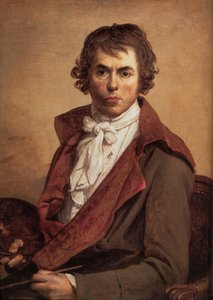
Acrylic On Canvas.

§ 1Catalogue data

§ 2Abstract
컬렉션 상세 정보
 상세 보기
상세 보기
작가 소개
Jacques-Louis David는 프랑스 로코코 시대의 화려함과 대비되는 고전적 엄격함과 질서를 구현하며 네오클래식 미술의 선구자로 자리매김했습니다. 그의 대표작인 ‘호라티우스의 서약’, 마르 뒤카스와 나폴레옹 크로스 오버스는 프랑스 혁명 정신과 영웅적인 이미지를 담아낸 작품들입니다. 이 화가는 예술가로서 역사적 의미를 지닌 작품들을 통해 후대에 영감을 불어넣었습니다.
§ 3Commentary
A Brushstroke Across Revolution: The Life and Art of Jacques-Louis David
Jacques-Louis David (1748-1825) stands as a monumental figure in the annals of French art history, embodying not merely artistic skill but also the tumultuous spirit of his era – a period irrevocably shaped by the seismic shifts from Rococo decadence to the austere idealism of Neoclassicism and ultimately scarred by the fervor of the French Revolution. His journey began amidst personal hardship; orphaned at a young age and burdened with a facial impediment that initially impeded speech, David nevertheless possessed an unwavering dedication to mastering his craft—a determination fueled by an innate understanding of visual storytelling and a profound conviction in the power of art to convey moral truths. Initially apprenticed to François Boucher, David swiftly recognized the more intellectually stimulating approach championed by Joseph-Marie Vien, whose fervent embrace of history painting and classical subjects resonated deeply with the burgeoning artistic sensibilities of his time. This formative influence instilled within him a commitment to portraying heroic narratives imbued with grandeur and moral significance—a stylistic preference that would define his oeuvre throughout his illustrious career. Early explorations showcased David’s meticulous attention to detail and masterful command of chiaroscuro, techniques honed during his apprenticeship and subsequently perfected in works like “The Death of Marat,” cementing his reputation as a pioneer of Neoclassical realism. David's artistic breakthrough arrived with the commission for "Oath of the Horatii," an iconic depiction of Roman patriotism that catapulted him to international acclaim. Executed in 1784, this monumental canvas exemplifies the core tenets of Neoclassicism: balanced composition, idealized figures rendered with unflinching accuracy, and a deliberate suppression of emotional excess—a stylistic choice deliberately antithetical to the flamboyant ornamentation characteristic of Rococo art. The painting’s pyramidal structure draws viewers' gaze upwards towards the central figures, conveying a sense of solemn dignity and moral fortitude. David skillfully utilized subtle tonal variations to sculpt form and create depth, capturing the palpable tension between duty and personal sacrifice—themes that resonated powerfully with the intellectual currents circulating throughout Enlightenment France. The Revolution irrevocably altered David’s artistic trajectory, propelling him into the service of Napoleon Bonaparte and transforming him into a propagandist for imperial grandeur. During this period, he produced monumental canvases celebrating Napoleonic victories and portraying Napoleon himself as an embodiment of Roman virtue—a stylistic shift reflecting the prevailing political climate and demonstrating David's adaptability as an artist. However, amidst the spectacle of imperial ambition, David retained his commitment to classical ideals, producing portraits that captured the dignity and intellect of prominent figures while adhering to rigorous artistic standards. His unwavering dedication to technique ensured that even in monumental commissions, he maintained a level of realism and expressive nuance that distinguished him from many of his contemporaries. David’s legacy extends far beyond his individual masterpieces; he established the École Royale des Beaux-Arts in Paris—a cornerstone institution for shaping generations of French artists—and championed a stylistic approach rooted in observation and intellectual rigor. His influence can be discerned throughout subsequent artistic movements, cementing his position as one of the most significant figures in European art history. The enduring power of his work lies not merely in its aesthetic beauty but also in its ability to convey profound moral truths—a testament to David’s unwavering belief in the transformative potential of art and his indelible contribution to shaping the cultural landscape of his time.질의응답
"untitled (8943)"은 전체적으로 밝은 편인가요, 아니면 어두운 편인가요?
"untitled (8943)"의 전체적인 밝기는 shadow이며, 휘도는 Soft Shadow입니다.
자크 루이 다비드의 "untitled (8943)"과(와) 유사한 작품을 어떻게 찾을 수 있나요?
"untitled (8943)"와 유사한 작품들은 해당 작품의 유사한 작품 페이지에서 확인하실 수 있습니다.
자크 루이 다비드의 "untitled (8943)"의 특징적인 기법과 화풍은 무엇인가요?
"untitled (8943)"은(는) Acrylic On Canvas 기법을 사용하여 Neoclassical Ideals 양식으로 제작되었습니다.


 프린트 판매로 전환


 가로 또는 세로 중 어느 한 면이라도 105cm(약 41인치)를 초과하는 작품이나 복제화의 경우, 프레임은 분해된 키트 형태로 배송됩니다. 이는 안전한 배송을 보장하고 운송 중 발생할 수 있는 손상을 방지하기 위함입니다.


