100일 환불 보장 전 세계 무료 배송
449,587작품들 30,613아티스트들 4,660박물관 32언어 설정
통화
    언어
      아틀리에 · 2015년 설립 · 프랑스 파리
      AllPaintingsStore
      allpaintingsstore.com
      Catalogue entry

      Temperance

      1645. Marble. 루브르 박물관.

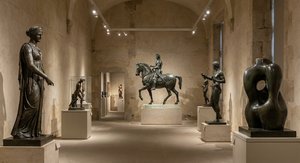
      Fig. 1. Jacques Sarazin, Temperance, 1645. Shown as the reproduction you are specifying: , .

      § 1Catalogue data

      § 2Abstract

      컬렉션 상세 정보

      Experience the Baroque echo of Temperance by Jacques Sarazin (1645), a masterful marble sculpture capturing classical grace; discover this timeless piece today.

      작가 소개

      Jacques Sarazin (1592-1660): French Baroque sculptor of the Louis XIV style, renowned for the Louvre's Caryatides & collaborations with Simon Vouet. Explore his art!

      § 3Commentary

      Jacques Sarazin’s Temperance: A Baroque Echo in Parisian Sculpture

      Jacques Sarazin (1592-1660) stands as a pivotal figure bridging the Classical ideals of his formative years with the exuberant dynamism of the Baroque era—a stylistic confluence that profoundly shaped French sculpture during Louis XIV's reign. He wasn’t merely a craftsman diligently fulfilling commissions; he was an artist who internalized the burgeoning Baroque spirit from his Roman sojourn and skillfully adapted it to the more restrained sensibilities of the Parisian court, establishing groundwork for the grandeur synonymous with Louis XIV’s artistic vision. His early training under Nicolas Guillain instilled within him a bedrock of classical principles—a reverence for form and proportion—qualities that would consistently characterize his oeuvre even as he embraced bolder Baroque elements.

      Roman Influences: Shaping Artistic Vision

      Sarazin's journey commenced in Noyon, France, where he honed his skills alongside his brother within the atelier of Nicolas Guillain – a studio deeply rooted in Classical tradition. This foundational experience instilled an unwavering appreciation for harmonious ratios and idealized representations, principles that would permeate his subsequent artistic endeavors. The Roman sojourn itself proved transformative; it exposed him to monumental sculptures celebrating grandeur and emotion—a stark contrast to the more restrained aesthetic prevalent in France at the time. He absorbed the expressive gestures and dramatic lighting championed by Baroque sculptors like Bernini, recognizing their capacity to convey profound psychological depth and spiritual fervor. This assimilation of Roman artistic sensibilities would become a defining characteristic of Sarazin’s distinctive style.

      The Sculpture's Narrative: Temperance Embodied

      “Temperance,” executed in 1645, exemplifies this masterful synthesis. The sculpture depicts a woman gracefully pouring water from one vessel into another—a gesture laden with symbolic significance rooted in Christian morality and representing the virtue of self-control. Her posture exudes serenity and dignity, reflecting the Classical ideal of reposeful beauty. The drapery around her torso and legs is meticulously crafted, demonstrating Sarazin’s technical prowess and capturing the fluid movement inherent in Baroque sculpture. Notably, a small child stands before her, reaching upwards towards the water—a motif frequently employed in Baroque art to symbolize innocence and divine grace. This juxtaposition of figures underscores the overarching theme: the careful balance between desire and restraint, aspiration and moderation.

      Technique and Material Considerations

      Sarazin’s mastery extended beyond stylistic innovation; he possessed exceptional technical skill. Crafted from marble – a material favored by Baroque sculptors for its luminosity and ability to convey texture—the sculpture showcases meticulous attention to detail. The sculptor skillfully employed carving techniques to achieve subtle gradations of tone, enhancing the illusion of depth and creating an atmosphere of palpable stillness. Furthermore, Sarazin’s understanding of sculptural composition ensured that every element contributed to the overall narrative – a testament to his dedication to artistic excellence.

      A Legacy of Baroque Grandeur

      “Temperance” stands as a remarkable achievement—a harmonious blend of Classical restraint and Baroque exuberance. It represents not merely a beautiful object but also a powerful statement about virtue and spiritual contemplation. Jacques Sarazin’s contribution solidified the Baroque style's influence on French sculpture, paving the way for Louis XIV’s opulent artistic patronage and establishing him as one of the foremost sculptors of his era. Its enduring appeal continues to inspire artists and collectors alike—a timeless reminder of the transformative power of art history.

      질의응답

      "Temperance"은(는) 무엇에 관한 작품인가요?

      Jacques Sarazin의 "Temperance"에 나타난 주제로는 sculpture, classical art, mythology, temperance, allegory, woman figure, water symbolism 등이 있습니다. 이들은 모여 작품의 소재를 요약해 보여줍니다.

      "Temperance"은(는) 어떤 화풍에 속하나요?

      "Temperance"은(는) Baroque 양식의 작품입니다. 이 사조는 해당 작품이 속한 예술적 전통을 나타냅니다.

      "Temperance"의 재료와 화풍은 무엇인가요?

      Jacques Sarazin의 "Temperance"은 Marble 기법과 Baroque 양식을 결합한 작품입니다. 기법과 양식은 작품의 제작 방식과 스타일을 설명합니다.

      § 4The artist

      Jacques Sarazin

      Jacques Sarazin

      1592 - 1660, France

      Quick facts about Jacques Sarazin

      • Artistic Movement Or Style: Baroque, Louis XIV
      • Artists Or Movements Influenced By This Artist: ['Louis XIV style']
      • Artists Who Influenced This Artist:
        • Domenichino
        • Nicolas Guillain
      • Date Of Birth: 1592
      • Date Of Death: 1660
      • Full Name: Jacques Sarazin
      • Nationality: French
      • Notable Artworks:
        • Caryatides Louvre
        • Naples vue Pausilippe
        • Château de Pau view
      • Place Of Birth: Noyon, France

      작가 소개

      A Sculptor of Kings and a Bridge to Baroque

      Jacques Sarazin, born in Noyon, France in 1592, occupies a fascinating position within the evolution of French sculpture. He wasn’t merely a craftsman executing commissions; he was a pivotal figure who absorbed the burgeoning Baroque style from his Roman sojourn and skillfully adapted it to the more restrained tastes of the French court, ultimately laying groundwork for the grandeur of Louis XIV's aesthetic. His journey began alongside his brother, both apprentices within the atelier of Nicolas Guillain in Paris – a foundation steeped in classical principles that would remain central to Sarazin’s artistic identity throughout his career. This early training instilled a reverence for form and proportion, qualities that would distinguish his work even as he embraced more dynamic Baroque elements.

      Roman Reverie and Artistic Forging

      The year 1610 marked a turning point with Sarazin’s arrival in Rome. This wasn't simply a geographical relocation; it was an immersion into the heart of artistic innovation. Working under a French artist named Anguille, he quickly gained recognition, securing employment with Cardinal Aldobrandini at the Villa Aldobrandini in Frascati. It was here that Sarazin’s talent truly began to blossom. A particularly significant friendship formed with Domenichino, leading to collaborative projects like the high altar of Sant'Andrea della Valle – a testament to Sarazin’s growing skill and his ability to integrate seamlessly into established artistic circles. His versatility extended beyond large-scale collaborations; he demonstrated his mastery of stucco bas-reliefs for San Lorenzo in Miranda, showcasing a remarkable adaptability that would prove invaluable upon his return to France. The Roman experience wasn't merely about acquiring technique; it was about absorbing an atmosphere, understanding the power of dramatic composition and emotional expression – elements that would subtly infuse his later work.

      Parisian Triumph and Royal Patronage

      Sarazin’s return to Paris in 1628 coincided with a fortunate marriage—a union with a niece of the prominent painter Simon Vouet. This connection proved instrumental, fostering a close artistic partnership that resulted in numerous prestigious commissions for hôtels particuliers and châteaux throughout the Île-de-France region, most notably at Maisons-Laffitte. To meet the demands of these ambitious projects, Sarazin established a large workshop, nurturing a team of skilled assistants including Gilles Guérin, Philippe de Buyster, and Gérard van Opstal – effectively creating a school of sculpture that would disseminate his style for generations to come. His success didn’t go unnoticed by the royal court. François Sublet de Noyers, a minister to Louis XIII and a discerning patron of the arts, recognized Sarazin's exceptional talent, leading to what is arguably his most celebrated achievement: the decoration of the great portal and dome of the western facade of the interior court of the Louvre.

      The Louvre’s Caryatides and Lasting Legacy

      The caryatides adorning the attic level of the Louvre are not merely decorative elements; they represent a profound dialogue with classical antiquity, specifically Michelangelo's style. Sarazin didn’t simply copy; he interpreted, infusing the ancient forms with a distinctly French sensibility. This commission solidified his reputation as *the* sculptor of the era and demonstrated his ability to translate grand artistic visions into tangible reality. Beyond the Louvre, Sarazin continued to receive commissions from the Queen and actively championed the establishment of the Académie Royale de Peinture et de Sculpture – recognizing the importance of institutionalizing artistic training and elevating the status of artists within French society. His final major undertaking, the mausoleum for the heart of Prince de Condé in the Jesuit church of Rue Saint-Antoine, remained unfinished at his death in 1660, but was completed by his pupil, Pierre Le Gros the Elder, ensuring its lasting impact. Sarazin’s style—a harmonious blend of classical rigor and Baroque dynamism—defined a significant moment in French art history. He wasn't simply an artist *of* his time; he helped to *shape* it, leaving behind a legacy that continues to inspire awe and admiration centuries later. His work embodies the grandeur and sophistication of the French court, marking him as a true master of the Style Louis XIV.

      § 5Comparanda

      § 6Questions

      주요 정보

      • Influences: Nicolas Guillain
      • Notable elements or techniques: Classical drapery, Child figure symbolism
      • Year: 1645
      • Artist: Jacques Sarazin
      • Medium: Marble Sculpture

      아트 퀴즈

      각 질문의 정답은 하나뿐입니다.

      문항 1:
      What is the primary theme depicted in Jacques Sarazin’s sculpture ‘Temperance’?
      문항 2:
      Jacques Sarazin’s sculptural training heavily influenced by Nicolas Guillain emphasized:
      문항 3:
      Where did Jacques Sarazin spend a formative period in his artistic development, absorbing the Baroque style?
      문항 4:
      The sculpture’s depiction of a child figure with wings symbolizes:
      문항 5:
      What artistic style is Jacques Sarazin primarily associated with?

      § 7Cite this entry

      AllPaintingsStore.com, “Jacques Sarazin, Temperance (1645)”, https://allpaintingsstore.com/ko/art/jacques-sarazin-temperance-8Y3H88-en/ArtistReproduction/ (accessed 2 10월 2026).

      § 8The reproduction

      핸드메이드 유화 복제화

      작가가 직접 캔버스에 손으로 그린 유화 작품으로, 원하는 크기와 액자로 맞춤 제작해 드립니다. ( 프린트 판매로 전환 디지털 이미지 판매 채널로 전환)

      It is specified on the order sheet in the margin; the present state of that sheet reads as follows.

      Temperance

      재현 매체

      복제본 규격

      -

      최정상급 시니어 아티스트

      더욱 세밀한 묘사와 정교함, 그리고 충분한 제작 시간

      -

      복제화 액자 옵션

      -

      -

      가로 또는 세로 중 어느 한 면이라도 105cm(약 41인치)를 초과하는 작품이나 복제화의 경우, 프레임은 분해된 키트 형태로 배송됩니다. 이는 안전한 배송을 보장하고 운송 중 발생할 수 있는 손상을 방지하기 위함입니다.

      전문가 조립 권장 - 본 제품은 DIY용이 아닙니다.
      해당 키트는 숙련된 전문 프레임 제작자가 목공용 풀(별도 구매), 캔버스 스트레칭 플라이어 및 풀이 마르는 동안 나무 틀의 수평을 유지할 클램프를 사용하여 캔버스를 팽팽하게 고정하고 조립해야 합니다. 잘못된 조립이나 불균형한 캔버스 장력은 작품에 영구적인 손상을 입힐 수 있으며, 이로 인한 손상은 보증 범위에 포함되지 않습니다.

      • 모든 고형목재 부재가 포함되어 있으며, 정확한 크기로 정밀하게 재단되었습니다.

      • 제공된 나사를 사용하여 조립하며, 모서리 접합부용 목공용 풀은 포함되어 있지 않으므로 제작자께서 별도로 준비해 주셔야 합니다.

      • 전문가용 도구가 필요하며 키트에 포함되어 있지 않습니다: 캔버스 스트레칭 플라이어(텐셔너)와 접착제가 마르는 동안 나무 틀의 수평을 유지하기 위한 클램프가 필요합니다.

      주의사항:
      모서리 접합부에는 목공용 풀이 필요하며, 풀이 완전히 마를 때까지 클램프로 바(bar)를 고정해야 합니다. 또한 조립된 프레임에 캔버스를 팽팽하게 당기려면 캔버스 스트레칭 플라이어가 필요합니다. 이 제품들 중 어느 것도 키트에 포함되어 있지 않습니다. 이 사이즈를 주문하시기 전에 숙련된 전문 액자 제작업체를 미리 섭외하시기 바랍니다.

      캡션

      -

      -

      보호용 바니시

      유광 바니시(색감을 선명하게 하며 빛과 습기로부터 보호함)

      -

      내 작품 맞춤 설정

      변경 가능한 예시: 얼굴을 고객의 사진으로 교체, 반려동물 추가(예: 고양이를 강아지로 변경), 배경에 숨겨진 메시지 삽입, 배경 풍경 또는 요소 변경.

      -

      긴급 배송

      전 세계 배송()은 기존 5주의 표준 기간 대신 3~4주 내에 완료됩니다. (30 10월). 품질에는 어떠한 타협도 하지 않습니다.

      -

      빠른 배송

      지역 일반 배송: 약 5주 소요 (6 11월).

      기본 배송비 포함

      총 결제 금액

      ₩ 349738

      Included with every order

      • 전 세계 무료 특급 배송
      • 고품질 린넨 캔버스
      • 배송 전 과정 보험 적용
      • 관세 환급 보장 서비스
      • 원본 색상 일치 보장
      • 제조 결함 발견 시 100일 이내 반품 가능
      • 100% 환불 보장
      • 다량 구매 할인 혜택
      Order sheet