

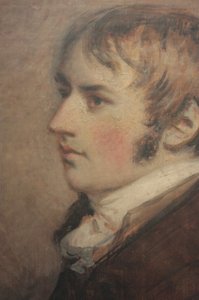
1817. 캔버스에 유채. 테이트 브리튼.

§ 1카탈로그 정보


§ 2추상
수집품 상세 설명
영국 낭만주의 정신을 비추는 빛나는 창, 존 컨스터블의 1817년 걸작 '플랫퍼드 밀'을 만나보세요. 반짝이는 강물의 반영과 전원적인 평온함이 담긴 이 작품이 당신의 컬렉션을 기다립니다.
 더 보기
더 보기
§ 3해설
A Window into Suffolk’s Soul: Exploring Constable's Flatford Mill
John Constable’s Flatford Mill (detail) is far more than a mere depiction of a riverside scene; it is an embodiment of Romantic idealism, capturing the very essence of rural England at the cusp of the Industrial Revolution. Painted in 1817, this iconic canvas transcends its visual representation to become a profound meditation on nature's power and humanity’s relationship with it—a sentiment deeply felt by Constable himself, who grew up amidst the fertile landscapes of Dedham Vale. The painting portrays a quintessential English countryside vista featuring a bustling mill alongside the River Stour. Within this meticulously observed scene, a lone horseman rides along the riverbank, accompanied by several boats engaged in activity, creating a sense of life and movement that feels both grounded and eternal.
The artist’s style is firmly rooted in Luminism, prioritizing atmospheric effects over precise detail to achieve a breathtaking realism. Constable achieved this through the painstaking development of layering thin glazes of paint, a technique that allows light to penetrate deeply into the canvas and creates an illusion of shimmering luminescence. This masterful manipulation of light is particularly evident in the reflections on the water surface, where the river seems to breathe with the sky above. The inclusion of a dog towards the bottom right corner adds an element of domestic tranquility to the scene, subtly reinforcing the painting’s overarching theme of harmony between man and nature.
Symbolism and the Emotional Landscape
Beyond its visual charm, the work is rich with symbolic depth. The River Stour itself symbolizes fluidity and change—a visual representation of the unstoppable march of time. However, Constable deliberately juxtaposes this dynamism with the stillness of the mill wheel and the horseman’s posture, suggesting a quiet resistance to inevitable alteration. Light, particularly the diffused sunlight filtering through the clouds, represents divine grace and illuminates the beauty of the landscape; it is not simply illumination, but an embodiment of enlightenment and spiritual contemplation central to Romantic thought.
The historical context surrounding this work is crucial to understanding its profound emotional impact. Constable was grappling with anxieties about the encroaching industrial age, witnessing firsthand the rapid transformation of rural England into a mechanized landscape. Yet, within this looming shadow of progress, he sought solace and inspiration in the enduring beauty of the natural world. For the art lover or interior designer, bringing a reproduction of this masterpiece into a home offers an opportunity to preserve its luminous beauty and invite a sense of peace, nostalgia, and a timeless connection to the natural world into any living space.
질의응답
존 컨스터블의 "플랫퍼드 밀 (세부도)"의 색채는 얼마나 조화로운가요?
존 컨스터블의 "플랫퍼드 밀 (세부도)"의 색채는 통일된 색조 조화를 보여줍니다. 여기서 조화란 색상들이 서로 어떻게 어우러지는지를 의미합니다.
낭만주의 풍경화 사조의 작품 "플랫퍼드 밀 (세부도)"은 어떤 감정을 전달하나요?
"플랫퍼드 밀 (세부도)"의 평온함한 정서는 낭만주의 풍경화 양식과 조화를 이룹니다.
"플랫퍼드 밀 (세부도)"은(는) 어느 시대의 작품인가요?
존 컨스터블의 "플랫퍼드 밀 (세부도)"의 역사적 시기는 19세기 미술입니다. 이러한 분류는 미술사적 맥락에서 해당 작품의 위치를 정의합니다.


 프린트 판매로 전환


 가로 또는 세로 중 어느 한 면이라도 105cm(약 41인치)를 초과하는 작품이나 복제화의 경우, 프레임은 분해된 키트 형태로 배송됩니다. 이는 안전한 배송을 보장하고 운송 중 발생할 수 있는 손상을 방지하기 위함입니다.


