


 실제 크기로 보기
 보내기
보내기 공유하기
공유하기
 상세 보기
상세 보기 가이드 보기

 이미지 다운로드
 유사 작품 더 보기
 X-레이
X-레이 슬라이드 쇼 보기
 Q&A
Q&A 통계 정보
통계 정보Charger


 상세 보기
상세 보기
지클레 / 아트 프린트
빠른 제작과 다양한 마감 옵션을 선택할 수 있는 박물관 수준의 지클레이 및 캔버스 프린트. ( 수작업 채색 복제본 주문하기 디지털 이미지 판매 채널로 전환)




P118B ₩10

P118H ₩10

P118W ₩10

P438Z ₩10

P508JH ₩12

P508YH ₩12

P805H ₩10

P805Z ₩10

P919BZ ₩10

P919G ₩10

P919XJ ₩10

P959ZH ₩10

P968JZ ₩12

W106C ₩8

W218G ₩10

W218JH ₩8

W218Y ₩10

W307PJ ₩10

W316G ₩10

W316PJ ₩8

W316Y ₩10

W398PJ ₩8

W4111J ₩10

W500HY ₩15

W500JH ₩15

W692G ₩12

W849H ₩8

W940BG ₩15

W953PJ ₩8




작품의 원본 비율을 그대로 유지하는 프리셋 사이즈 중에서 선택해 보세요.

액자나 벽면 크기에 맞춰 필요한 가로와 세로 길이를 입력해 주세요. 프린트는 원본 이미지보다 크게 제작할 수 없으며 오직 자르는 것만 가능하므로, 비율이 다른 사이즈를 선택할 경우 이미지의 일부가 잘려 나갈 수 있습니다. 인쇄 작업에 들어가기 전, 최종 확인을 위해 디지털 목업을 보내드립니다. 이 페이지에 표시된 이미지는 실제 잘리는 영역을 나타내지 않으며, 오직 목업을 통해서만 정확한 확인이 가능합니다.


 유리 옵션은 110cm 미만 크기에서만 선택 가능합니다.

Charger
지클레 / 아트 프린트
복제본 규격
-


총 결제 금액
₩ 87022
Joseph Théodore Deck: Embracing Japonisme’s Influence in Ceramic Art
Joseph Théodore Deck (1823-1891) stands as an undeniable cornerstone of French ceramic art, marking a pivotal moment where artistic innovation intersected with cultural dialogue during the latter half of the 19th century. Born in Guebwiller, Alsace – then firmly within France’s grasp – Deck dedicated his life to elevating ceramics beyond mere functional considerations into canvases for aesthetic expression; a pursuit profoundly shaped by his unwavering fascination with Japanese art and craftsmanship—a movement known as Japonisme that captivated European artists and intellectuals alike.Early Life & Artistic Foundations
Deck's artistic journey commenced humbly, beginning as an apprentice under Jean-Baptiste Clément, a respected Parisian potter whose workshop instilled in him a foundational understanding of ceramic techniques rooted in traditional French artisanal practices. This formative experience wasn’t merely about mastering the craft; it fostered a deep appreciation for heritage and established a crucial connection to the enduring legacy of French ceramics. Clément's influence ensured Deck wouldn’t simply replicate existing styles but would strive for excellence within established traditions.The Birth of Atelier Deck & Japonisme’s Embrace
Recognizing the boundless potential for independent creativity, Deck boldly founded his own workshop in Paris in 1857—a decisive step away from institutional constraints and toward realizing his artistic vision. Within this space, he cultivated a spirit of experimentation and innovation, actively seeking new approaches to ceramic decoration. Crucially, Deck embraced Japonisme – the burgeoning admiration for Japanese art forms within French circles – incorporating elements of asymmetry, bold color palettes reminiscent of woodblock prints (ukiyo-e), and stylized floral motifs into his designs. This stylistic choice wasn’t merely fashionable; it represented a deliberate engagement with a radically different aesthetic sensibility originating across the Pacific Ocean.Technique & Style: Cuera Seca – A Revolutionary Approach
Deck's artistic breakthroughs extended beyond stylistic influences, achieving remarkable technical advancements that redefined French ceramic production. He championed cuera seca—literally “dry leather”—a technique developed in Spain but adopted and perfected by Deck’s atelier. This method involved applying a thin layer of clay onto the surface of bisque ware (partially fired earthenware), creating an incredibly delicate glaze that adhered to the porous material with remarkable tenacity. The resulting surfaces possessed an unparalleled luminosity and textural richness, mirroring the subtle nuances found in Japanese lacquerware and contributing significantly to Deck’s distinctive visual style. This technique demanded meticulous skill and patience—a testament to Deck's dedication to pushing the boundaries of ceramic artistry.Symbolism & Emotional Resonance: “Charger” – A Reflection of Aesthetic Ideals
Considered alongside works by contemporaries like Alexandre Cabanel and Gustave Moreau, Deck’s “Charger,” exemplified the Symbolist movement’s preoccupation with emotion and spiritual contemplation. The dish's composition—dominated by swirling blues and purples mirroring turbulent skies—captures a palpable sense of drama and unease. The stylized floral arrangement, reminiscent of Japanese garden designs, speaks to an idealized vision of nature imbued with mystical qualities. As evidenced in the Detroit Institute of Arts’ catalogue entry, Deck skillfully utilized color and form to evoke profound emotional responses – aligning perfectly with Symbolist artistic principles. This artwork serves as a powerful reminder that art transcends mere visual beauty; it aspires to communicate intangible ideas and feelings.Conclusion: An Enduring Legacy
Joseph Théodore Deck's contribution to French ceramic art remains unparalleled, securing his place among the most influential figures of the Belle Époque. His embrace of Japonisme, coupled with his mastery of cuera seca and his unwavering commitment to artistic innovation, cemented his legacy as a pioneer who irrevocably transformed the aesthetic landscape of his time—a legacy that continues to inspire artists and collectors alike today.질의응답
Josephe Theodore Deck의 "Charger" 작품은 어떤 공간에 추천하시나요?
Josephe Theodore Deck의 "Charger"은(는) Living Room에 추천하는 작품입니다. 이 제안은 작품의 주제, 색상 및 분위기를 바탕으로 합니다.
Living Room에 "Charger" 작품을 어떤 사이즈로 배치하는 것이 가장 좋을까요?
Living Room 공간에는 Josephe Theodore Deck의 "Charger" 작품을 Large 크기로 인쇄하시는 것을 추천합니다.
"Charger"은(는) 무엇에 관한 작품인가요?
Josephe Theodore Deck의 "Charger"에 나타난 주제로는 floral design, ceramic art, japanese aesthetics, decorative arts, symbolism, blue glaze, josephe deck 등이 있습니다. 이들은 모여 작품의 소재를 요약해 보여줍니다.
관련 작품들


작가 소개
The Alchemist of Glaze: The Life and Legacy of Joseph Théodore Deck
In the vibrant, transformative landscape of nineteenth-century French decorative arts, few names resonate with as much technical brilliance and aesthetic daring as Joseph Théodore Deck. Born in 1823 in the picturesque town of Guebwiller, Alsace, Deck’s journey was one of profound metamorphosis—from a young apprentice navigating the hardships of early loss to a master craftsman who would redefine the very boundaries of ceramic expression. His life was not merely a pursuit of craft, but an obsessive quest to breathe life into clay, turning utilitarian earthenware into luminous, ethereal objects of desire that bridged the gap between Eastern tradition and Western innovation.
The foundations of his mastery were laid in the fires of apprenticeship. Following the untimely death of his parents, a young Deck was thrust into the world of ceramics, learning the intricate secrets of glazing and enamel decoration under the guidance of Victor-to-Joseph Hugelin, a stove builder in Strasbourg. This early exposure to the rugged, functional art of tilework for cast iron stoves provided him with a structural understanding of heat and mineral interaction. As he traveled through the great ceramic hubs of Central Europe—visiting Budapest, Prague, Berlin, and Vienna—he absorbed the diverse vocabularies of master ceramicists, a nomadic education that would later allow him to synthesize a truly international style.
A Symphony of Japonisme and Orientalism
When Deck arrived in Paris, he entered a cultural epicenter hungry for the exotic. The mid-nineteenth century was defined by Japonisme, a feverish fascination with the aesthetics of Japan following its opening to global trade. While many artists merely mimicked Japanese motifs, Deck possessed the rare ability to internalize their soul. He embraced the principles of asymmetry, the delicate balance of negative space, and the subtle gradations of color that characterized Japanese masterpieces. Yet, his vision was not limited to the East; he was equally captivated by the intricate patterns of Islamic art.
His studies at the Musée de Cluny allowed him to immerse himself in the splendor of Iznik ceramics from the Ottoman Empire. He became enamored with the vibrant blues and floral motifs of Turkish pottery, yet, in a stroke of true genius, he refused to be a mere copyist. Instead, he adapted these ancient inspirations, creating his own symmetrical reinterpretations that felt both timeless and modern. This fusion of Japanese restraint and Persian opulence gave rise to what many collectors now recognize as the quintessential "Deck style"—a breathtaking dialogue between different worlds rendered in porcelain and earthenware.
The Mastery of Cuera Seca and Technical Innovation
What truly set Deck apart from his contemporaries was his role as a scientific pioneer within the studio. He did not just paint on clay; he manipulated light itself through complex chemical processes. His most celebrated achievement was the development of cuera seca, a sophisticated multi-layered glazing technique that allowed for extraordinary textural depth and a shimmering, translucent finish. Through this method, he could achieve colors that seemed to glow from within the ceramic body, creating surfaces that possessed a liquid, almost holographic quality.
One of his most legendary breakthroughs was the discovery of le bleu de Deck in 1859—an electric, vibrant majolica blue glaze that became a hallmark of his workshop. This innovation, alongside his mastery of underglaze and enamel polychrome decoration, allowed him to produce works that were as much about the chemistry of light as they were about form. His workshop, established in 1856 as Faïences d’Art Théodore Deck, became a laboratory of beauty where he could experiment with the boundaries of what glaze could achieve, influencing major English potteries like Minton and leaving an indelible mark on the history of European art pottery.
A Lasting Impression on the Ceramic World
The historical significance of Joseph Théodore Deck lies in his ability to "de-industrialize" the potter's art. In an era where mass production was beginning to dominate, Deck championed a return to the artisanal, treating each piece as a singular canvas for painterly expression. His work stands as a bridge between the rigid traditions of the past and the fluid, experimental spirit of the modern age. Today, his pieces are cherished in the world's most prestigious institutions, including the British Museum and the Metropolitan Museum of Art, serving as enduring testaments to a man who saw the infinite possibilities hidden within a simple mound of earth.

Josephe Theodore Deck
1823 - 1891 , France
작가 정보 요약
- Artistic Movement Or Style: Japonisme
- Artists Or Movements Influenced By This Artist: ['Sèvres porcelain']
- Artists Who Influenced This Artist:
- Jean Carriès
- Ernest Chaplet
- Date Of Birth: 1823
- Date Of Death: 1891
- Full Name: Joseph Théodore Deck
- Nationality: French
- Notable Artworks:
- Charger
- La Japonaise
- Place Of Birth: Guebwiller, France
관련 기사

Victorian Botanical Art: How Bold, High-Impact Florals are Reclaiming Modern Interior Design
Discover how Victorian botanical art is transforming modern spaces. Explore high-impact floral aesthetics, from Marianne North's tropical drama to bold, hand-painted reproductions that bring vintage scientific beauty into contemporary urban design.

John La Farge: Pioneering American Colorism & Japonisme's Influence
Explore the groundbreaking work of John La Farge, a pioneer of American colorism and stained glass. Discover his captivating Japonisme-inspired murals & lasting legacy in 19th-century art. Expert insights for collectors.

William Stewart MacGeorge: Aesthetic Japonisme & the Scottish Portrait Tradition
Explore the captivating art of William Stewart MacGeorge, a key figure of the Kirkcudbright School. Discover his fusion of Scottish tradition with Aesthetic and Japonisme influences. Learn about his portraits & landscapes.

Blossoms of Time: A Historical & Aesthetic Exploration of Floral Painting Across Cultures
Explore the rich history of floral painting! Discover symbolism, techniques & masterpieces from Van Huysum to O'Keeffe. Expert insights for art lovers & collectors at AllPaintingsStore.
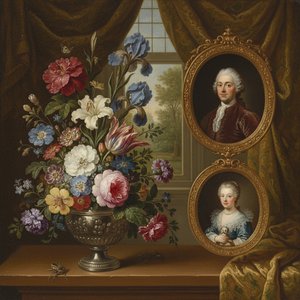
Jan van Kessel the Elder: A Baroque Master of Floral Still Life & Miniature Portraiture
Discover the exquisite detail of Jan van Kessel the Elder's Baroque floral still lifes & captivating miniatures. Explore his artistic legacy, scientific precision, and lasting influence on 17th-century Flemish painting.

