

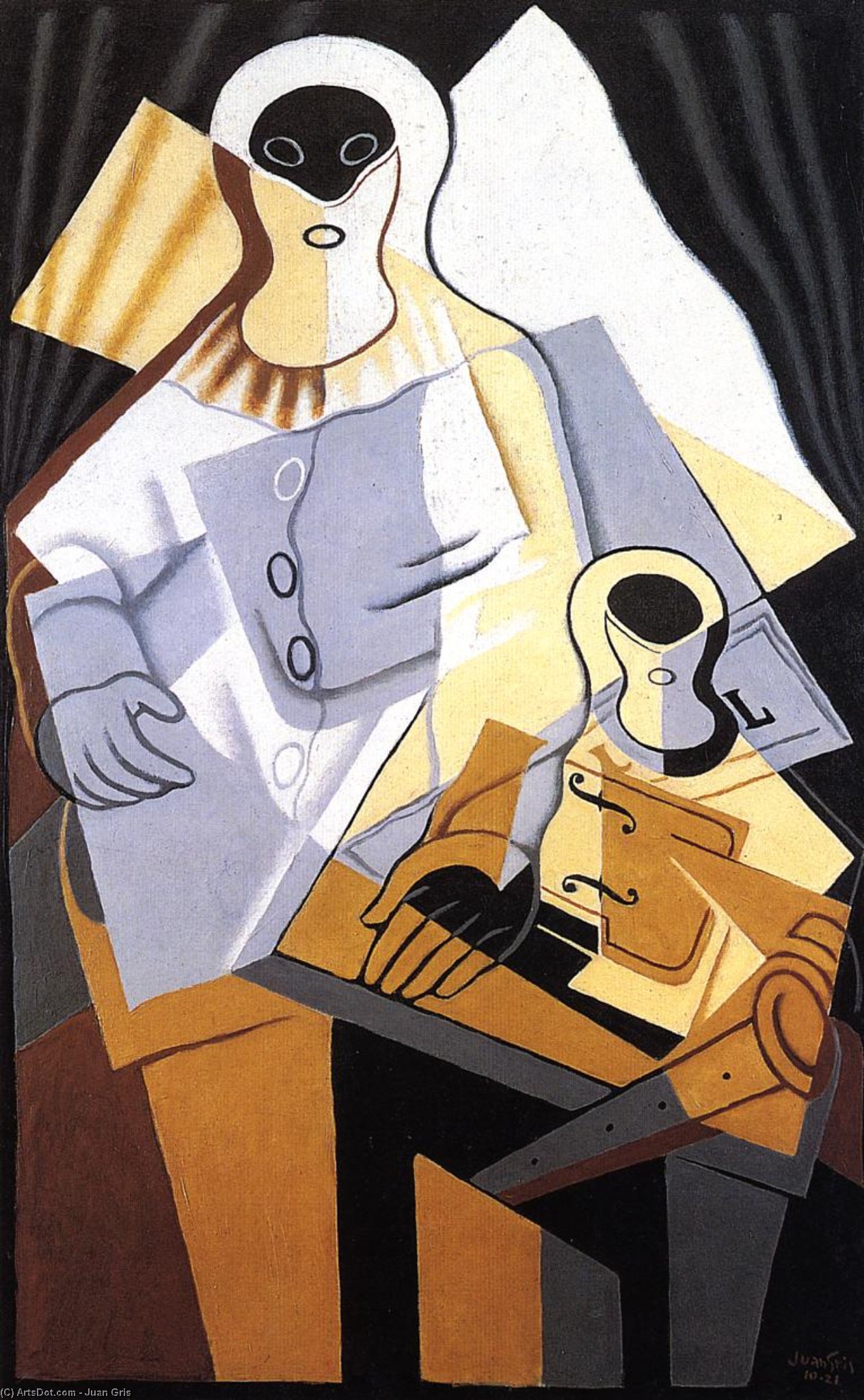
1922. Oil On Canvas, 100.0 x 65.0 cm.
§ 1카탈로그 정보

- 100.0 x 65.0 cm


§ 2추상
수집품 상세 설명
Experience Juan Gris’s iconic Cubist painting Pierrot, a fragmented masterpiece of geometric shapes and bold colors from 1922. Admire this captivating artwork and discover its rich history – own a piece of art history today.
 더 보기
더 보기
작가 프로필
후안 그리(1887-1927)는 스페인의 대표적인 입체주의 화가입니다! 기하학적 스타일, 종합 입체주의와 현대 미술에 대한 지속적인 영향력을 발견해보세요. 작품을 감상하세요.
§ 3해설
Juan Gris's Pierrot: A Fragmented Portrait of Modernity
Juan Gris’s “Pierrot,” painted in 1922, is more than just a depiction of a character from Commedia dell’Arte; it’s a meticulously constructed exploration of form and perception, a cornerstone of the Cubist movement. Measuring 100 x 65 cm, this oil on canvas invites viewers into a world where reality is deconstructed and rebuilt through geometric shapes and fractured perspectives. The painting's power lies not just in its aesthetic beauty but also in its profound engagement with the anxieties and possibilities of early 20th-century modernity.
- Subject Matter: The central figure, a woman seated in a chair, immediately evokes the traditional Pierrot archetype – a melancholic clown. However, Gris subverts this familiar image through his radical Cubist approach.
- Cubism's Influence: Created during the height of the movement, “Pierrot” exemplifies Cubism’s core tenets: analyzing objects from multiple viewpoints and presenting them simultaneously on a single canvas. This technique challenges the viewer to actively participate in constructing meaning.
- Color Palette: Gris employs a restrained yet impactful color palette – primarily muted blues, browns, and ochres – which contributes to the painting's sense of quiet contemplation and formal rigor.
Deconstructing Reality: Technique and Composition
Gris’s technique is characterized by precise brushwork and an almost architectural approach to composition. The woman’s form is broken down into interlocking planes, creating a dynamic interplay of light and shadow. Notice the deliberate use of overlapping geometric shapes – cubes, cones, and cylinders – that define her body and surroundings. This fragmentation isn't random; it’s a carefully considered strategy to represent multiple viewpoints simultaneously. The background, featuring a dining table, adds a touch of domesticity while further reinforcing the painting’s fractured reality. The second figure, seemingly a mask-like face, introduces an element of mystery and perhaps even alienation – a common theme in early 20th-century art reflecting anxieties about industrialization and social change.
- Geometric Precision: Gris's mastery of geometric forms is evident throughout the painting, demonstrating his commitment to Cubism’s core principles.
- Spatial Illusion: The artist skillfully manipulates perspective to create a sense of depth and dimensionality despite the fragmented representation.
- Texture and Brushwork: Close examination reveals a meticulous layering of paint, creating subtle variations in texture that enhance the painting's visual richness.
Symbolism and Emotional Resonance
“Pierrot” transcends a simple portrait; it’s laden with symbolic weight. The seated figure, often interpreted as a representation of womanhood, embodies both vulnerability and strength. Her averted gaze suggests introspection or perhaps a detachment from the surrounding world. The inclusion of the mask-like figure adds another layer of complexity, potentially representing anonymity, disguise, or the dehumanizing effects of modern life. Gris’s deliberate ambiguity invites viewers to project their own interpretations onto the canvas, fostering a deeply personal connection with the artwork.
A Legacy of Innovation
Painted in 1922, “Pierrot” stands as a testament to Juan Gris's genius and his pivotal role in shaping modern art. This masterpiece exemplifies Cubism’s revolutionary approach to representation, influencing generations of artists who followed. Owning a hand-painted reproduction of "Pierrot" is not simply acquiring an artwork; it’s gaining access to a significant moment in artistic history – a window into the mind of one of the 20th century's most innovative visionaries.
질의응답
"Pierrot"에 사용된 기법은 무엇이며, 제작 시기는 언제인가요?
"Pierrot"은(는) 1922년에 Oil On Canvas 기법으로 제작되었습니다. 재료와 제작 연도는 원작이 어떤 방식으로 언제 만들어졌는지를 나타냅니다.
구매하기 전에 후안 그리스의 "Pierrot"을(를) 제 벽에 미리 배치해 볼 수 있나요?
"Pierrot"의 증강 현실(AR) 미리보기를 경험해 보세요. 호환 가능한 기기에서 작품의 AR로 미리보기 페이지를 통해 여러분의 공간에 배치된 작품을 확인하실 수 있습니다.
"Pierrot"에는 어떤 분위기와 감정이 어우러져 있나요?
후안 그리스의 "Pierrot"에 담긴 분위기는 Elegant이며, 정서적 어조는 Reflective입니다.


 프린트 판매로 전환


 가로 또는 세로 중 어느 한 면이라도 105cm(약 41인치)를 초과하는 작품이나 복제화의 경우, 프레임은 분해된 키트 형태로 배송됩니다. 이는 안전한 배송을 보장하고 운송 중 발생할 수 있는 손상을 방지하기 위함입니다.


