

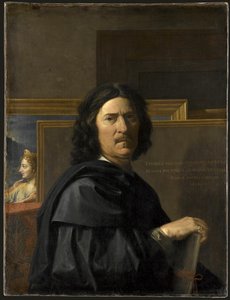
1645. Oil On Canvas, 120.0 x 187.0 cm. 프라도 미술관.

§ 1카탈로그 정보

- 120.0 x 187.0 cm


§ 2추상
수집품 상세 설명
 더 보기
더 보기
작가 프로필
르아블 프랑스 니콜라 푸생 르아블, 앙데리 고대 로마의 영향을 받아 고요하고 균형 잡힌 풍경과 신화 속 이야기를 담은 프랑스 바로크 화가 니콜라 푸생. 그의 작품은 18세기 네오클래식 미술에 큰 영향을 미쳤습니다. 바로크, 고전주의 자크 루이 다비드 라파엘로 1594년 1665년 니콜라 푸생 프랑스 게르마니쿠스의 죽음 프랑스 르아블 파리 3 니콜라 푸생은 주로 어느 도시에서 활동했습니까?
§ 3해설
Ideal Landscape by Nicolas Poussin
Nicolas Poussin, a name synonymous with the grandeur of French Baroque painting, was nonetheless a soul deeply rooted in Italian soil for much of his artistic life. Born in Les Andelys, Normandy, in June 1594, his early years remain somewhat veiled in mystery, yet they undoubtedly laid the foundation for a career that would become pivotal in shaping the classical tradition within French art. Though he briefly studied in Paris during the early 1610s, absorbing influences from lesser-known artists of the time, it was his journey to Rome in 1624 that truly ignited his artistic destiny. This wasn’t merely a geographical relocation; it was an immersion into the heart of antiquity, a pilgrimage to the very source of inspiration that would define his aesthetic vision. Poussin's initial forays into painting were marked by a sensuous quality reminiscent of Venetian masters like Titian, yet even in these early works, a nascent sense of order and intellectual rigour began to emerge—a characteristic that would become central to his oeuvre. His fascination with classical art—particularly the sculptures of Michelangelo and Raphael—immediately captivated him, propelling him toward Rome where he spent most of his artistic life. There, amidst the humanist fervor of the papal court and the burgeoning rediscovery of Greco-Roman texts and monuments, Poussin honed his skills and developed a distinctive style that prioritized clarity, logic, and harmonious composition. He cultivated relationships with influential patrons like Cardinal Francesco Barberini and Cassiano dal Pozzo, who championed his artistic endeavors and encouraged him to explore ambitious mythological narratives imbued with moral significance. These commissions allowed him to refine his technique—primarily oil on canvas—employing meticulous brushwork and subtle tonal gradations to achieve breathtaking realism while simultaneously conveying profound spiritual contemplation. “Ideal Landscape,” created in 1645, exemplifies Poussin’s mastery of this approach. Measuring 120 x 187 cm and housed at the Museo del Prado in Madrid, Spain, it represents a cornerstone of Baroque landscape painting—a genre that sought to elevate the natural world into an arena for philosophical reflection. The scene depicts a serene vista featuring a group of figures riding horses in the foreground, skillfully arranged against a backdrop of distant mountains bathed in soft sunlight. This careful orchestration of perspective and light—a hallmark of Poussin’s style—creates an illusion of depth and grandeur that draws the viewer into the idyllic realm depicted. Beyond its technical brilliance, “Ideal Landscape” resonates with powerful symbolic meaning. The horses themselves symbolize freedom and nobility, mirroring the humanist ideals prevalent during the period. Furthermore, the figures scattered throughout the landscape represent humanity's harmonious relationship with nature—a theme frequently explored by Poussin in his mythological compositions. Like many Baroque artists, Poussin aimed to inspire awe and contemplation through his art, conveying not merely visual beauty but also moral virtue. The painting’s enduring appeal lies in its ability to transport viewers back to a time of intellectual curiosity and artistic innovation—a testament to the lasting legacy of Nicolas Poussin's vision. The Museo del Prado houses this masterpiece alongside numerous other works by Poussin, offering visitors an unparalleled opportunity to immerse themselves in the splendor of Baroque art and appreciate the profound influence of classical antiquity on French painting. Its meticulous detail and luminous palette continue to captivate audiences today, cementing Poussin’s place as one of the most celebrated artists of his era.질의응답
"Ideal Landscape"을(를) 완성한 예술가와 화풍은 무엇인가요?
"Ideal Landscape"은(는) 니콜라 푸생의 작품으로, Baroque 운동을 대표합니다.
현재 니콜라 푸생의 "Ideal Landscape"은(는) 어디에서 관람할 수 있나요?
Ideal Landscape의 원작은 프라도 미술관, Madrid, Spain에서 만나보실 수 있습니다.
니콜라 푸생의 "Ideal Landscape"의 전체적인 분위기는 밝은 편인가요, 아니면 어두운 편인가요?
니콜라 푸생의 "Ideal Landscape"의 느껴지는 밝기는 shadow입니다. 이는 배치할 공간의 조명과 자연스럽게 어우러집니다.


 프린트 판매로 전환


 가로 또는 세로 중 어느 한 면이라도 105cm(약 41인치)를 초과하는 작품이나 복제화의 경우, 프레임은 분해된 키트 형태로 배송됩니다. 이는 안전한 배송을 보장하고 운송 중 발생할 수 있는 손상을 방지하기 위함입니다.


