100일 환불 보장 전 세계 무료 배송
449,564작품들 30,613아티스트 4,660박물관 32언어 설정
도록 정보

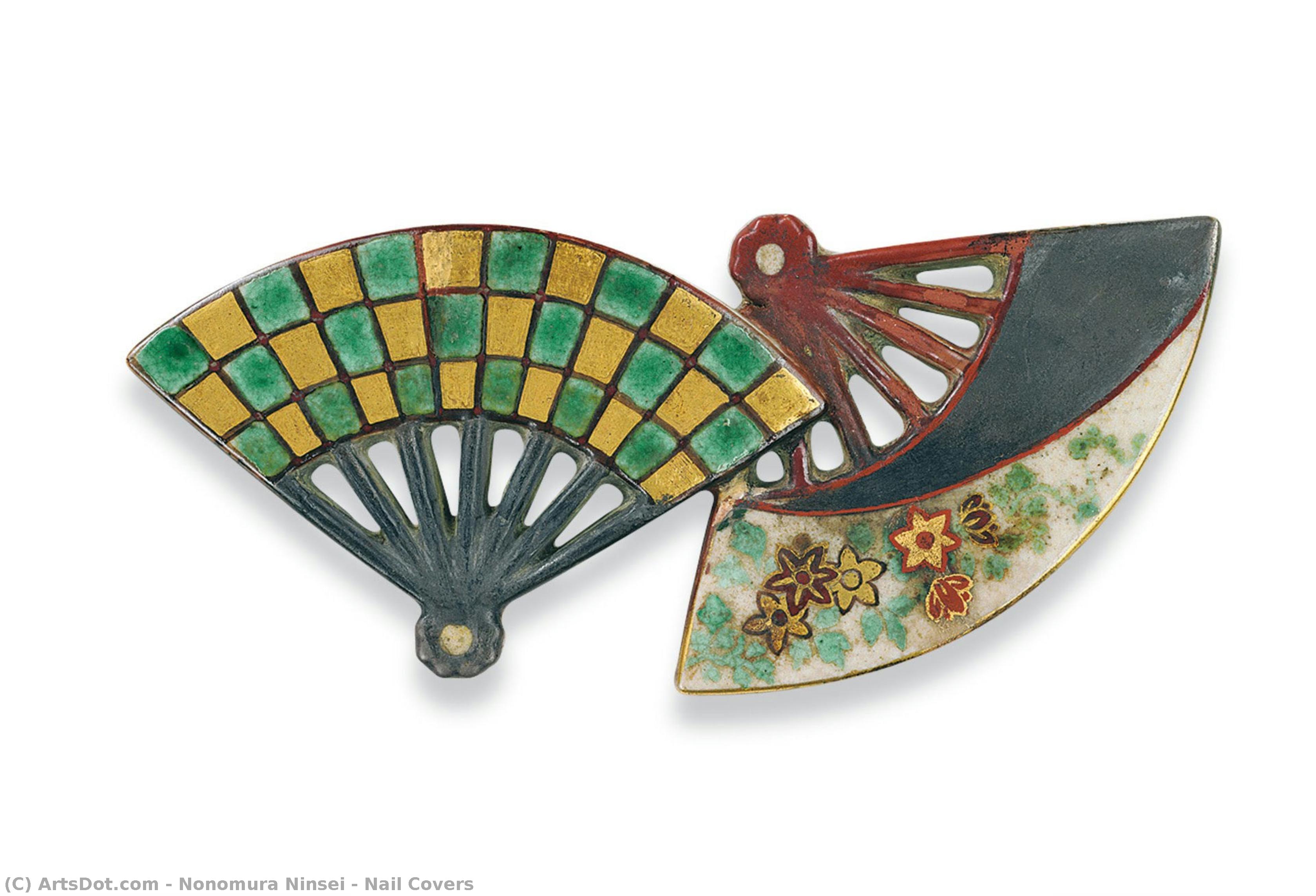
Nail Covers

.

도판 1. Nonomura Ninsei, Nail Covers. 선택하신 복제본의 모습입니다: , .

§ 1카탈로그 정보

§ 2추상

수집품 상세 설명

작가 프로필

Discover Nonomura Ninsei, a master of Kyō ware ceramics from Kyoto's Edo period. Known for graceful brushwork & exquisite designs, explore his iconic nail covers and tea jars.

§ 3해설

These ceramic pieces seem to replicate inlaid metal cloisonné nail covers. They were biscuit fired before being given a coating of transparent glaze for a principal firing, and then decorated with polychrome paints, which were in turn fired onto the surface. Because gold paint cannot be fired together with other colors, these pieces must have passed through the kiln at least four times before completion.The nail covers were passed down in the Kyōgoku family of Muragame. A record of tea ware dating from 1695, when Kyōgoku Takamochi (1692–1724) was clan chief, contains the entry “thirty paired fans, Omuro overglaze enamel fanshaped nail covers”, of which seventeen are thought to correspond to these items. “Omuro” indicates that the pieces were produced in the kiln of the early Edo-period Kyoto-ware master craftsman Nonomura Ninsei, whose work was known as Omuro-yaki. The chrysanthemum-shaped nail covers are mentioned in the 1734 On’in onsukidōgu chō (Catalogue of Tea Ware), which dates from the period when Kyōgoku Takanori (1718–63) was domain chief.Although these small pieces bear neither seal nor signature, the broad range of overglaze colors—gold, silver, red, blue, green—closely resemble those on the Kyōgoku family’s collection of Omuro-yaki overglaze-enameled tea jars and clearly display Ninsei’s salient features.

질의응답

"Nail Covers"은(는) 빛과 어둠의 균형을 어떻게 맞추고 있나요?

Nonomura Ninsei의 "Nail Covers"의 밝기는 brilliant로 기록되었으며, 휘도는 Luminous입니다.

Nonomura Ninsei의 "Nail Covers"의 전체적인 분위기는 밝은 편인가요, 아니면 어두운 편인가요?

전반적으로 "Nail Covers"의 밝기는 brilliant로 기록되었습니다. 인지된 밝기는 작품이 얼마나 밝거나 어둡게 느껴지는지를 나타냅니다.

"Nail Covers"과(와) 유사한 작품이 더 있을까요?

Nonomura Ninsei의 "Nail Covers"의 유사한 작품들 페이지에서 관련 작품들을 만나보세요.

§ 4작가 소개

Nonomura Ninsei

Nonomura Ninsei

1600 - 1670, Japan

Nonomura Ninsei에 관한 주요 정보

  • Full Name: Nonomura Seisuke / Ninsei
  • Nationality: Japanese
  • Date Of Birth: 1600
  • Date Of Death: 1670
  • Place Of Birth: Kyoto, Japan
  • Notable Artworks:
    • Tea Leaf Jar
    • Nail Covers
  • Artistic Movement Or Style: Kyō ware / Rinpa Style
  • Artists Who Influenced This Artist: ['Kawamori Sowa']
  • Artists Or Movements Influenced By This Artist: ['Ogata Kōrin']

작가 정보

Nonomura Ninsei (1600 - 1670): The Soul of Kyō Ware

Nonomura Ninsei (野々村仁清), born around 1600 in Tamba, Hyogo Prefecture, remains an enigmatic figure within the annals of Japanese ceramics. Despite limited biographical details—primarily gleaned from records pertaining to his patronage by Prince Yoshitada of Ninna Temple—his legacy endures as one of the most influential artists of Kyoto’s Edo Period (1644-1868), fundamentally shaping the aesthetic sensibilities of Kyō ware, a style celebrated for its understated elegance and profound connection to nature.

Ninsei's artistic journey began with apprenticeships in Seto, mastering the techniques of glaze formulation and vessel construction—skills that would later inform his distinctive approach to kiln firing. Recognizing the importance of tradition alongside innovation, he established Omuro Kiln (أموروكيلن), strategically positioned before Ninna Temple’s gate, securing a vital connection to the influential tea ceremony movement.

Early Life & Training

Information about Ninsei's formative years is scarce. However, scholarly consensus suggests that he originated from Tamba, a region renowned for its ceramic tradition. His early training likely encompassed both practical craftsmanship and philosophical contemplation—elements crucial to understanding the ethos underpinning his artistic output.

Kyō Ware: A Singular Style

Ninsei’s contribution to Kyō ware transcends mere technical proficiency; he cultivated a singular aesthetic characterized by graceful brushwork, meticulously rendered grasses, blossoms, and birds. Unlike many of his contemporaries who prioritized elaborate ornamentation, Ninsei championed simplicity—a deliberate choice that allowed for the subtle expression of natural beauty.

His vessels possessed an unparalleled harmony between form and decoration, reflecting Zen Buddhist principles of emptiness and contemplation. The kiln firing technique itself was perfected by Ninsei, resulting in a distinctive glaze surface texture that further enhanced the visual impact of his creations. This meticulous attention to detail distinguishes Kyō ware from other ceramic styles.

Collaboration & Influence

Ninsei’s artistic partnership with his elder brother, Ogata Kōrin (1648-1715),—who established Rinpa style—represents a pivotal moment in Japanese art history. Kōrin's influence extended beyond Kyō ware, fostering a broader appreciation for naturalism and refined taste.

Ninsei’s work served as inspiration for subsequent generations of ceramists, cementing his position as a cornerstone of Rinpa aesthetics. His legacy continues to resonate within the Kyoto ceramic tradition today, reminding us that true artistic excellence resides in understated beauty and profound contemplation.

Notable Achievements & Legacy

Ninsei’s most celebrated achievements include the creation of numerous tea jars—particularly those adorned with depictions of flowering plum trees—which exemplify his mastery of brushwork and glaze technique. These vessels are revered for their exquisite proportions and harmonious integration of design elements, embodying the ideals of Kyō ware.

Furthermore, Ninsei’s involvement in decorating temple halls and residences underscored his role as a cultural icon—a symbol of Kyoto’s artistic heritage. His influence extends beyond ceramics, permeating broader aesthetic sensibilities and shaping perceptions of beauty within Japan.

Conclusion

Nonomura Ninsei's life may have been shrouded in obscurity, yet his impact on Kyō ware and Rinpa style remains indelible. He stands as a testament to the power of quiet contemplation and meticulous craftsmanship—principles that continue to inspire artists and collectors alike. His enduring legacy ensures that the soul of Kyoto’s ceramic tradition will forever be associated with the name Nonomura Ninsei.

§ 5관련 작품

§ 6문의사항

§ 7이 항목 인용하기

AllPaintingsStore.com, “Nonomura Ninsei, Nail Covers”, https://allpaintingsstore.com/ko/art/nonomura-ninsei-nail-covers-D5DL2R-en/ArtistReproduction/ (접속일 9 10월 2026).

§ 8복제본

핸드메이드 유화 복제화

작가가 직접 캔버스에 손으로 그린 유화 작품으로, 원하는 크기와 액자로 맞춤 제작해 드립니다. ( 프린트 판매로 전환 디지털 이미지로 전환)

주문서 여백에 명시되어 있으며, 해당 주문서의 현재 상태는 다음과 같습니다.

Nail Covers

재현 기법

복제본 크기

-

엄선된 시니어 아티스트

더욱 세밀한 묘사와 정교함, 그리고 충분한 제작 시간

-

복제화 액자 구성

-

-

가로 또는 세로 중 어느 한 면이라도 105cm(약 41인치)를 초과하는 작품이나 복제화의 경우, 프레임은 분해된 키트 형태로 배송됩니다. 이는 안전한 배송을 보장하고 운송 중 발생할 수 있는 손상을 방지하기 위함입니다.

전문가 조립 권장 - 본 제품은 DIY용이 아닙니다.
해당 키트는 숙련된 전문 프레임 제작자가 목공용 풀(별도 구매), 캔버스 스트레칭 플라이어 및 풀이 마르는 동안 나무 틀의 수평을 유지할 클램프를 사용하여 캔버스를 팽팽하게 고정하고 조립해야 합니다. 잘못된 조립이나 불균형한 캔버스 장력은 작품에 영구적인 손상을 입힐 수 있으며, 이로 인한 손상은 보증 범위에 포함되지 않습니다.

  • 모든 원목 부재가 포함되어 있으며, 조립에 딱 맞게 정밀하게 재단되었습니다.

  • 제공된 나사와 함께, 별도로 준비해야 하는 모서리 접합부용 목공용 풀을 사용하여 조립합니다. (목공용 풀은 포함되어 있지 않으므로 제작자께서 직접 준비해 주셔야 합니다.)

  • 전문가용 도구가 필요하며 키트에 포함되어 있지 않습니다: 캔버스 스트레칭 플라이어(텐셔너)와 접착제가 마르는 동안 나무 틀의 수평을 유지하기 위한 클램프가 필요합니다.

주의사항:
모서리 접합부에는 목공용 풀이 필요하며, 풀이 완전히 마를 때까지 클램프로 바(bar)를 고정해야 합니다. 또한 조립된 프레임에 캔버스를 팽팽하게 당기려면 캔버스 스트레칭 플라이어가 필요합니다. 이 제품들 중 어느 것도 키트에 포함되어 있지 않습니다. 이 사이즈를 주문하시기 전에 숙련된 전문 액자 제작업체를 미리 섭외하시기 바랍니다.

작품 설명문

-

-

보호용 바니시

유광 바니시(색감을 선명하게 하며 빛과 습기로부터 보호함)

-

내 작품 맞춤 설정

변경 가능한 예시: 얼굴을 고객의 사진으로 교체, 반려동물 추가(예: 고양이를 강아지로 변경), 배경에 숨겨진 메시지 삽입, 배경 풍경 또는 요소 변경.

-

빠른 배송

전 세계 배송()은 기존 5주의 표준 기간 대신 3~4주 내에 완료됩니다. (6 11월). 품질에는 어떠한 타협도 하지 않습니다.

-

특급 배송

전 세계 배송(): 약 5주 소요 (13 11월).

포함됨

최종 결제 금액

₩ 346324

모든 주문에 포함되는 혜택

  • 전 세계 무료 특급 배송
  • 프리미엄 린넨 캔버스
  • 배송 전 과정 보험 적용
  • 관세 및 수입세 환급 보장 서비스
  • 원본과 동일한 색상 구현 보장
  • 100일 이내 반품 정책 (결함 발생 시)
  • 100% 환불 보장
  • 다량 구매 할인 혜택
주문서