

1971. Ink On Paper.

§ 1Catalogue data


본 작품은 저작권법의 보호를 받습니다.
이 페이지에 표시된 작품은 저작권법의 보호를 받으며, 이에 따라 동일한 복제품을 제작하거나 판매하는 것은 법으로 금지되어 있습니다. 이러한 권리 보호는 다음과 같은 국제 협약에 따라 시행됩니다. 베른 협약 또한 다음에서 명시하는 법률을 포함한 국내법에 의해 보호됩니다. 미국 저작권법 제17조.
저희는 존중을 담은 합법적인 대안으로서, 원작에서 영감을 받은 맞춤형 수제 유화 작품을 제공합니다. 저희의 숙련된 전문 화가들은 원작의 스타일, 분위기, 예술적 정수를 면밀히 연구하여, 그 자체로 독창적인 창작물이면서도 원작과 동일한 감동을 불러일으키는 새로운 작품을 만들어냅니다.
이 방식은 저작권 보호를 받는 예술 작품을 복제하거나 그대로 재현하는 것이 아니기에 저작권 규정을 완벽히 준수합니다. 대신, 이는 창의적인 재해석의 과정을 거칩니다. 즉, 원작에서 영감을 받되 원작과 동일하지 않은 새로운 회화 작품을 의미합니다.
 상세 보기
상세 보기§ 2Abstract
컬렉션 상세 정보
A striking Cubist monochrome drawing by Pablo Picasso from 1971 explores the surreal tension between a regal figure and a nude form through geometric abstraction, inviting you to explore this masterpiece of duality.
작가 소개
파블로 피카소(1881-1973)는 입체주의의 공동 창시자이자 다양한 화풍을 선보인 혁명적인 스페인 화가 및 조각가입니다. <구르니카>와 <아비뇽의 처녀들> 같은 상징적인 작품으로 잘 알려져 있으며, 그의 예술적 유산은 오늘날에도 계속해서 영감을 주고 있습니다.
§ 3Commentary
A Surreal Dialogue Between Power and Vulnerability
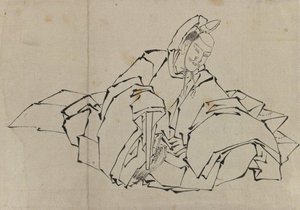
In the vast, revolutionary canon of Pablo Picasso, few works capture the profound tension of the human condition as intimately as "Untitled (63)". Created in 1971, during the twilight of his extraordinary life, this monochrome masterpiece serves as a hauntingly beautiful meditation on duality. The drawing does not merely present figures; it stages a silent, psychological drama between two opposing forces. On one side, we encounter a figure of imposing authority—a queen-like presence seated upon a throne of sharp, geometric precision. Her form is constructed from rigid, angular planes that evoke the unyielding nature of power and tradition. Yet, this structural strength finds its perfect, poignant counterpoint in the nude female figure positioned to the right. Rendered with flowing, organic contours and soft, curvilinear lines, she embodies a sense of raw vulnerability and natural grace. It is a composition that breathes with an unspoken exchange, inviting the viewer to witness a subtle challenge to established norms.
The emotional resonance of this piece lies in its ability to evoke both unease and profound contemplation. As one gazes upon the bifurcated canvas, the eye is drawn into the friction between the architectural stability of the seated figure and the fluid, ephemeral beauty of the nude form. This juxtaposition creates a sense of surrealism that transcends simple figuration, touching upon universal themes of dominance and fragility. For the collector or the interior designer, this artwork offers more than just visual interest; it provides a focal point of intellectual depth. It is a piece that demands presence in a room, acting as a window into the complexities of perception and the eternal dance between the structured world we build and the organic reality we inhabit.
Mastery of Line and the Cubist Legacy
Technically, "Untitled (63)" is a triumph of Picasso’s late-period mastery, showcasing his ability to manipulate the simplest of mediums—pen and ink on paper—to achieve extraordinary depth. The artwork is a testament to the enduring influence of Cubism, yet it moves beyond mere fragmentation into a more lyrical, expressive territory. Picasso utilizes a sophisticated array of hatching and cross-hatching techniques to sculpt light and shadow from the void. These meticulous lines do not merely define edges; they create texture and volume, giving weight to the throne's heavy geometry while lending a soft, tactile quality to the flowing hair and skin of the female figure. The monochromatic palette, stripped of the distractions of color, forces the viewer to focus entirely on the rhythm of the strokes and the interplay of black and white.
The flattened perspective, a hallmark of the Cubist movement, serves a vital symbolic purpose here. By disrupting conventional spatial depth, Picasso prevents the viewer from becoming a passive observer; instead, we are forced to navigate multiple viewpoints simultaneously, much like the multifaceted nature of truth itself. The use of sharp triangles and rectangles in the left portion of the composition reinforces a sense of structural permanence, while the more fluid, organic shapes on the right suggest movement and life. This technical brilliance ensures that every time one views a high-quality reproduction of this work, new details emerge from the shadows—a new layer of texture, a sharper angle, or a softer curve—making it an endlessly captivating addition to any curated collection of modern art.
질의응답
"Untitled (63)"의 작가와 제작 연도는 무엇인가요?
"Untitled (63)"은(는) 1971년에 파블로 피카소에 의해 제작되었습니다.
"Untitled (63)"은 전체적으로 밝은 편인가요, 아니면 어두운 편인가요?
파블로 피카소의 "Untitled (63)"의 밝기는 brilliant로 기록되었으며, 휘도는 Luminous입니다.
파블로 피카소의 "Untitled (63)"은 어느 시대의 작품인가요?
"Untitled (63)"은(는) Modern 시대의 작품입니다.





 프린트 판매로 전환


 가로 또는 세로 중 어느 한 면이라도 105cm(약 41인치)를 초과하는 작품이나 복제화의 경우, 프레임은 분해된 키트 형태로 배송됩니다. 이는 안전한 배송을 보장하고 운송 중 발생할 수 있는 손상을 방지하기 위함입니다.


