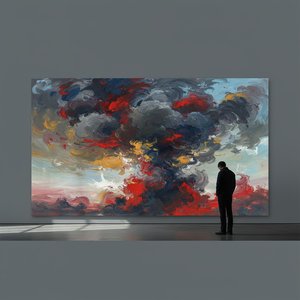
1938. Oil On Board, 51.0 x 76.0 cm.

§ 1카탈로그 정보

- 51.0 x 76.0 cm


§ 2추상
수집품 상세 설명
Explore Jackson Pollock’s groundbreaking Abstract Expressionist masterpiece, 'The Flame,' capturing raw energy and vibrant hues in 1938—a mesmerizing testament to spontaneous artistry and a captivating glimpse into the formative years of American modernism.
 더 보기
더 보기
작가 프로필
잭슨 폴록(1912-1956)은 추상 표현주의의 선구자입니다. 드리핑 기법으로 대표되는 혁신적인 작품 세계를 탐험하고 현대 미술에 지대한 영향을 미쳤습니다. #추상표현주의 #드리핑
§ 3해설
Visual Composition and Materiality
The painting The Flame consists of oil on fiberboard, measuring 51 x 76 cm. The surface features a central motif of an incandescent blaze that moves through an amorphous expanse. Dark tones dominate the background, providing a foundation for bursts of crimson, ochre, and cadmium red. Scattered throughout this composition are avian figures. These birds are positioned within the swirling hues, appearing amidst the larger movement of the central element. The application of paint involves thick layers and heavy brushwork that creates a textured surface.
The color palette relies on the contrast between deep, dark pigments and bright yellows and whites. Lines of color intersect across the canvas in a way that suggests motion. While the work contains recognizable shapes like birds and fire, the edges of these forms are often blurred by the surrounding splatters and fluid applications of pigment.
Technique and Artistic Development
Created in 1938, this work reflects an era of experimentation with spontaneous gesture. The technique utilizes a method where paint is poured, dripped, or splashed onto the surface, allowing gravity to influence the resulting patterns. This approach moves away from traditional, meticulous brushstrokes toward a more fluid and automatic process. The physical act of applying the medium creates interwoven lines and textures that capture energy in a tangible form.
The method shows an early interest in the movement and transformation found in fire. It incorporates elements of rhythmic composition influenced by Regionalist aesthetics and the powerful imagery of Mexican muralism. The use of specific colors, such as burnt umber alongside bright reds, indicates an engagement with the visual language of Native American art. This period of work precedes the more famous all-over drip paintings, representing a transition toward a freer, more expressive style of abstraction.
Symbolic Elements and Context
The central theme of the painting centers on fire as a metaphor for creative energy and spiritual rebirth. The flames engulfing the scattered birds suggest a state of transformation. These avian figures represent instinct and freedom, placed strategically to interact with the surrounding heat. The dark, brooding colors of the background contribute to a sense of tension and unrestrained potential.
Historically, the work emerged during a time of significant artistic shifts, including the influence of Surrealist principles and the concept of automatism. This involves channeling the subconscious into the creative process. The painting functions as a record of movement, where the interplay of light and dark tones mirrors the primal force of an actual blaze. Through its use of color and form, the work communicates a sense of internal change and the raw power of natural elements.
질의응답
"The Flame" 작품은 어떤 사이즈로 출력하는 것을 추천하시나요?
폴 잭슨 폴록의 "The Flame" 작품은 Small 크기의 복제본을 추천합니다. 비율을 유지하면서 크기를 조정할 수 있습니다.
폴 잭슨 폴록의 "The Flame"은(는) 회화인가요, 드로잉인가요, 아니면 판화인가요?
폴 잭슨 폴록의 "The Flame"은(는) WallArt로 분류됩니다. 이 카테고리는 해당 작품의 예술적 형식을 나타냅니다.
폴 잭슨 폴록의 "The Flame"에 대한 안내 페이지가 있나요?
폴 잭슨 폴록의 "The Flame"에 대한 학습 가이드 페이지를 이용하실 수 있습니다. 이 페이지는 학생들과 수업용으로 제작된, 인쇄 가능한 작품 정보 시트를 제공합니다.


 프린트 판매로 전환


 가로 또는 세로 중 어느 한 면이라도 105cm(약 41인치)를 초과하는 작품이나 복제화의 경우, 프레임은 분해된 키트 형태로 배송됩니다. 이는 안전한 배송을 보장하고 운송 중 발생할 수 있는 손상을 방지하기 위함입니다.