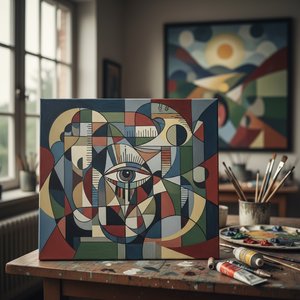
Watercolor.

§ 1카탈로그 정보


§ 2추상
수집품 상세 설명
Paul Klee's 'Rose Wind' is an evocative abstract painting featuring swirling reds and oranges punctuated by circles and triangles, capturing the artist’s signature blend of musical inspiration and expressive form. Explore a stunning reproduction on canvas.
 더 보기
더 보기
작가 프로필
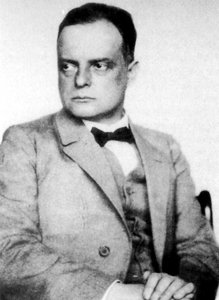
파울 클레는 표현주의와 쿠비즘 등 다양한 예술 사조에 영향을 받은 스위스 화가로, 독특한 색채 이론과 음악적 감성을 담은 작품들로 미술사에 영감을 불어넣었습니다. 그의 대표작은 아름다운 정원 풍경화와 기발한 상징으로 가득 찬 그림들이며, 현대 미술의 아이콘으로 기억됩니다.
§ 3해설
A Symphony in Color: Exploring Paul Klee’s Rose Wind
The moment one encounters Rose Wind, there is an immediate sense of being swept into a rhythmic, breathing landscape of pigment and form. Painted in 1938 during the artist's time in Davos, Switzerland, this masterpiece stands as a profound testament to Paul Klee’s unwavering commitment to abstraction and his deep engagement with the expressive potential of color. More than just a depiction of a flower, the painting embodies a complex interplay of visual elements that invite contemplation and resonate deeply within the viewer's psyche. It represents a pivotal moment in Klee’s artistic evolution, marking a departure from earlier figurative works towards a more liberated exploration of form and pigment, where the boundaries between the organic world and pure geometric thought begin to dissolve.The Dance of Organic Geometry
Klee’s distinctive style is characterized by what he famously termed “organic geometry,” a concept intended to convey his belief that geometric forms should be imbued with life-affirming qualities. In Rose Wind, this approach is executed brilliantly through the use of concentric circles that dominate the composition. These circular shapes are not merely decorative; they pulsate with an internal energy, subtly suggesting the swirling motion of a breeze—a visual echo of the painting’s title. A large central circle serves as the heart of the piece, acting as a stylized rose, while smaller surrounding circles create a layered effect that adds immense depth and textural richness. Intersecting lines and triangular shapes weave throughout the canvas, establishing a dynamic visual rhythm that contrasts beautifully with the smooth, flowing curves of the circles. Through the delicate layering of watercolor and gouache on paper, Klee achieved an ethereal luminosity, capturing the fleeting, translucent beauty of natural phenomena.Reflections of a Turbulent Era
To understand the emotional weight of this work, one must consider the historical context of its creation. In 1938, Davos was a city gripped by the mounting anxieties of the escalating tensions leading up to World War II. Klee, having sought refuge there after fleeing Nazi persecution in Berlin, infused his work with a sense of introspection and quiet resilience. The painting’s palette—primarily composed of warm reds, oranges, and yellows—offers a striking contrast to the period's pervasive gloom. These fiery tones do not merely represent color; they symbolize a flickering vitality amidst uncertainty. For collectors and interior designers alike, this piece offers a captivating balance of warmth and complexity, making it an ideal centerpiece for spaces that require a touch of intellectual depth and emotional warmth. Whether viewed as a study in abstract movement or a symbol of enduring life, Rose Wind remains a timeless jewel of 20th-century modernism.질의응답
폴 클레의 "Rose Wind" 복제본은 어떤 용도로 활용하기에 좋나요?
폴 클레의 "Rose Wind"은(는) Accent(으)로 활용하시기에 가장 좋습니다. 그 외에도 다양한 용도로 사용하실 수 있습니다.
"Rose Wind"은(는) 어떤 화풍에 속하나요?
"Rose Wind"은(는) Cubism 양식의 작품입니다. 이 사조는 해당 작품이 속한 예술적 전통을 나타냅니다.
폴 클레의 "Rose Wind"은(는) 퍼블릭 도메인에 해당하나요? 그 이유는 무엇인가요?
"Rose Wind"의 저작권 상태(퍼블릭 도메인 - 저작권 보호 기간이 만료되었습니다)는 작가의 1940년 사망 시점을 기준으로 결정됩니다.


 프린트 판매로 전환


 가로 또는 세로 중 어느 한 면이라도 105cm(약 41인치)를 초과하는 작품이나 복제화의 경우, 프레임은 분해된 키트 형태로 배송됩니다. 이는 안전한 배송을 보장하고 운송 중 발생할 수 있는 손상을 방지하기 위함입니다.