

Acrylic On Canvas.

§ 1카탈로그 정보

§ 2추상
수집품 상세 설명
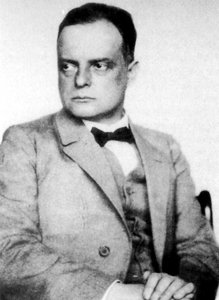
Employing a grayscale palette—ranging from whites to blacks—highlights form and texture over color variation.
 더 보기
더 보기
작가 프로필
파울 클레는 표현주의와 쿠비즘 등 다양한 예술 사조에 영향을 받은 스위스 화가로, 독특한 색채 이론과 음악적 감성을 담은 작품들로 미술사에 영감을 불어넣었습니다. 그의 대표작은 아름다운 정원 풍경화와 기발한 상징으로 가득 찬 그림들이며, 현대 미술의 아이콘으로 기억됩니다.
§ 3해설
A Quiet Reflection: Analyzing Paul Klee’s Self-Portrait
Paul Klee's "Self-portrait," executed in 1937, stands as a deceptively simple yet profoundly resonant testament to the artist’s enduring fascination with form and gesture. More than just a depiction of his likeness, it embodies Klee’s core artistic philosophy – an unwavering commitment to capturing essence rather than striving for photographic accuracy. The sketch, rendered in muted grayscale tones—primarily whites and blacks punctuated by subtle shading—immediately establishes a contemplative mood, inviting viewers into the artist's inner world.- Composition & Perspective: Klee employs a flattened perspective, characteristic of his early style, prioritizing visual harmony over illusionistic depth. The head and shoulders dominate the canvas, positioned centrally to draw the eye directly to the subject’s gaze – an unwavering stare that conveys both introspection and quiet confidence. Minimal background detail reinforces this focus, emphasizing the portrait's contemplative nature.
- Technique & Material: Crafted with graphite pencils on paper, “Self-Portrait” showcases Klee’s masterful use of hatching and crosshatching techniques. These meticulous lines build up tonal values with remarkable precision, creating a textured surface that mimics the physicality of pencil strokes. The artist eschews bold colors, opting instead for grayscale to heighten the expressive power of line and shape.
- Stylistic Influences & Expression: Klee’s approach aligns closely with his broader stylistic explorations—drawing inspiration from Cubism's fragmented perspectives and Surrealism’s dreamlike imagery. However, unlike many artists of his time who sought to convey emotion overtly, Klee prioritizes visual abstraction, suggesting feelings through carefully considered compositional choices and expressive lines.
- Symbolic Resonance: The artist’s attire—a cap and collared shirt with a tie—offers subtle symbolic cues. These elements speak to Klee's engagement with tradition while simultaneously reflecting his desire for artistic innovation. The simplicity of the sketch itself symbolizes an exploration of fundamental visual principles, mirroring Klee’s belief that art should transcend mere representation.
- Historical Context: Created during a period marked by political upheaval and uncertainty—specifically amidst Nazi persecution—the portrait reflects Klee's anxieties about his personal safety and artistic freedom. Yet, despite these concerns, the artwork retains an aura of serenity, suggesting resilience and unwavering dedication to creative pursuits.
질의응답
폴 클레의 "Self-portrait"은 어떤 소재와 분위기를 담고 있나요?
"Self-portrait"은(는) portrait sketch, monochromatic drawing, geometric forms, early style, minimal composition, line texture, psychological depth을(를) 담아내며, Calm한 분위기를 자아냅니다.
Self-portrait은(는) 폴 클레의 예술적 여정 중 어느 시기의 작품인가요?
"Self-portrait"은(는) 폴 클레의 예술적 생애 중 Early Style 시기의 작품입니다. 이 분류를 통해 해당 작품을 작가의 예술적 발전 과정과 연결해 볼 수 있습니다.
"Self-portrait"은(는) 저작권으로부터 자유로운가요?
저작권과 관련하여, "Self-portrait"은(는) 퍼블릭 도메인 - 저작권 보호 기간이 만료되었습니다 상태입니다.


 프린트 판매로 전환


 가로 또는 세로 중 어느 한 면이라도 105cm(약 41인치)를 초과하는 작품이나 복제화의 경우, 프레임은 분해된 키트 형태로 배송됩니다. 이는 안전한 배송을 보장하고 운송 중 발생할 수 있는 손상을 방지하기 위함입니다.


