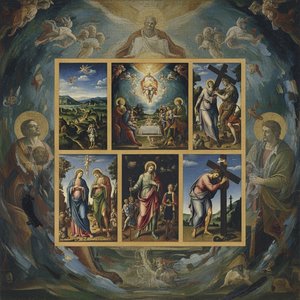
1795. Aquatint, 446.0 x 620.0 cm. 테이트 브리튼.

§ 1Catalogue data
 Aquatint
- WallArt
- Romanticism
 1795
1795- Early Modern
 446.0 x 620.0 cm
 테이트 브리튼
§ 2Abstract
컬렉션 상세 정보
A haunting portrayal of spiritual struggle through the agonizing figure of Nebuchadnezzar by Romantic visionary William Blake invites you to explore the profound depths of this iconic 1795 masterpiece.
 상세 보기
상세 보기
작가 소개
로맨틱 시대를 대표하는 영국의 화가 겸 시인 윌리엄 블레이크! '무고와 경험의 노래', '천국과 지옥의 결혼' 등 환상적인 이미지와 심오한 상징으로 가득 찬 작품들을 통해 인간 정신과 영혼을 탐구했습니다. 혁신적인 프린팅 기법과 독창적인 예술 세계는 후대 예술가들에게 큰 영향을 미쳤습니다.
§ 3Commentary
A Portrait of Spiritual Struggle: Exploring William Blake’s Nebuchadnezzar
William Blake's "Nebuchadnezzar," completed in 1795, stands as a haunting testament to the artist’s profound engagement with biblical prophecy and his deeply personal exploration of faith and doubt. More than just a depiction of a man kneeling in prayer—though that posture undeniably dominates the composition—the painting delves into layers of psychological complexity and symbolic resonance, cementing its place among Blake's most iconic works.- Subject Matter & Composition: The central figure embodies Nebuchadnezzar II, King of Babylon, a biblical monarch renowned for his defiance of divine authority. Blake portrays him in an agonizing position—kneeling on the ground with hands outstretched—a gesture that speaks to vulnerability and supplication. Surrounding him are two smaller figures, presumably representing angels or messengers, positioned above and to the left, emphasizing the disparity between earthly suffering and celestial grace.
- Style & Technique: Blake’s distinctive Romantic style is immediately recognizable through his masterful use of etching and aquatint—a technique he pioneered—allowing for incredible tonal gradation and textural detail. The artist meticulously rendered the cave-like setting, utilizing subtle shading to convey a sense of claustrophobia and isolation. This meticulous attention to detail underscores Blake's commitment to capturing not merely visual appearances but also emotional states.
Historical Context: Prophecy and Doubt in Enlightenment England
“Nebuchadnezzar” emerged during a period of significant intellectual ferment—the Enlightenment—where reason and scientific inquiry challenged traditional religious dogma. Blake’s work reflects this tension, grappling with questions of faith versus skepticism. The biblical narrative itself served as inspiration for Blake's contemplation on the nature of divine judgment and human responsibility. He wasn’t simply illustrating scripture; he was wrestling with its implications for his own spiritual beliefs.- Symbolism: The cave symbolizes the inner turmoil experienced by Nebuchadnezzar, mirroring Blake's own anxieties about reconciling faith and reason. The angels represent divine compassion and offer solace amidst despair—a recurring motif in Blake’s oeuvre. Furthermore, the posture of kneeling signifies humility before God, yet simultaneously conveys a palpable sense of anguish.
- Emotional Impact: “Nebuchadnezzar” powerfully communicates feelings of sorrow, vulnerability, and spiritual struggle. Blake's expressive use of line and tonal variation captures the psychological drama unfolding within the scene—drawing viewers into Nebuchadnezzar’s tormented state of mind. It is a portrait not just of a biblical king but also of the human condition itself.
Blake’s Revolutionary Printmaking Approach
Blake's innovative use of etching and aquatint represents a pivotal moment in printmaking history. Unlike conventional engraving, which relies on incising lines into metal plates, aquatint employs powdered resin applied to the plate surface before polishing it. This process creates tonal variations—gradations of light and dark—that surpass anything achievable with engraving alone. Blake’s mastery of this technique allowed him to produce images imbued with breathtaking subtlety and nuance, elevating printmaking to an art form in its own right.- Legacy: “Nebuchadnezzar” continues to resonate with audiences today as a symbol of spiritual introspection and artistic courage. Its enduring appeal lies in Blake’s ability to distill complex theological ideas into a visually arresting composition—a testament to his genius as both poet and painter.
질의응답
윌리엄 블레이크의 "Nebuchadnezzar"을(를) 홈 데코에 어떻게 활용할 수 있을까요?
윌리엄 블레이크의 "Nebuchadnezzar"은(는) Focal(을)를 위해 추천되며, Living Room에 배치하기에 가장 이상적입니다. 용도와 공간 정보를 함께 참고하여 작품의 위치를 결정해 보세요.
"Nebuchadnezzar"의 미리보기를 어디에서 볼 수 있나요?
윌리엄 블레이크의 "Nebuchadnezzar"의 미리보기를 작품의 미리보기 페이지에서 확인하실 수 있습니다.
윌리엄 블레이크의 "Nebuchadnezzar"은(는) 어떤 미술 사조에 속하나요?
윌리엄 블레이크의 "Nebuchadnezzar"은(는) Romanticism 사조에 속합니다. 이 사조는 해당 작품의 양식적 배경을 제공합니다.


 프린트 판매로 전환


 가로 또는 세로 중 어느 한 면이라도 105cm(약 41인치)를 초과하는 작품이나 복제화의 경우, 프레임은 분해된 키트 형태로 배송됩니다. 이는 안전한 배송을 보장하고 운송 중 발생할 수 있는 손상을 방지하기 위함입니다.