

Self Portrait Hand-painted oil painting – standard and custom sizes
Oil On Canvas.

§ 1Catalogue data


§ 2Abstract
컬렉션 상세 정보
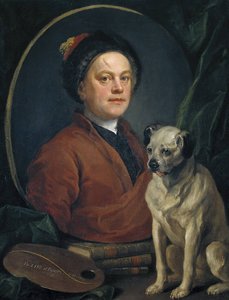
William Hogarth's 1757 Self Portrait showcases the artist at work, blending realism & Classicism. A glimpse into his creative process & artistic legacy.
 상세 보기
상세 보기
§ 3Commentary
An Encounter with the Artist's Soul
In the quiet intimacy of his studio, William Hogarth presents us with more than just a likeness; he offers a profound window into the very essence of Enlightenment observation. His Self-Portrait is a masterclass in capturing the intersection of personal identity and professional dedication. As we gaze upon this oil on canvas, we find ourselves seated alongside the artist, witnessing a moment of focused creation. Hogarth depicts himself not as a distant figure of myth, but as a man deeply engaged with his craft, his hands holding the tools of his trade—the brush and palette—while his eyes remain fixed upon the unseen canvas before him. This directness creates an immediate emotional bond between the viewer and the subject, inviting us to participate in the silent, sacred ritual of artistic production.
The composition is a delicate balance of grandeur and domesticity, structured with the deliberate grace of Baroque principles. While the central positioning of Hogarth establishes a sense of importance and stability, the inclusion of his small pug dog introduces a tender, humanizing element. This canine companion, sitting attentively by his side, serves as a poignant symbol of loyalty and companionship, grounding the formal portrait in a relatable, lived reality. The arrangement suggests a world where high intellectual pursuit and simple, everyday affection coexist harmoniously, making the piece deeply resonant for anyone who finds beauty in the quiet moments of life.
The Mastery of Light and Line
Technically, this portrait is a testament to Hogarth’s extraordinary command over Classicism. Eschewing the flamboyant and opulent colors that often characterized his contemporaries, Hogarth employs a restrained and sophisticated palette dominated by muted browns, creams, and subtle tonal gradations. This choice of color serves to emphasize clarity and precision, allowing the viewer to focus on the meticulous textures of the scene. His brushwork is smooth and expertly blended, a skill likely refined during his early years as an engraver. Through careful layering of paint, he achieves a sense of volume and form that breathes life into the fabric of his clothing and the soft fur of his companion.
The interplay of light and shadow within the work is subtle yet transformative. Rather than relying on dramatic, theatrical lighting, Hogarth uses a more diffused approach to define the contours of his face and the physical space around him. This technique creates a sense of realism that aligns perfectly with the Enlightenment's fascination with empirical truth. For the collector or interior designer, this understated elegance makes the piece incredibly versatile; it possesses a timeless quality that can anchor a room with its intellectual depth and quiet strength, providing a sophisticated focal point that rewards prolonged contemplation.
A Legacy of Observation
To understand this self-portrait is to understand the spirit of mid-18th-century London. Created during a period when reason and scientific inquiry were reshaping the world, Hogarth’s work embodies the era's commitment to portraying reality without embellishment. He stands as a visual historian, using his art to document not just faces, but the very character of an age. The portrait reflects a man who is both a creator and a critic, someone whose gaze is trained to see the truth beneath the surface of social convention.
Owning a reproduction of this masterpiece is an opportunity to bring a piece of art history's most observant minds into one's personal space. It is an invitation to value precision, to celebrate the beauty of the real, and to surround oneself with the enduring spirit of human curiosity. Whether displayed in a library, a study, or a contemporary living space, this Self-Portrait serves as a constant reminder of the power of the observant eye and the profound dignity found in dedicated labor.
질의응답
"Self Portrait" 작품은 어떤 사이즈로 출력하는 것을 추천하시나요?
"Self Portrait" 작품은 Small 인쇄 크기를 권장합니다. 동일한 비율의 다른 사이즈로도 제작 가능합니다.
윌리엄 호가스의 "Self Portrait"의 색채 정체성은 무엇인가요?
윌리엄 호가스의 "Self Portrait"은(는) Earthy 색조의 팔레트를 사용하며, Gray (#6d6c6b)이(가) 주된 색상을 이룹니다.
"Self Portrait"은(는) 윌리엄 호가스의 반복되는 주제들 사이에서 어떤 위치를 차지하고 있나요?
"Self Portrait"은(는) portraiture, self-representation, domesticity, satirical art, british art, animal companion, 18th century을(를) 묘사하고 있는 반면, 윌리엄 호가스의 기존 주제들은 social critique, classical tradition, british society, artist identity, visual narrative입니다. 이 두 가지를 비교해 보면 해당 작품이 작가의 통상적인 소재와 어떻게 연관되는지 알 수 있습니다.
§ 4The artist
윌리엄 호가스
1697 - 1764, 영국
Quick facts about 윌리엄 호가스
- Artistic Movement Or Style: 풍자적 사실주의
- Artists Who Influenced This Artist:
- 피에르 드 호흐
- 존athan 스위프트
- Date Of Birth: 1697년
- Date Of Death: 1764년
- Full Name: William Hogarth
- Nationality: 영국인
- Notable Artworks:
- 해치와이드 프로그레스
- 라크스 프로그레스
- 결혼 모드
- Place Of Birth: 런던 영국
작가 소개
A London Life in Ink and Paint: The World of William Hogarth
William Hogarth, born into the bustling heart of 18th-century London in 1697, was more than just an artist; he was a visual historian, a keen observer of human nature, and a satirical commentator on the societal currents of his age. His life story is inextricably linked to the very fabric of England during a period of significant transformation – its burgeoning ambitions, underlying anxieties, and pervasive hypocrisies all finding potent expression in his remarkably detailed and often biting works. The son of a struggling Latin schoolmaster, Hogarth’s early experiences instilled within him both a love for learning and a sharp awareness of social inequalities, a foundation that would prove crucial to shaping his artistic vision. Initially apprenticed to an engraver, he quickly demonstrated a talent extending beyond mere technical skill; he possessed an innate ability to observe the nuances of human behavior and translate them into compelling visual narratives. However, he chafed against the constraints of traditional engraving, seeking a more expressive outlet for his burgeoning creativity. This led him to studies at both St Martin’s Lane Academy and under Sir James Thornhill, where he honed his skills in painting and composition, absorbing influences that would later inform his unique style.The Birth of Modern Moral Subjects
Hogarth's true innovation lay not simply *what* he painted, but *how*. He pioneered what he termed “modern moral subjects” – series of pictures designed to tell a story, often imbued with a strong satirical edge. These weren’t isolated portraits or landscapes; they were visual novels unfolding before the viewer’s eyes, offering pointed commentary on contemporary society. A Harlot's Progress, created in 1742, stands as perhaps his most famous example. This series of six paintings meticulously follows the tragic downfall of Mary, a young woman arriving in London full of hope but quickly succumbing to the temptations and dangers of city life. Each scene is rendered with painstaking detail, filled with symbolic elements that reveal the moral decay surrounding her. The figures are portrayed with unflinching realism, capturing every gesture and expression with remarkable accuracy—a deliberate departure from idealized depictions prevalent at the time. Similarly, A Rake's Progress, begun in 1733, charts the reckless decline of Tom Rakewell, a man who squanders his inheritance on gambling, debauchery, and ultimately, madness. These weren’t merely cautionary tales; they were unflinching portraits of a society grappling with issues of class, morality, and social mobility. Hogarth's genius resided in his ability to elevate everyday scenes – the bustling streets of London, the opulent interiors of the wealthy, the squalid lives of the poor – into works of art that resonated deeply with his audience. He didn’t shy away from depicting the harsh realities of life, presenting them with a blend of humor and pathos that forced viewers to confront uncomfortable truths about themselves and their society.Technique and Influences: A Synthesis of Styles
Hogarth's artistic style was a unique amalgamation of diverse influences. He greatly admired the realism and narrative detail found in the works of Dutch genre painters like Pieter de Hooch, evident in his meticulous depictions of interiors and everyday life. The expressive dynamism of Rembrandt’s portraits also captivated him—a testament to his ability to convey emotion through subtle shading and composition. Furthermore, Hogarth was profoundly impacted by the satirical prints produced in France during the Enlightenment, particularly those of Jean-Honoré Fragonard and François Boucher, whose playful use of color and illusion inspired him to experiment with new visual techniques. However, Hogarth wasn’t simply imitating these sources; he was synthesizing them into something entirely new and distinctly his own. His technique was characterized by a masterful use of line and shading, particularly evident in his engravings. He employed a distinctive cross-hatching technique that created depth and texture, bringing his scenes to life with remarkable clarity—a method perfected through years of diligent practice. This meticulous approach allowed him to capture the subtleties of human expression and convey complex narratives with precision and power. Beyond visual art, Hogarth was influenced by literary works, particularly those of Jonathan Swift and Henry Fielding, whose satirical wit informed his own social observations. He believed that art should not merely be beautiful but should also serve a moral purpose, challenging viewers to think critically about the world around them and their place within it. He sought to hold a mirror up to nature, reflecting both its beauty and its ugliness with unflinching honesty.Major Achievements and Legacy
Hogarth’s contribution to British art is undeniable. He established a distinctly British artistic identity—one rooted in observation, realism, and social critique—marking a decisive break from the conventions of earlier generations. His series of paintings, notably *A Harlot's Progress* and *A Rake's Progress*, remain enduring masterpieces of moral storytelling, continuing to provoke discussion and debate centuries after their creation. These works are not merely aesthetically pleasing; they serve as invaluable documents of 18th-century society, capturing the anxieties and aspirations of a nation undergoing rapid change. His engravings—particularly *Marriage A-la-Mode*—became immensely popular, disseminating his satirical ideas throughout England and beyond. He is widely considered a precursor to political cartooning and comic strips, laying the groundwork for visual storytelling in popular culture—a legacy that extends far into the 21st century. Artists like James Gillray and George Cruikshank drew inspiration from Hogarth’s style, perpetuating his tradition of social satire and challenging viewers to confront uncomfortable truths about themselves and their society. His influence can be seen throughout British art history, shaping the aesthetic sensibilities of subsequent generations of painters and printmakers.Concluding Thoughts
William Hogarth died in 1764, leaving behind a body of work that continues to fascinate scholars and artists alike. He remains a pivotal figure in the history of British art—celebrated for his innovative approach to storytelling, his unflinching social commentary, and his enduring ability to capture the complexities of human life. His paintings and engravings are not merely historical artifacts; they are vibrant windows into a bygone era, offering timeless insights into the follies and foibles of humanity. He demonstrated that art could be both entertaining and enlightening—a powerful tool for fostering critical reflection and promoting social reform. Hogarth’s legacy endures as a testament to the transformative potential of artistic vision—a reminder that art can illuminate the human condition and inspire us to strive for a more just and compassionate world.§ 5Comparanda
관련 작품들


§ 6Questions
§ 7Cite this entry
AllPaintingsStore.com, “윌리엄 호가스, Self Portrait”, https://allpaintingsstore.com/ko/art/william-hogarth-self-portrait-8XZ757-en/ArtistReproduction/ (accessed 1 10월 2026).
§ 8The reproduction
핸드메이드 유화 복제화
작가가 직접 캔버스에 손으로 그린 유화 작품으로, 원하는 크기와 액자로 맞춤 제작해 드립니다. ( 프린트 판매로 전환 디지털 이미지 판매 채널로 전환)
It is specified on the order sheet in the margin; the present state of that sheet reads as follows.

Self Portrait
재현 매체
복제본 규격
-

최정상급 시니어 아티스트
더욱 세밀한 묘사와 정교함, 그리고 충분한 제작 시간
-

복제화 액자 옵션
-
-
가로 또는 세로 중 어느 한 면이라도 105cm(약 41인치)를 초과하는 작품이나 복제화의 경우, 프레임은 분해된 키트 형태로 배송됩니다. 이는 안전한 배송을 보장하고 운송 중 발생할 수 있는 손상을 방지하기 위함입니다.
전문가 조립 권장 - 본 제품은 DIY용이 아닙니다.
해당 키트는 숙련된 전문 프레임 제작자가 목공용 풀(별도 구매), 캔버스 스트레칭 플라이어 및 풀이 마르는 동안 나무 틀의 수평을 유지할 클램프를 사용하여 캔버스를 팽팽하게 고정하고 조립해야 합니다. 잘못된 조립이나 불균형한 캔버스 장력은 작품에 영구적인 손상을 입힐 수 있으며, 이로 인한 손상은 보증 범위에 포함되지 않습니다.
 가로 또는 세로 중 어느 한 면이라도 105cm(약 41인치)를 초과하는 작품이나 복제화의 경우, 프레임은 분해된 키트 형태로 배송됩니다. 이는 안전한 배송을 보장하고 운송 중 발생할 수 있는 손상을 방지하기 위함입니다.
모든 고형목재 부재가 포함되어 있으며, 정확한 크기로 정밀하게 재단되었습니다.
제공된 나사를 사용하여 조립하며, 모서리 접합부용 목공용 풀은 포함되어 있지 않으므로 제작자께서 별도로 준비해 주셔야 합니다.
전문가용 도구가 필요하며 키트에 포함되어 있지 않습니다: 캔버스 스트레칭 플라이어(텐셔너)와 접착제가 마르는 동안 나무 틀의 수평을 유지하기 위한 클램프가 필요합니다.
주의사항:
모서리 접합부에는 목공용 풀이 필요하며, 풀이 완전히 마를 때까지 클램프로 바(bar)를 고정해야 합니다. 또한 조립된 프레임에 캔버스를 팽팽하게 당기려면 캔버스 스트레칭 플라이어가 필요합니다. 이 제품들 중 어느 것도 키트에 포함되어 있지 않습니다. 이 사이즈를 주문하시기 전에 숙련된 전문 액자 제작업체를 미리 섭외하시기 바랍니다.

캡션
-
-

보호용 바니시
유광 바니시(색감을 선명하게 하며 빛과 습기로부터 보호함)
-

내 작품 맞춤 설정
변경 가능한 예시: 얼굴을 고객의 사진으로 교체, 반려동물 추가(예: 고양이를 강아지로 변경), 배경에 숨겨진 메시지 삽입, 배경 풍경 또는 요소 변경.
-

긴급 배송
전 세계 배송()은 기존 5주의 표준 기간 대신 3~4주 내에 완료됩니다. (29 10월). 품질에는 어떠한 타협도 하지 않습니다.
-
빠른 배송
지역 일반 배송: 약 5주 소요 (5 11월).
기본 배송비 포함
총 결제 금액
₩ 349738
Included with every order
- 전 세계 무료 특급 배송
- 고품질 린넨 캔버스
- 배송 전 과정 보험 적용
- 관세 환급 보장 서비스
- 원본 색상 일치 보장
- 제조 결함 발견 시 100일 이내 반품 가능
- 100% 환불 보장
- 다량 구매 할인 혜택


