The Master of Meticulous Realism
Born in Pittsburgh, United States of America, Albert Francis King emerged as a defining figure in the American art landscape of the nineteenth century. Primarily recognized as Pittsburgh's premier still-life painter, his work possessed an extraordinary ability to breathe life into the inanimate. While he was largely self-taught, his artistic journey was shaped by the disciplined study of Martin Leisser, which helped refine his eye for detail and texture. His lineage carried a quiet strength; his parents had immigrated from Germany, eventually changing their name from Konig to King to navigate the social complexities of their new home in Pittsburgh.
King’s artistry was characterized by an almost hypnotic precision, often drawing comparisons to the legendary 18th-century French master Jean-Baptiste-Siméon Chardin. He possessed a profound talent for trompe l'oeil effects, creating illusions so convincing that they seemed to transcend the canvas. His still-life compositions were not merely arrangements of objects but celebrations of nature’s bounty. He captured the succulent weight of watermelons—often depicted with a single, inviting wedge missing—the delicate fuzz of peaches, and the vibrant clusters of grapes and strawberries nestled in chip baskets. Through his brush, even the simplest fish or vegetable became a study in light, shadow, and tactile reality.
A Portraitist of Prominence
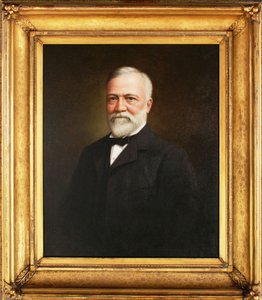
While his still-lifes captured the quiet beauty of domesticity, King’s reputation as a portraitist earned him a place among the social elite. He was a sought-after chronicler of the era's most influential figures, possessing a unique ability to capture what contemporaries described as "the best likeness." His studio became a destination for the titans of industry and culture, and his portraits now serve as vital historical windows into the prestige of the age. Among those who sat for him were:
- Andrew Carnegie, whose dignified presence was captured with remarkable elegance.
- Henry Heinz, reflecting the era's growing industrial prominence.
- Henry Clay Frick, a subject that showcased King's mastery of texture and character.
- The composer Stephen Foster, immortalized through King's sensitive hand.
- President William McKinley, marking the artist's reach into the highest echelons of American leadership.
Beyond the controlled environments of his portrait commissions and still-life arrangements, King found a different kind of inspiration in the natural world. For personal pleasure, he turned his attention to the landscape, finding solace in the sylvan beauty of the Pennsylvania countryside. Influenced by the Hudson River School style, he frequently painted en plein air near Scalp Level, near Johnstown, Pennsylvania. In these works, he sought to capture the "fleeting moods" and the romance of the outdoors, painting the scenic mountain streams of Paint Creek with a sense of wonder that contrasted beautifully with the structured precision of his studio work.
Legacy and Artistic Significance
The significance of Albert Francis King lies in his ability to bridge the gap between the humble and the heroic. Whether he was rendering the glistening skin of an orange or the commanding gaze of a business magnate, his commitment to realism remained unwavering. His life, which saw him move briefly to Omaha, Nebraska, before returning to his roots, was deeply intertwined with the cultural fabric of Pittsburgh. Through his memberships in the Pittsburgh Art Society and the Pittsburgh Art Association, he helped foster a local artistic community that valued technical excellence and observational truth. Today, his work remains a testament to an era of meticulous craftsmanship and a profound reverence for the tangible world.
Q&A
Albert Francis King의 작품을 색상별로 모아둔 곳은 어디인가요?
Albert Francis King의 작품은 작가의 컬러 인덱스 페이지에서 색상별로 감상하실 수 있습니다.
Albert Francis King의 작품 전체 목록을 볼 수 있는 곳이 있나요?
이 사이트에 등록된 Albert Francis King의 모든 작품은 작가의 전체 작품 보기 페이지에서 만나보실 수 있습니다.
특정 매체로 분류된 Albert Francis King의 모든 작품을 어떻게 찾을 수 있나요?
특정 매체로 제작된 Albert Francis King의 모든 작품을 확인하시려면, 작가의 모든 매체별 페이지를 이용해 주세요.