Introduction: Echoes of London’s Censorship Office
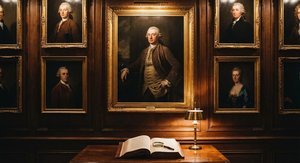
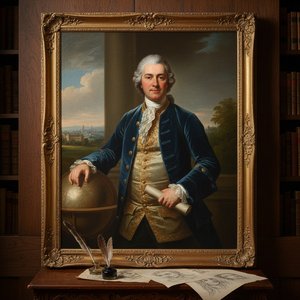
Alexander Joshua Caleb Bryce's artistic vision is rooted in a fascination with historical narratives and the subtle interplay between power, communication, and visual representation. Primarily focused on depictions of London’s Clerkenwell Green – specifically the Censorship Office – his work delves into a period marked by stringent governmental control over information dissemination during World War II. Bryce doesn't merely recreate scenes; he imbues them with symbolic depth, prompting viewers to contemplate the anxieties surrounding wartime propaganda and the role of art as both witness and participant in shaping public opinion. His meticulous attention to detail—captured through watercolor techniques—reflects a commitment to conveying not just what was seen but also how it felt.Early Life & Influences: Shaping a Vision
Born in Gig Harbor, Washington, Bryce’s formative years instilled within him an appreciation for observation and storytelling. Details from his childhood – particularly encounters with the natural landscape of Puget Sound – subtly inform his artistic sensibilities. While biographical information remains sparse, references to Davis Alexander (a fellow Portland State alumnus) suggest a shared intellectual curiosity regarding social dynamics and the impact of environment on human experience. These influences contribute to Bryce’s overarching thematic concerns: exploring how individuals respond to societal pressures and how art can serve as a conduit for conveying complex emotions and ideas.The Censorship Office Series: Technique & Symbolism
Bryce's celebrated series centered around the Censorship Office exemplifies his mastery of watercolor painting and his profound understanding of historical symbolism. He painstakingly recreated the interior of the office, capturing the muted tones and cluttered surfaces that mirrored the atmosphere of wartime London. The deliberate use of neutral trade mails—a poignant reminder of intercepted correspondence—served as a central motif, symbolizing the suppression of dissent and the pervasive surveillance prevalent during the conflict. Bryce’s technique—characterized by layering washes of color to achieve luminous effects—allowed him to convey both visual accuracy and emotional resonance.Development & Artistic Evolution
Bryce's artistic journey progressed from initial explorations in watercolor to increasingly ambitious projects that interrogated broader social issues. His engagement with Mail Art – a collaborative form of artistic expression rooted in postal correspondence – broadened his creative horizons and solidified his commitment to challenging conventional notions of authorship and dissemination. This experimentation reflects a desire to push boundaries, both technically and conceptually, demonstrating Bryce’s willingness to embrace new mediums and approaches while retaining core aesthetic principles.Historical Significance & Legacy
Bryce's depictions of Clerkenwell Green stand as powerful testaments to the anxieties surrounding censorship during World War II and offer valuable insights into the role of art in shaping public discourse. His work contributes to a larger conversation about artistic responses to political upheaval, prompting viewers to consider how artists grapple with ethical dilemmas and strive to communicate truth amidst propaganda. By meticulously reconstructing historical scenes and imbuing them with symbolic meaning, Bryce elevates his paintings beyond mere visual representations—transforming them into evocative narratives that endure as reflections of a pivotal moment in British history.질의응답
Alexander Joshua Caleb Bryce가 그린 모든 주제를 한눈에 볼 수 있는 개요가 있나요?
Alexander Joshua Caleb Bryce의 작품은 작가의 주제별 아틀라스 페이지에서 주제별로 찾아보실 수 있습니다.
Alexander Joshua Caleb Bryce 작가의 작품을 3D 갤러리에서 어디서 볼 수 있나요?
Alexander Joshua Caleb Bryce의 3D 뮤지엄는 작가의 작품들을 가상 3D 갤러리로 선보이는 페이지입니다.
Alexander Joshua Caleb Bryce의 작품을 색상별로 정렬해서 볼 수 있나요?
색상별 인덱스 페이지에서는 Alexander Joshua Caleb Bryce의 작품들을 색상별로 모아 보실 수 있습니다.