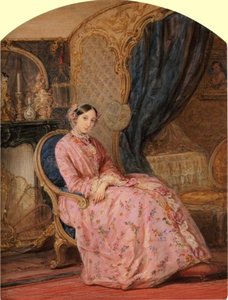
Christina Robertson: A Scottish Artist at the Russian Court
Early Life and Training
- Born: December 17, 1796, in Kinghorn, Fife, Scotland (though records indicate Edinburgh).
- Family Background: Robertson’s early life was shaped by her artistic family connections. Her mother was the sister of George Saunders, a miniature painter who became her initial mentor.
- Early Training: She received foundational training from her uncle, George Saunders, in London, mastering the art of miniature painting before expanding into oils and watercolors.
Artistic Development and Early Success
- Establishing a Career: Robertson quickly established herself as a successful portraitist, initially attracting Scottish patrons. Her skill allowed her to surpass her mentor financially.
- Royal Academy Exhibition: By 1823, she was exhibiting at the Royal Academy, gaining recognition within the British art world.
- Pioneering Studio Ownership: In 1828, Robertson opened her own studio in London – a remarkable achievement as one of the first women to do so.
- Royal Scottish Academy Honor: A significant milestone came in 1829 when she became the first woman honorary member of the Royal Scottish Academy.
Move to Russia and Imperial Patronage
- Parisian Connections: During the 1830s, Robertson traveled and worked in Paris, where she encountered members of the Russian court who may have already been familiar with her work through engravings.
- St. Petersburg Invitation: She was invited to St. Petersburg in 1839, partly due to increased demand for portraits following the fire that destroyed parts of the Winter Palace in 1837.
- Imperial Commissions: Robertson executed full-length paintings of Tsar Nicholas I and Empress Alexandra Feodorovna, along with their daughters Maria, Olga, and Alexandra.
- Academy Recognition: In 1841, she became the first (and only) woman to be made an honorary member of the Imperial Academy of Arts.
Life as a Court Painter & Later Years
- Ten Years in Russia: Robertson served as a royal artist for ten years, creating portraits of prominent figures within the Russian imperial family.
- Challenges and Commissions: While some portraits were initially rejected (like those of daughters-in-law), she continued to receive commissions, including one from Grand Duchess Maria Alexandrovna for a portrait of herself and her children, and an updated portrait of Empress Alexandra at the Empress’s request.
- Death and Burial: Christina Robertson died in St. Petersburg on April 30, 1854, and was buried in the Volkovo Cemetery.
Artistic Style and Historical Significance
- Portraiture Focus: Robertson’s work primarily focused on portraiture, characterized by academic precision and a keen ability to capture the likeness and personality of her sitters.
- Legacy & Rediscovery: Though largely forgotten after the Russian Revolution, recent exhibitions have helped revive interest in her life and art. Her portraits provide valuable historical documentation of the Russian Imperial family.
- Unique Position: Robertson’s success as a female artist in both Britain and Russia was exceptional for her time, breaking barriers and paving the way for future generations of women artists.
Q&A
Christina Robertson의 작품을 분위기별로 모아둔 곳은 어디인가요?
Christina Robertson의 작품은 각 작품이 지닌 분위기에 따라 분류된 무드 룸 페이지에서 무드별로 감상하실 수 있습니다.
Christina Robertson가 그린 모든 주제를 한눈에 볼 수 있는 개요가 있나요?
주제별 작품 모음 페이지에서는 Christina Robertson의 작품들을 주제별로 확인하실 수 있습니다.
Christina Robertson 작가의 다른 활동명이나 알려진 이름이 있나요?
Christina Robertson은(는) Christina Sanders, Christina Saunders, Miss Christina Saunders, كريستينا روبرتسون, クリスティーナ・ロバートソン(으)로도 알려져 있습니다.