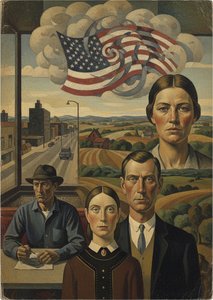
The Many Faces of Ed McGowin: A Journey Through Identity and Form
In the vast tapestry of American art, few figures possess a legacy as delightfully labyrinthine as Ed McGowin. Born in Hattiesburg, Mississippi, in 1938, McGowin emerged from the deep-rooted traditions of the American South to become a pioneer of conceptual exploration and sculptural innovation. His early years were shaped by the landscapes of Mississippi and Alabama, providing a foundational aesthetic that would later merge with the radical, boundary-pushing spirit of New York’s avant-garde. This duality—a tension between regional sensibility and global experimentation—defines his entire body of work, creating a dialogue between the earthbound textures of his youth and the cerebral complexities of his mature practice.
McGowim's academic journey served as the crucible for his multidisciplinary mastery. After earning his B.A. from the University of Southern Mississippi, he pursued an M.A. at the University of Alabama, honing a technical proficiency that allowed him to move seamlessly between the visceral application of paint and the structural demands of sculpture. His early career saw him navigating various roles, from serving as an aide in Washington D.C. to establishing art schools in Virginia. These formative years were not merely about skill acquisition but about building a deep understanding of how art functions within social and institutional frameworks—a theme that would later manifest in his most radical conceptual undertakings.
The Radical Experiment: The Name Change Project
Perhaps the most captivating chapter in McGowin’s storied career is the Name Change Project, an audacious performance of identity that took place between 1970 and 1972. In a move that challenged the very essence of artistic authorship, McGowin legally altered his identity twelve times, adopting various pseudonyms to create distinct personas for his creative output. This was far more than a mere theatrical stunt; it was a profound interrogation of how an artist's name and reputation can act as a cage, limiting the scope of expression. By fragmenting his identity, McGowin sought to liberate his art from the weight of expectation, allowing each persona to explore different stylistic territories without the baggage of a singular, established "brand."
This period produced some of his most evocative and diverse works, ranging from the textured, abstract expressionist energy of 7 1 78 to the vibrant, screen-printed dynamism of Dairy Queen Stage 2. Through these various identities, McGowin demonstrated an incredible range:
- Conceptual Disruption: Using legal identity shifts to dismantle the traditional narrative of the "singular genius."
- Material Versatility: Moving from wooden surfaces and impasto paintings to complex screen prints and sculptural forms.
- Documentary Art: Creating works like Ingram Andrew Young, which blurred the lines between legal documentation and visual art.
Sculptural Mastery and the Language of Earth
Beyond the conceptual provocations of his persona-driven work, McGowin’s sculptural practice reveals a profound connection to the physical world. His approach to sculpture is characterized by an intimate engagement with materiality, particularly through the use of stone, limestone, and granite. He often employed sophisticated vacuum-forming techniques to manipulate these heavy, geological materials into striking geometric shapes. These works do not merely sit in space; they evoke the very essence of geological strata, suggesting a deep, rhythmic connection between human memory and the ancient history of the earth.
His sculptures serve as a bridge between the organic and the abstract, transforming raw, rugged elements into polished, thought-provoking forms. This mastery of medium allowed him to create public art installations that resonate with a sense of permanence and social responsibility. Whether working in the medium of wood, as seen in the remarkable Fandove—now held in the prestigious Smithsonian American Art Museum—or carving into the heart of stone, McGowin’s work remains anchored in a search for truth within form. His legacy is that of an artist who refused to be defined by a single medium or a single name, leaving behind a profound testament to the infinite possibilities of the creative spirit.
Q&A
Ed Mcgowin의 다른 이름이나 별칭에는 무엇이 있나요?
Ed Mcgowin은(는) William Edward Mcgowin(으)로도 알려져 있습니다.
주제별로 분류된 Ed Mcgowin의 작품들은 어디에서 확인할 수 있나요?
Ed Mcgowin의 주제별 작품 모음는 작가의 작품들을 주제별로 찾아볼 수 있는 페이지입니다.
Ed Mcgowin의 작품을 색상별로 정렬해서 볼 수 있나요?
Ed Mcgowin의 컬러 인덱스에서는 작가의 작품들을 색상별로 모아 보실 수 있습니다.