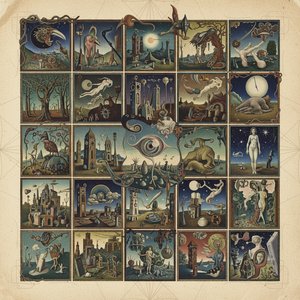
A Vision of the Orient: The Life and Art of Ernst Koerner
Ernst Koerner, a name synonymous with evocative depictions of Egypt and the Middle East, carved a unique niche for himself in 20th-century painting. Born in 1897 in Vienna, Austria, his artistic journey was deeply intertwined with both personal experience and the prevailing cultural fascination with distant lands. While biographical details remain somewhat sparse, Koerner’s life unfolded against a backdrop of significant societal shifts – from the waning days of the Austro-Hungarian Empire to the tumultuous years between the World Wars and beyond. He received formal training at the Academy of Fine Arts in Vienna, where he honed his skills in traditional painting techniques. However, it was not the classical landscapes of Europe that captured his imagination but rather the allure of the Orient, a realm steeped in history, mystery, and exotic beauty. This fascination wasn’t merely academic; Koerner undertook extensive travels throughout Egypt, Palestine, Syria, and Lebanon during the 1920s and 30s, immersing himself in the cultures he would later portray with such passion and detail. These journeys were pivotal, providing him with firsthand observations that would become the foundation of his distinctive artistic style.The Allure of Ancient Egypt: A Defining Theme
Koerner’s oeuvre is overwhelmingly dominated by scenes of ancient Egypt, though he also frequently depicted contemporary life in other Middle Eastern countries. He wasn't interested in archaeological precision; instead, he sought to capture the *atmosphere* of these places – the golden light bathing ancient monuments, the vastness of the desert landscapes, and the enduring spirit of a civilization steeped in mythology and grandeur. His paintings are characterized by dramatic skies, often ablaze with fiery sunsets, which serve as a powerful backdrop for iconic structures like pyramids, temples, and obelisks. The use of light is paramount, creating a sense of both awe and timelessness. He masterfully employed chiaroscuro, contrasting deep shadows with brilliant highlights to emphasize the sculptural forms of his subjects. While influenced by Orientalist painters who came before him – artists like David Roberts and Jean-Léon Gérôme – Koerner distinguished himself through his more romanticized and emotionally charged approach. His Egypt is not a land of scientific study but one of poetic vision, imbued with a sense of longing and reverence. He often populated his scenes with small figures, rendered as silhouettes against the monumental architecture, emphasizing the insignificance of humanity in comparison to the enduring power of history.Influences and Artistic Development
Koerner’s artistic development was shaped by several key influences. The Vienna Secession movement, with its emphasis on decorative patterns and symbolic imagery, likely played a role in his early training. However, it was the Orientalist tradition of 19th-century painting that proved most formative. He absorbed elements from artists like Eugène Delacroix, whose vibrant color palettes and dramatic compositions resonated with his own aesthetic sensibilities. The influence of Maxfield Parrish is also discernible in Koerner’s use of saturated colors and idealized forms. Beyond painting, he drew inspiration from literature and mythology, particularly the stories and legends associated with ancient Egypt. His paintings often allude to these narratives, adding layers of symbolic meaning to his depictions of temples and monuments. Over time, Koerner refined his technique, moving away from a more detailed realism towards a more expressive style characterized by bold brushstrokes and simplified forms. He became increasingly focused on capturing the emotional impact of his subjects rather than their precise physical appearance.Major Achievements and Legacy
Although not widely recognized during his lifetime, Ernst Koerner achieved considerable success in the post-war art market. His paintings were particularly popular in Germany and Austria, where they resonated with a public eager to reconnect with a sense of beauty and wonder after years of conflict. He exhibited regularly throughout Europe and garnered a loyal following of collectors who appreciated his unique vision of the Orient.- His most celebrated works include depictions of the pyramids of Giza at sunset, the temples of Karnak illuminated by moonlight, and scenes of bustling marketplaces in Cairo.
- Koerner’s ability to evoke a sense of atmosphere and emotional resonance set him apart from other Orientalist painters.
- His paintings continue to be highly sought after by collectors today, representing a significant contribution to the genre of landscape painting.
Historical Significance and Enduring Appeal
Ernst Koerner’s work reflects a broader cultural fascination with Egypt that peaked in the early 20th century, fueled by archaeological discoveries like the tomb of Tutankhamun. However, his paintings transcend mere documentation or exoticism. They offer a romanticized yet deeply felt vision of a civilization steeped in history and mystery. His enduring appeal lies in his ability to transport viewers to another time and place, evoking a sense of wonder and longing for the distant past. While acknowledging the potential pitfalls of Orientalist representation, Koerner’s work can be appreciated as a testament to the power of art to capture the imagination and inspire a sense of reverence for different cultures. His paintings serve as a reminder of the enduring beauty and majesty of ancient Egypt, continuing to captivate audiences with their dramatic skies, vibrant colors, and evocative atmosphere. He died in 1973 leaving behind a legacy of stunning landscapes that continue to be admired by art lovers worldwide.질의응답
미술 사조별로 분류된 Ernst Koerner의 작품은 어디에서 볼 수 있나요?
Ernst Koerner 작가가 활동했던 예술 사조는 작품을 사조별로 분류하여 보여주는 작가의 모든 사조 페이지에서 확인하실 수 있습니다.
Ernst Koerner의 작품들은 어떤 분위기를 담고 있나요?
아티스트의 무드 룸 페이지에서는 Ernst Koerner의 작품들을 분위기에 따라 큐레이션된 형태로 만나보실 수 있습니다.
Ernst Koerner의 작품을 매체별로 찾아볼 수 있나요?
Ernst Koerner의 작품은 작가 페이지인 모든 매체에서 매체별로 둘러보실 수 있습니다.