The Atmospheric Legacy of Francis E. Chardon
Francis Edward Chardon (1865-1925) wasn’t a name that immediately resonates within the grand halls of art history, yet his canvases hold a quiet power—a subtle beauty born from meticulous observation and an uncanny ability to capture the essence of American life at the turn of the 20th century. Born in Calcutta, India, to a family steeped in transatlantic commerce and colonial influence – his father, Edouard Chardon, was an indigo planter – Chardon’s early years instilled within him a unique perspective, blending Eastern sensibilities with Western artistic training. This confluence shaped not only his subject matter but also the atmospheric quality that defines his most celebrated works.
His formal education in Europe—France and Germany—provided a foundation in academic realism, yet Chardon quickly transcended mere imitation. He sought to imbue his paintings with a sense of mood and atmosphere, drawing inspiration from the Impressionists while retaining a distinctly American sensibility. This is particularly evident in his portraits, where he doesn’t simply depict physical likeness but rather attempts to convey the inner life of his subjects—their character, their anxieties, their quiet moments of contemplation. His early years studying pastel drawing and watercolour painting in Naples under Joseph Casciaro further honed this skill.
A Life Shaped by Family and Place
Chardon’s personal history profoundly influenced his artistic trajectory. His father's involvement with the indigo trade, a complex and often fraught enterprise, exposed him to the realities of global commerce and its impact on diverse communities. This awareness subtly informed his depictions of American life, particularly in his portraits of families and individuals connected to the burgeoning industrial landscape. The move to Llandudno, Wales, in 1912, following his mother’s death, marked a significant shift. The rugged coastal scenery and the quiet charm of this Victorian resort town became a recurring motif in his work—a place of solace and reflection, often rendered with a hazy, dreamlike quality.
His residence, Rapallo House, inherited from his mother, served as both home and studio, becoming a repository for his art collection and a testament to his lifelong pursuit of beauty. The house itself, now the Rapallo House Museum and Art Gallery in Llandudno, offers a fascinating glimpse into Chardon’s life and artistic philosophy—a space where family history intertwined with artistic creation.
Technique and Style: The Language of Atmosphere
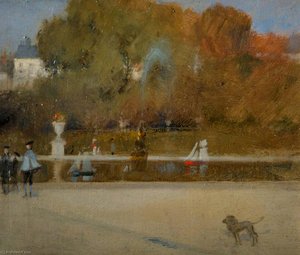
Chardon's technique was characterized by a deliberate restraint. He eschewed dramatic contrasts of light and shadow, favoring instead subtle gradations of tone and color to create an atmosphere of quiet contemplation. His brushwork is often loose and suggestive, allowing the eye to wander across the canvas and discover details gradually. He employed a muted palette—primarily browns, grays, greens, and blues—to evoke a sense of melancholy or nostalgia. This deliberate choice contributes significantly to the overall mood of his paintings.
His portraits are particularly noteworthy for their psychological depth. He skillfully used lighting and composition to draw attention to the eyes of his subjects, conveying a sense of vulnerability and introspection. He wasn’t interested in creating idealized representations; instead, he sought to capture the complexities of human experience—the joys, sorrows, and uncertainties that define our lives.
Historical Context and Lasting Significance
Chardon's work reflects the broader artistic trends of his time—the waning influence of academic realism and the rise of Impressionism and Post-Impressionism. However, he forged a unique path, blending these influences with his own distinctive vision. His paintings offer a valuable window into American life during a period of rapid social and economic change – the late 19th and early 20th centuries. His depictions of families, workers, and rural landscapes provide insights into the values, aspirations, and challenges faced by ordinary Americans.
While he may not be as widely recognized as some of his contemporaries, Francis E. Chardon’s atmospheric paintings—particularly his portraits—continue to resonate with viewers today. His ability to capture the essence of human experience through subtle brushwork and evocative color palettes ensures that his legacy will endure.
Q&A
주제별로 분류된 Francis E Chardon의 작품들은 어디에서 확인할 수 있나요?
주제별 작품 모음 페이지에서는 Francis E Chardon의 작품들을 주제별로 확인하실 수 있습니다.
Francis E Chardon의 작품은 얼마나 인기가 있나요?
Francis E Chardon의 방문 통계 페이지에서는 이 사이트에 등록된 작가의 작품들을 바탕으로 산출된 통계 정보를 제공합니다.
Francis E Chardon 작가의 작품을 연도별로 어떻게 확인할 수 있나요?
Francis E Chardon의 작품 연표를 확인해 보세요: 작품 연대기 페이지에서 작품들을 제작 날짜순으로 보실 수 있습니다.