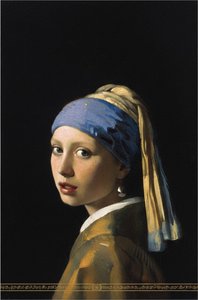
The Luminous Shadows of Gillis Coignet
In the grand tapestry of the Flemish Renaissance, few threads shimmer with as much mysterious brilliance as the life and work of Gillis Coignet, known to his Italian contemporaries as Giulio Cognietta. Born in Antwerp around 1542, Coignet emerged from a lineage of craftsmanship, the son of a skilled goldsmith and maker of scientific instruments. This early exposure to precision and the delicate manipulation of light likely laid the foundation for a career defined by an extraordinary ability to capture the ephemeral. His journey was one of profound movement and transformation; as a Lutheran living through the turbulent religious shifts of the sixteenth century, he was eventually driven from his beloved Antwerp following the city's fall in 1585, finding refuge and new creative horizons in Amsterdam and later Hamburg.
Coignet’s artistic soul was forged in the crucible of international exchange. During a pivotal decade-long sojourn in Italy, he breathed the same air as the masters of the Venetian school, absorbing the dramatic emotionality of Tintoretto and the rich, painterly warmth of Titian. This period of immersion allowed him to transcend the boundaries of Northern tradition, infusing his Flemish roots with a Mediterranean sense of grandeur and drama. He became a master of the nocturnal scene, a painter who could command the darkness. His canvases often feature scenes lit by the flickering uncertainty of candlelight or the silvered glow of moonlight, creating an atmosphere where myth and reality blur into a single, breathtaking moment.
A Mastery of Myth and Moonlight
The true genius of Coignet lies in his ability to breathe life into the allegorical and the divine. His repertoire was vast, ranging from the harrowing intensity of biblical narratives to the ethereal beauty of mythological legends. He possessed a singular talent for chiaroscuro, using the stark contrast between deep, velvety shadows and sudden bursts of light to direct the viewer's eye and evoke a sense of profound psychological depth. When one gazes upon his depictions of sacred or classical tales, there is a palpable tension—a feeling that the characters are caught in a moment of spiritual or physical transition.
His technical prowess was equally remarkable, characterized by:
- Layered Glazing: The application of thin, translucent washes of pigment that allowed light to penetrate the surface, lending his works an inner radiance and a soft, dreamlike quality.
- Anatomical Precision: A disciplined adherence to the human form, likely a remnant of his early training and his fascination with the structural beauty found in both art and science.
- Expressive Brushwork: While capable of meticulous detail, Coignet was never afraid of a more fluid, emotive stroke that could convey the movement of fabric or the swirling energy of a night sky.
Legacy of a Wandering Master
Though his life was marked by the displacement common to many artists of the Reformation era, Coignet’s legacy remained anchored in the enduring power of his imagery. He did not merely document history or myth; he interpreted them through a lens of profound human emotion. His ability to marry the meticulous observational skills of the Northern tradition with the dramatic, atmospheric innovations of the Italian Renaissance helped bridge two of Europe's most significant artistic movements. Today, Coignet stands as a testament to the resilience of the creative spirit, an artist whose work continues to illuminate the shadows of the past, inviting us to find beauty in the interplay of light and the mysteries of the night.
질의응답
Gillis Coignet The Elder의 모든 작품은 어디에서 볼 수 있나요?
본 웹사이트에 등록된 Gillis Coignet The Elder의 모든 작품은 작가의 모든 작품 보기 페이지에서 확인하실 수 있습니다.
Gillis Coignet The Elder 작가는 어떤 사조에 참여했나요?
Gillis Coignet The Elder의 작품은 작가의 모든 사조 페이지에서 사조별로 둘러보실 수 있습니다.
Gillis Coignet The Elder 작가 작품의 컬러 프로필은 어디에서 확인할 수 있나요?
본 웹사이트에 등록된 작품 전반에 나타나는 Gillis Coignet The Elder의 색채 활용은 작가의 팔레트 지놈 페이지에서 확인하실 수 있습니다.