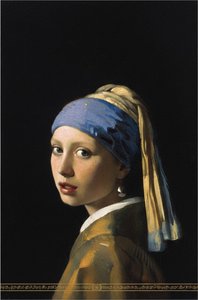
A Life Dedicated to Portraiture: Hendrick Berckman and the Dutch Golden Age
Hendrick Berckman, born in Klundert in 1629 and laid to rest in Middleburg in 1679, was a painter deeply embedded within the vibrant artistic landscape of the Dutch Golden Age. While initially trained as a landscape artist, his name became synonymous with compelling portraiture, capturing the essence of the elite society he served. Berckman’s journey began under the tutelage of two prominent Antwerp masters: Thomas Willeboirts Bosschaert and Jacob Jordaens. This early education instilled in him a meticulous attention to detail – characteristic of Bosschaert – coupled with a dynamic compositional sensibility inherited from Jordaens, known for his lively genre scenes and robust figures. A period spent in Haarlem further refined his skills under the guidance of Philip Wouwermans, renowned for his idyllic landscapes and battle paintings; however, it was not this path that ultimately defined Berckman’s artistic legacy.From Landscapes to Likenesses: Artistic Development
Registered in Leiden between 1652 and 1654, Berckman began establishing his presence within the Dutch art world. It was in 1655 that he settled permanently in Middleburg, a thriving port city in Zeeland province. This relocation proved pivotal. Though possessing a foundation in landscape painting, Berckman increasingly focused on portraiture, responding to the demands of a burgeoning merchant class and regional nobility eager to immortalize their status and achievements. Contemporary accounts, notably those by Arnold Houbraken, reveal that Jordaens encouraged him to embrace larger-scale works, a suggestion Berckman readily adopted. This shift wasn’t merely pragmatic; it allowed him to explore the psychological depth of his subjects, moving beyond mere representation towards capturing character and social standing. His early work shows traces of Wouwermans' influence in the rendering of backgrounds and details, but quickly evolved into a more individualized style marked by refined elegance and subtle emotional nuance.Patronage and Prominence: The Elite Circle
Berckman’s talent soon attracted significant patronage. He was appointed court painter to Count Hendrick of Nassau, Governor of Hulst, a position that solidified his reputation and opened doors to commissions from other prominent figures. His portraits weren't simply depictions; they were statements of power, wealth, and social connection. One of his most celebrated achievements lies in his repeated portrayals of Vice-Admiral Michiel Adriaenszoon de Ruyter, the legendary Dutch naval commander. Berckman captured De Ruyter not only as a military hero but also as a man – portraits that now reside in esteemed institutions like the National Maritime Museum in Greenwich and the Rijksmuseum in Amsterdam. Similarly, his depictions of De Ruyter’s wife, Anna van Gelder, showcase his ability to convey both dignity and grace. Beyond these iconic figures, Berckman immortalized ministers such as Thomas Pots of Vlissingen, further demonstrating his versatility and appeal across different segments of society.A Lasting Legacy: Technique and Historical Significance
Berckman’s technique was characterized by a masterful use of light and shadow, creating depth and realism in his portraits. He employed a rich palette, favoring warm tones that lent a sense of sophistication to his subjects' attire and surroundings. His brushwork, while detailed, wasn’t overly fussy; it allowed for a naturalistic rendering of textures – the sheen of silk, the weight of velvet, the subtle contours of skin. While many of his large-scale militia portraits have been lost over time, those that remain—and the numerous individual commissions he fulfilled—offer invaluable insights into the social fabric of 17th-century Holland. He became Dean of the Middelburg Guild in 1679, a testament to his standing within the artistic community. Hendrick Berckman’s work stands as a compelling example of Dutch Golden Age portraiture, blending technical skill with an acute understanding of human character and social dynamics. His paintings are not merely historical records; they are windows into a world of ambition, prosperity, and enduring legacy.질의응답
Hendrick Berckman 작품의 연도별 타임라인이 있나요?
Hendrick Berckman의 작품을 연도별로 정리하여 보여주는 작품 연대기 페이지입니다.
주제별로 Hendrick Berckman의 작품을 탐색할 수 있나요?
주제별 아틀라스 페이지에서는 Hendrick Berckman의 작품들을 주제별로 찾아보실 수 있습니다.
Hendrick Berckman의 작품 중 몇 점을 둘러보실 수 있나요?
모든 작품 보기 페이지에서 Hendrick Berckman의 작품 작품 11점점을 만나보실 수 있습니다.