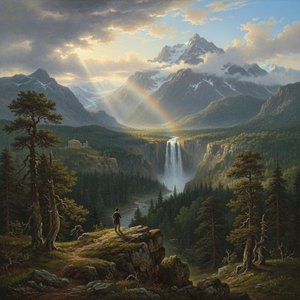
James Shotton: A North Shields Visionary of the Victorian Landscape
James Shotton (1824-1896) wasn’t a name etched in the annals of grand artistic movements, yet his work possesses a quiet, enduring power. Born in the bustling port town of North Shields, Northumberland, he represents a fascinating confluence of regional identity, Dutch Masters' influence, and a deeply observant eye for the natural world. Shotton’s life was inextricably linked to his surroundings – the rugged coastline, the coal-rich landscapes, and the vibrant community of his hometown all served as constant sources of inspiration. His career, largely self-directed, reveals an artist who prioritized meticulous detail and atmospheric rendering over seeking fame or fortune, a dedication that ultimately shaped a remarkably consistent and compelling body of work.Early Life and Artistic Foundations
Shotton’s artistic journey began modestly, displaying a remarkable talent for drawing from his earliest years. Unlike many artists who pursued formal training at prestigious academies, Shotton honed his skills through self-study and observation. He apprenticed as a draughtsman in Newcastle, gaining practical experience in architectural design and technical illustration – disciplines that undoubtedly informed his later landscape work with their emphasis on perspective and spatial relationships. Crucially, he developed a deep appreciation for the Dutch Masters, particularly the meticulous detail and atmospheric effects of artists like Rembrandt and Jacob van Ruisdael. This influence is readily apparent in Shotton’s compositions, which often feature diffused light, subtle tonal shifts, and an almost photographic realism. His early exposure to the industrial landscape of North Shields – a region undergoing rapid transformation due to coal mining – likely fostered a sensitivity to both beauty and decay, themes that would later permeate his work.The Cullercoats Artists’ Colony and Regional Identity
In 1869, Shotton became associated with the Cullercoats Artists' Colony, a group of local artists who gathered along the coastline near Newcastle. This environment proved pivotal in shaping his artistic development. The colony fostered a spirit of experimentation and collaboration, encouraging artists to explore their regional identity through landscape painting. Shotton’s work during this period is characterized by an intimate understanding of the Northumberland coast – its dramatic cliffs, sheltered coves, and ever-changing light. He captured not just the visual appearance of these places but also the sense of place, conveying a deep connection to the land and sea. His paintings of North Shields itself—the bustling harbor, the industrial docks, and the everyday lives of its inhabitants—offer a valuable glimpse into the social and economic realities of the town during the Victorian era.Notable Works and Artistic Techniques
Shotton’s oeuvre is notable for its remarkable consistency in style and subject matter. He frequently depicted scenes from Northumberland, including dramatic coastal views, detailed studies of local flora and fauna, and portraits of prominent figures within his community. His most celebrated works include “A mound of even-sloping side wherein a hundred stately beeches grew,” a meticulously rendered depiction of a woodland scene that showcases his mastery of light and shadow; "Sandstone of the Coal Measures of Northumberland," which captures the rugged beauty of the region’s geological formations; and his evocative portraits, such as those of Thomas Haswell, a North Shields songwriter. Shotton's technique was characterized by painstaking detail, achieved through numerous layers of thin glazes applied to the canvas. He employed a limited palette—primarily browns, greens, blues, and grays—to create atmospheric effects and convey a sense of depth and realism. His work also demonstrates an impressive understanding of composition, using diagonal lines and carefully placed elements to draw the viewer’s eye into the scene.Legacy and Historical Significance
Despite his relative obscurity during his lifetime, James Shotton's legacy has been steadily recognized in recent decades. His paintings are now housed in significant collections, including those of North Tyneside Council and the Northumberland Archives. Shotton’s work offers a unique perspective on Victorian England—a testament to the beauty found within the industrial landscape and the enduring connection between people and their environment. He represents a vital link in the chain of British landscape painting, bridging the gap between the grand traditions of the Royal Academy and the more localized concerns of regional artists. His dedication to meticulous observation and atmospheric rendering ensures that his paintings continue to resonate with viewers today, offering a glimpse into a bygone era and a profound appreciation for the natural world.질의응답
James Shotton 작가의 작품을 감상할 수 있는 3D 가상 투어가 있나요?
James Shotton의 작품은 작가의 3D 뮤지엄 페이지에 마련된 3D 갤러리에서 감상하실 수 있습니다.
James Shotton의 연도별 활동 기록이 있나요?
James Shotton의 예술적 여정은 연대기 페이지에서 시기별로 펼쳐집니다. 이곳에서는 작가의 활동 시기를 장(chapter)으로 나누어 작품들을 연대순 타임라인 형태로 한눈에 확인할 수 있습니다.
James Shotton의 작품을 팔레트별로 모아둔 곳은 어디인가요?
컬러 팔레트별 페이지에서는 James Shotton의 작품들을 색상 팔레트별로 모아볼 수 있습니다.