A Life Painted in Elegance: The World of Jean-Laurent Mosnier
Jean-Laurent Mosnier, a name resonating with the refined grace of 18th and early 19th century portraiture, was more than just a painter; he was a chronicler of an era. Born in Paris in 1743, his life unfolded against a backdrop of immense social and political upheaval – from the opulent reign of Louis XVI to the tumultuous years of the French Revolution and beyond. Mosnier’s artistic journey reflects this shifting landscape, marked by both aristocratic patronage and a remarkable adaptability that allowed him to flourish even amidst exile. He wasn't merely depicting faces; he was capturing the essence of a world on the brink of transformation, preserving its elegance and anxieties for posterity.From Royal Courts to Distant Shores: A Career in Transition
Mosnier’s early training followed the established path within the French academic system, honing his skills at the Académie de Saint-Luc before achieving mastery in 1766. His talent quickly garnered recognition, leading to a coveted position as *Peintre de la Reine* – court painter to Marie Antoinette in 1776. This appointment placed him squarely within the heart of French aristocratic society, and his portraits from this period exude the refined sensibilities of the Ancien Régime. He was accepted into the Académie Royale in 1788, a testament to his growing reputation. However, the storm clouds of revolution were gathering, and Mosnier’s world was about to be irrevocably altered. The French Revolution forced him to seek new horizons, embarking on a peripatetic career that took him first to London around 1790, then to Hamburg, and finally to St. Petersburg in 1801. This wasn't simply an escape; it was a testament to his resilience and artistic prowess. He didn’t abandon portraiture but rather adapted his style to suit the tastes of each new locale, demonstrating a remarkable ability to connect with diverse audiences while maintaining his signature elegance.Influences and Artistic Style: A Neoclassical Refinement
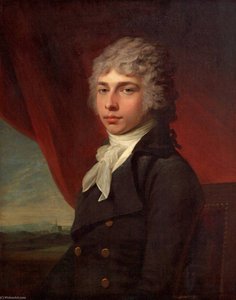
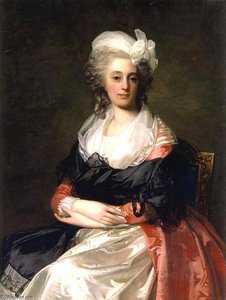
Mosnier's artistic voice was deeply rooted in the Neoclassical movement, characterized by its emphasis on clarity, balance, and meticulous detail. His compositions are harmonious, lines are precise, and his attention to texture and form is unwavering. While he absorbed influences from contemporaries like Élisabeth Louise Vigée Le Brun and Adélaïde Labille-Guiard – both celebrated portraitists in their own right – Mosnier developed a distinctive style that blended aristocratic refinement with a subtle psychological depth. His miniatures, in particular, are exquisite examples of his craftsmanship, showcasing a delicate rendering of features and an unparalleled attention to detail. He possessed a remarkable ability to capture not just the likeness but also the personality and social standing of his sitters. His self-portrait with pupils, thought to be inspired by Labille-Guiard’s work, reveals both his ambition as an artist and his dedication to passing on his skills to the next generation.A Legacy in Portraiture: Notable Works and Lasting Impact
Mosnier's oeuvre is a rich tapestry of portraits reflecting the lives of prominent individuals across Europe. His depictions of Louis XVI and Marie Antoinette stand as poignant reminders of a bygone era, capturing the royal couple before the storm of revolution engulfed them. In London, he painted numerous members of the British nobility, while in St. Petersburg, he secured commissions from leading Russian families. The portrait of Admiral George Brydges Rodney, completed in 1791, is a particularly striking example of his ability to convey power and dignity through masterful brushwork and composition. Beyond these celebrated works, Mosnier’s portraits of figures like Jean Sylvain Bailly – the first mayor of Paris – offer valuable insights into the personalities who shaped the course of history. His legacy extends beyond individual masterpieces; it lies in his ability to document a period of profound change, providing us with a visual record of the fashion, customs, and social dynamics of the 18th and early 19th centuries. He stands as a testament to the enduring power of portraiture – its capacity not only to immortalize individuals but also to illuminate the world they inhabited.질의응답
Jean Laurent Mosnier 작가는 어떤 색상을 가장 자주 사용했나요?
본 웹사이트에 등록된 작품 전반에 나타나는 Jean Laurent Mosnier의 색채 활용은 작가의 팔레트 지놈 페이지에서 확인하실 수 있습니다.
Jean Laurent Mosnier의 작품을 연도순으로 어디에서 볼 수 있나요?
Jean Laurent Mosnier의 작품을 연도별로 정리하여 보여주는 작품 연대기 페이지입니다.
Jean Laurent Mosnier 작가의 작품을 감상할 수 있는 3D 가상 투어가 있나요?
Jean Laurent Mosnier의 작품은 작가의 3D 뮤지엄 페이지에 마련된 3D 갤러리에서 감상하실 수 있습니다.