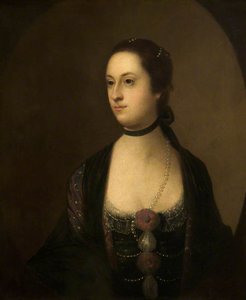
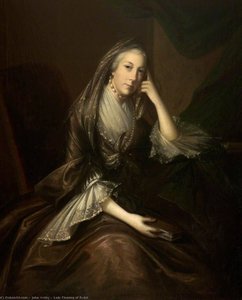
A Life Painted in Intrigue and Style
John Astley’s life reads more like a captivating novel than the biography of a mere painter. Born in Wem, Shropshire, in 1724, into a family with roots in apothecary practice, his early years were marked by an undeniable charm and a penchant for attracting attention – a quality that would define much of his existence. His father, Richard Astley, instilled in him a love for the arts, while his mother, Margaret, provided a grounding in domesticity. From a young age, John was recognized as possessing exceptional beauty, earning him the moniker “Beau Astley,” a title synonymous with dashing good looks and an irresistible allure.
His trajectory shifted dramatically when he entered Caius College, Cambridge, at seventeen. There, under the tutelage of Thomas Hudson, a leading portraitist of the era, he began his formal artistic training. Hudson’s influence was profound, shaping Astley's technique and introducing him to the principles of classical composition. However, it was a journey to Rome that truly ignited his artistic spirit. Supported by the patronage of Lord Chesterfield and Sir Horace Mann, Astley immersed himself in the vibrant art scene of Italy, studying under the renowned Pompeo Batoni – a master known for his elegant and theatrical portraits. This period wasn’t merely about technical skill; it was an immersion into a world of refined taste, aristocratic society, and artistic rivalry.
The Dublin Years: A Portraitist Emerges
Returning to England in 1752, Astley initially settled in Dublin, where he quickly established himself as a sought-after portraitist. His reputation soared, fueled by his undeniable charisma and the sheer volume of commissions he secured. He painted for a diverse clientele – from prominent Irish nobles to wealthy merchants – earning a considerable fortune within just three years. This period witnessed the development of a distinctive style, characterized by its elegance, vivacity, and a subtle theatricality. Accounts from this time paint a vivid picture of Astley as a flamboyant figure, often accompanied by a French valet in jack-boots, indulging in lavish entertainments and captivating his subjects with his charm.
His success in Dublin was not solely due to artistic talent; it was inextricably linked to his personality. He cultivated an image of effortless sophistication, projecting an aura of wealth and refinement that drew people to him. He became known for his extravagant lifestyle, a stark contrast to the more reserved demeanor often associated with artists of the time. This combination of skill and personality created a potent force in the Dublin art market.
Marriage, Estate, and Return to London
In 1759, Astley’s life took another dramatic turn when he married Lady Penelope Dukinfield Daniell, a woman significantly older than himself but possessing considerable wealth and social standing. This union dramatically altered his fortunes, providing him with the financial security he had previously lacked. He inherited a substantial estate at Dukinfield, Cheshire, transforming from a struggling artist into a landed gentleman. However, tragedy struck within just three years of their marriage when Lady Daniell succumbed to illness, leaving Astley a widower and father to two young children.
Despite this personal loss, Astley continued his artistic pursuits in London, establishing a studio and attracting a steady stream of commissions. He maintained connections with influential figures in the art world, including Joshua Reynolds, whose teachings had laid the foundation for his style. His work during this period reflected a growing maturity and a more nuanced understanding of portraiture, though some critics lamented a decline in the flamboyant charm that had characterized his earlier Dublin years.
A Legacy of Elegance and Intrigue
John Astley died in 1787 at the age of 63. His life was one of contradictions – a charming rogue, a successful artist, a wealthy landowner, and a man haunted by personal tragedies. His portraits, characterized by their elegance, vivacity, and subtle theatricality, continue to be admired for their beauty and insight into the social customs of Georgian England. While his reputation as a purely skilled painter has been somewhat overshadowed by the sensationalism surrounding his life, John Astley remains a fascinating figure – a testament to the power of personality in shaping an artist’s legacy. His work offers a glimpse into a world of aristocratic society, lavish entertainments, and the enduring allure of a man who was, undeniably, “the Beau” of British portraiture.
질의응답
John Astley의 작품을 컬러 팔레트별로 둘러볼 수 있나요?
특정 색상 팔레트의 John Astley 작품을 찾으시려면, 작가의 컬러 팔레트별 페이지를 이용해 보세요.
John Astley의 작품을 연도순으로 어디에서 볼 수 있나요?
John Astley의 작품을 연도별로 정리하여 보여주는 작품 연대기 페이지입니다.
John Astley의 작품을 매체별로 찾아볼 수 있나요?
John Astley의 작품은 작가 페이지인 모든 매체에서 매체별로 둘러보실 수 있습니다.