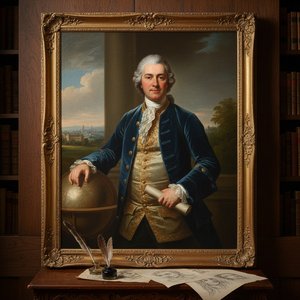
Norman Edgar: A Portraitist of British Dignity
Norman Edgar’s art is a quiet, dignified exploration of the human spirit, particularly as embodied by figures of authority and intellect within British society. Born in Paisley, Scotland, in 1948, Edgar’s journey to becoming one of the nation's foremost portraitists began with a formal education at Glasgow School of Art, followed by years teaching art before he ultimately embraced his own artistic vision. His work isn’t about flamboyant spectacle or dramatic gesture; rather, it’s a meticulous and deeply considered rendering of character, capturing not just likeness but also an underlying sense of presence and bearing. Edgar's style is rooted in the Colourist tradition – a late 19th-century movement emphasizing pure colour and tonal harmony – yet he possesses a distinctly modern sensibility, evident in his subtle use of light and shadow and his ability to convey both strength and vulnerability within his subjects.
Edgar’s early influences were profoundly shaped by the Scottish Colourists—artists like John Duncan and Francis Cadell—whose bold palettes and expressive brushwork he admired. However, Edgar's work also draws inspiration from the Old Masters, particularly Rembrandt and Velázquez, demonstrating a keen understanding of light, anatomy, and psychological depth. This synthesis of influences is evident in his portraits, which are characterized by their realism, emotional resonance, and technical mastery. He has consistently exhibited at prestigious venues such as the Royal Scottish Academy and the Glasgow Institute of Fine Arts, solidifying his reputation within the British art world.
A Portraiture of Power: Key Commissions and Subjects
Edgar’s career is marked by a remarkable string of significant commissions, primarily focused on portraits of prominent figures in British society. These include esteemed politicians, members of the Royal Family, and leading academics – individuals who represent the pinnacle of their respective fields. The portrait of Professor Patrick G. Walsh, for example, captures not just the academic’s appearance but also his intellectual gravitas and scholarly demeanor with remarkable sensitivity. Similarly, his depiction of Princess Anne, the Princess Royal, is a study in regal composure and understated elegance. These works are more than mere likenesses; they are carefully constructed narratives that reveal something essential about the subjects' personalities and roles.
Notable among Edgar’s commissions is ‘Professor MacKay’, a dignified oil painting depicting Professor Norman MacKay, President of the Royal College of Physicians and Surgeons of Glasgow. The portrait showcases Edgar’s ability to imbue his subjects with dignity and authority, utilizing rich colors and meticulous detail to create a truly memorable image. His work for HRH Princess Anne is equally compelling, demonstrating his skill in capturing the nuances of royal presence. These portraits are not simply decorative pieces; they are significant cultural artifacts that offer insights into the individuals they represent and the society they inhabit.
Technique and Style: The Colourist Legacy
At the heart of Edgar’s artistic practice lies a deep understanding and skillful application of the Colourist technique. This approach, championed by artists like Frank Skinner and John Bratby in Scotland, emphasizes the use of pure, unmixed colors to create luminous effects and evoke emotional responses. Edgar masterfully employs this principle, layering hues with precision and creating subtle variations in tone that add depth and richness to his paintings. His brushwork is typically loose and expressive, yet controlled and deliberate, contributing to the overall sense of spontaneity and vitality.
Furthermore, Edgar’s portraits are characterized by a meticulous attention to detail—particularly in the rendering of fabrics, textures, and facial features. He employs a limited palette, primarily consisting of earth tones, blues, and greens, which he skillfully manipulates to create a sense of atmosphere and mood. His use of light is particularly noteworthy; he often utilizes chiaroscuro – the dramatic contrast between light and dark – to sculpt his subjects’ forms and draw attention to key areas of their faces. This technique not only enhances the visual impact of his portraits but also conveys a sense of psychological depth.
Legacy and Influence
Norman Edgar's contribution to British portraiture is significant, solidifying his place as one of the nation’s most respected artists. His work stands apart for its quiet dignity, technical mastery, and profound understanding of human character. While he draws inspiration from the Colourist tradition, Edgar has developed a distinctly modern style that reflects his own artistic vision. His portraits are not merely representations of individuals; they are windows into their souls, offering glimpses of their inner lives and reflecting the values and aspirations of British society.
Beyond his individual achievements, Edgar’s legacy extends to his influence on subsequent generations of portrait artists. His meticulous approach to technique, combined with his sensitivity to psychological depth, has served as a model for many aspiring painters. His work continues to be exhibited and admired throughout the United Kingdom, ensuring that his contribution to British art will endure for years to come.
질의응답
주제별로 분류된 Norman Edgar의 작품들은 어디에서 확인할 수 있나요?
Norman Edgar의 작품은 작가의 주제별 아틀라스 페이지에서 주제별로 찾아보실 수 있습니다.
키워드로 Norman Edgar의 작품을 찾아볼 수 있나요?
특정 주제의 Norman Edgar 작품을 찾으려면 키워드별로 작품이 분류된 작가의 키워드별로 페이지를 이용해 보세요.
Norman Edgar의 작품을 분위기별로 찾아볼 수 있나요?
Norman Edgar의 작품은 각 작품에 담긴 분위기에 따라 분류된 아티스트의 무드 룸 페이지에서 무드별로 감상하실 수 있습니다.