A Portrait of Resilience and Romantic Vision
Ronald Power (1914–1989) stands as a profound figure in American art, a painter whose work serves as a bridge between the meticulous traditions of classical portraiture and the emotional depth of a modern sensibility. Born in Brooklyn, New York, Power possessed an innate artistic talent that blossomed early, fueled by a lifelong fascination with the rhythmic beauty of literature and music. His formative years were deeply influenced by the poetic explorations of figures such as Walt Whitman and Robert Browning, whose works provided him with a template for exploring the complexities of human emotion and experience through a lens of romanticism and resilience.
His formal journey into the world of fine art began at the prestigious Pratt Institute in Brooklyn. It was here that he honed his technical mastery, developing a command over light and form that would become his hallmark. While many of his contemporaries during the mid-20th century were swept up in the tide of burgeoning modernist abstraction, Power made a deliberate and steadfast choice to remain anchored in figurative representation. He sought not merely to replicate the physical likeness of his subjects but to delve into their psychological landscapes, prioritizing expressive nuance and an intimate understanding of the human spirit over stylistic experimentation.
Mastery of Light and Technique
The brilliance of Power’s oeuvre lies in his extraordinary technical precision and his ability to imbue canvas with a palpable sense of atmosphere. His method was one of immense patience, involving the painstaking process of layering thin glazes of oil paint. This technique allowed him to achieve an unparalleled level of tonal subtlety and a luminous quality that seems to radiate from within the paintings themselves. By meticulously studying the interplay of light and shadow, he could convey a sense of mood that transcends the visual, creating works that feel both ethereal and deeply grounded in reality.
This dedication to the craft allowed him to capture a diverse range of subjects with equal emotional resonance:
- Iconic Portraits: His ability to capture the essence of greatness is evident in his depictions of luminaries such as Winston Churchill, Eleanor Roosevelt, and Laurence Olivier.
- Atmospheric Landscapes: Beyond the human figure, Power excelled in creating landscapes imbued with a sense of grandeur and emotional weight, where nature itself becomes a character in his visual narratives.
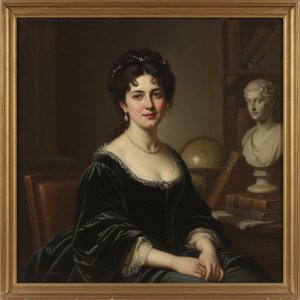
- Intimate Studies: Works like Lady in a Maroon Dress demonstrate his ability to transform a single moment of elegance into an enduring study of intimacy and grace.
Legacy and Historical Significance
Throughout his career, Ronald Power remained committed to the belief that art possesses a unique capacity to illuminate the human spirit. His work does not merely document history; it interprets the emotional textures of the eras in which his subjects lived. By eschewing the fleeting trends of abstraction in favor of a more permanent, figurative language, he created a body of work that remains timeless and deeply relatable.
Today, Power is remembered as a master of psychological depth. His paintings continue to captivate audiences with their luminous color palettes and their ability to evoke a sense of nostalgia and profound connection. He leaves behind a legacy defined by a romantic vision—a vision that finds beauty in the details, strength in resilience, and an eternal light within the human experience.
질의응답
Ronald Power의 작품을 매체별로 찾아볼 수 있나요?
특정 매체로 제작된 Ronald Power의 모든 작품을 확인하시려면, 작가의 모든 매체 페이지를 이용해 주세요.
Ronald Power 작가는 어떤 색상을 가장 자주 사용했나요?
Ronald Power의 팔레트 지놈는 작가의 작품 세계를 구성하는 컬러 프로필을 보여주는 페이지입니다.
미술 사조별로 분류된 Ronald Power의 작품은 어디에서 볼 수 있나요?
Ronald Power의 작품은 작가의 모든 사조 페이지에서 사조별로 둘러보실 수 있습니다.