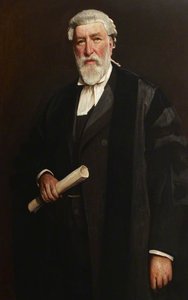
The Architect of Shadows: The Life and Legacy of Sidney Edward Paget
In the fog-shrouded streets of Victorian London, where mystery and deduction met in the gaslit corners of Baker Street, one man’s pen provided the visual heartbeat for a legend. Sidney Edward Paget was not merely an illustrator; he was the visual architect of the world's most famous consulting detective. While Arthur Conan Doyle provided the brilliant mind of Sherlock Holmes through prose, it was Paget who breathed physical form into the character, gifting him the sharp, observant gaze and the iconic silhouette that would haunt the collective imagination for generations. His work transcended simple decoration, acting as a vital bridge between the written word and the reader's sensory experience, crafting an atmosphere of tension and meticulous detail that defined the golden age of detective fiction.
Born on the 4th of October, 1860, to a family of modest means in Clerkenwell, Paget’s journey into the heart of the British art scene began with formal rigor. The son of a vestry clerk and a music professor, he possessed an innate sensitivity to both structure and emotion. His enrollment in the Royal Academy Schools in 1879 marked the beginning of a transformative era. It was within these hallowed halls that Paget forged connections that would later bleed into his most famous narratives. Most notably, he befriended Alfred Morris Butler, an architecture student whose very presence would become etched into the annals of literary history. As Paget sought to ground his illustrations in reality, Butler served as a primary model for the character of Dr. John Watson, ensuring that the companion to Holmes possessed a tangible, human weight that resonated with authenticity.
A Symbiosis of Ink and Imagination
The true explosion of Paget’s fame arrived in 1889, a year that saw the debut of A Study in Scarlet. When commissioned by Doyle to illustrate the burgeoning Holmes canon for The Strand Magazine, Paget embarked on a creative partnership that would yield eighteen profound illustrations. His approach was nothing short of revolutionary for the period. Eschewing the grand, theatrical gestures common in contemporary periodical art, Paget embraced a philosophy of understated observation. He understood that the essence of a detective story lies in the minute, often overlooked detail—the smudge of ash, the particular tilt of a hat, or the subtle tension in a sitter's hand. Through his masterful use of charcoal and pencil, he created compositions that prioritized the logic of deduction, mirroring the very mental processes of his protagonists.
His technical prowess allowed him to navigate the complex textures of Victorian life, from the opulent drawing rooms of the elite to the grimy, claustrophobic alleys of the East End. This versatility ensured that his work felt deeply embedded in the social fabric of the era. Beyond the Holmesian triumphs, Paget’s talent was recognized by the prestigious Royal Academy, where he exhibited numerous portraits and paintings between 1879 and 1905. His ability to capture psychological depth through subtle facial expressions allowed him to portray characters not as mere archetypes, but as living, breathing entities caught in the throes of mystery and peril.
The Enduring Silhouette
Though his life was tragically short, ending in 1908 at the age of forty-seven, the impact of Sidney Edward Paget remains indelible. He belonged to a remarkable lineage of illustrators; his brothers, Henry M. Paget and Walter Paget, were also significant contributors to the visual landscape of their time. Yet, it is the middle brother, Sidney, who achieved a unique form of immortality. His illustrations did more than just accompany text; they established the visual vocabulary for an entire genre. When we imagine Holmes leaning forward in thought or Watson observing with wary curiosity, we are seeing through the lens that Paget polished.
The historical significance of his work lies in its ability to have shaped the very identity of a cultural icon. Without Paget’s meticulous attention to the nuances of costume, light, and shadow, the visual legacy of Sherlock Holmes might have lacked the grounded, gritty realism that makes the character so enduring. He remains a master of the atmospheric, a storyteller who used the tip of a pencil to weave shadows into the very fabric of London's history, ensuring that even long after the gaslights dimmed, the image of the Great Detective would remain forever clear.
Q&A
Sidney Edward Paget의 작품을 컬러 팔레트별로 둘러볼 수 있나요?
컬러 팔레트별로 보기 페이지에서는 Sidney Edward Paget의 작품들을 색상 팔레트별로 모아볼 수 있습니다.
Sidney Edward Paget의 다른 이름이나 별칭에는 무엇이 있나요?
Sidney Edward Paget은(는) S. E. Paget, Sidney Paget(으)로도 알려져 있습니다.
Sidney Edward Paget의 작품 중 몇 점을 둘러보실 수 있나요?
전체 작품 보기 페이지에서 Sidney Edward Paget의 작품 작품 5점점을 만나보실 수 있습니다.