

The Ukiyo-e shortlist
Famous Ukiyo-e 아티스트 — Top 39 List
가쓰시카 호쿠사이 (1760–1849) is the most famous Ukiyo-e 아티스트, best known for 神奈川沖浪図 (かながわおきなみず) 및 후지산: 맑은 날씨 (붉은 후지). Then 우타가와 히로시게, 기타가와 우타마로, 요시토시 및 토리이 키요나가. The list covers 39 아티스트 born between 1618 and 1880 in 2 countries, from 히시카와 모로노부 to Goyō Hashiguchi.
Method. Scope: artists filed under Ukiyo-e in our catalogue. Order: our artist fame ranking. Excluded: artists born after 1955 without a Wikidata identifier. Wikipedia figure: languages with an article, out of our 32.


Key data
Ukiyo-e: key data
- 39아티스트
- 1618–1880출생 연도
- 2출생 국가
- 0여성
- 1현역 작가
- 5,890카탈로그 내 작품들
- 주요 작품을 가장 많이 보유한 미술관
- Bujalance Collection (11), 메트로폴리탄 미술관 (10), 게이오 대학교 도서관 (9), 미니애폴리스 미술관 (5)
Ranked list
39 Ukiyo-e 아티스트, ranked with key works


6/ 39
우타가와 구니요시 1798–1861
일본인 b. 도쿄 우키요에 Wikipedia 24/32

Trained by Utagawa Toyokuni I #13 · Trained Utagawa Yoshitora #32


12/ 39
Keisai Eisen 1790–1848
Japanese b. Edo Bunsei Era Ukiyo-e Wikipedia 15/32

In the vibrant, flickering light of 19th-century Edo, few artists captured the pulse of the "floating world" with as much evocative intensity as Keisai Eisen. This shift defined the aesthetic of the Bunsei era (1818–1830), a period often characterized by its decadent and psychologically complex atmosphere. In works such as his depictions of Fukaya Station or Ageo Station, he transformed mere topographical records into cinematic snapshots of life in motion.


13/ 39
Utagawa Toyokuni I 1769–1825
Japanese b. Shiba Ukiyo-e Wikipedia 13/32

Unlike some artists blessed with immediate, innate talent, Toyokuni appears to have been a dedicated student, meticulously absorbing the techniques and aesthetics of those who preceded him.
Trained Utagawa Kunimasa #15, Utagawa Toyokuni II #35


15/ 39
Utagawa Kunimasa 1773–1810
Japanese b. Aizuwakamatsu Utagawa School

He served as a vital link in the evolution of Japanese printmaking, helping to refine the stylistic language that would later be perfected by masters like Hiroshige and Kuniyoshi.


16/ 39
Nishikawa Sukenobu 1671–1750
Japanese b. Kyoto Ukiyo-e Wikipedia 9/32

Beyond his celebrated prints, Sukenobu produced an impressive array of paintings encompassing kimono patterns, samurai portraits, illustrations of classical literature, and landscapes.


17/ 39
Sharaku
Japan ukiyo-e Wikipedia 19/32

His portraits are noted for their ability to capture the psychology of a character through heightened theatrical gestures and expressive, almost caricature-like exaggerations.


18/ 39
Utashige
Japanese Ukiyo-e

This quiet revolution – a departure from the more flamboyant styles of his predecessors – established Hiroshige as a uniquely sensitive and poetic artist, whose work continues to inspire awe and contemplation centuries later.


19/ 39
Miyagawa Chōshun 1683–1753
Japanese b. Miyagawa Ukiyo-e Wikipedia 9/32

His subjects—often the elegant courtesans of the pleasure districts—were depicted with a fuller, more voluptuous grace than the slender, stylized figures seen in the works of later artists like Harunobu.


20/ 39
Goyō Hashiguchi 1880–1921
Dutch b. Kagoshima Post-Impressionism

In 1907 he won recognition for an ukiyo-e oil painting in the first Bunten show, but felt unfulfilled by public acceptance and returned to woodblock printing.


21/ 39
Isoda Koryūsai 1735–1790
Japanese b. Tokyo Ukiyo-e Wikipedia 10/32

In the vibrant, bustling heart of the Edo period, a golden age of Japanese creativity, few names resonate with as much elegance and prolific energy as Isoda Koryūsai. Born in 1735 in the burgeoning metropolis of Tokyo—then known as Edo—Koryūsai was a man shaped by the dualities of his era.


22/ 39
Ogata Gekko 1859–1920
Japanese b. Tokyo Ukiyo-e, Nihonga Wikipedia 9/32

His most celebrated series, “One Hundred Views of Mount Fuji” (1896-1905), exemplifies his mastery.


24/ 39
Adachi Ginko 1853년생
Japanese Ukiyo-e
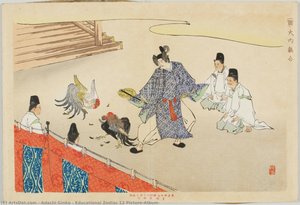
In the vibrant, transformative era of the late Meiji period, few artists captured the shifting soul of Japan as vividly as Adachi Ginkō. Born in 1853, a time when the traditional structures of the Edo period were beginning to yield to the rapid modernization of the West, Ginkō emerged as a master of the Ukiyo-e tradition.


25/ 39
Toyohara Chikanobu 1838–1912
Japanese Shin-hanga

In the twilight of the Edo period and the dawn of a modernizing Japan, few artists captured the profound tension between tradition and transformation as masterfully as Toyohara Chikanobu.


26/ 39
우타가와 토요히로 1773–1828
Japanese b. Toyooka Ukiyo-e Wikipedia 8/32

In the vibrant tapestry of the Edo period, few names resonate with the quiet elegance and technical mastery of Utagawa Toyohiro. Born as Okajima Tōjiro in Toyooka, Japan, this distinguished artist emerged as a pivotal figure within the renowned Utagawa school.


27/ 39
Mizuno Toshikata 1866–1908
Japanese b. Tokyo Ukiyo-e, Kuchi-e

Unlike the often-dramatic compositions favored by Yoshitoshi, Toshikata's works are imbued with an understated elegance and a profound sense of sentimentality. Several notable works by Mizuno Toshikata can be found in prestigious collections, including those at the Keio University Library and the Meiji Jingu Forest Festival of Art.


28/ 39
Ishikawa Toyonobu 1711–1785
Japanese b. Tokyo Ukiyo-e (Lacquer Print Art) Wikipedia 7/32

Among them stands Nishimura Shigenobu, also known as Ishikawa Toyonobu (1711–1785), a figure whose work embodies both the elegance and subtle sensuality characteristic of early ukiyo-e. He is often considered to have been the same person as Nishimura Shigenobu, a contemporary artist and student of Nishimura Shigenaga. Toyonobu’s artistic education began under the tutelage of Nishimura Shigenaga, a pupil of the renowned Okumura Masanobu.


29/ 39
Kogyo Sakamaki 1869–1927
Japanese Noh Theatre Prints

His prints continue to be studied by scholars and admired by collectors alike, serving as invaluable documents of Noh theatre’s cultural history and embodying the artistic ideals of the Meiji era—a testament to Sakamaki’s enduring legacy as a master of ukiyo-e and a poet of Japanese tradition.


30/ 39
Hokkei 1780–1850
b. Tokyo Wikipedia 8/32

The Tale of Genji, considered one of the greatest works of Japanese literature, depicts the complex lives and romantic entanglements within the Heian court.


31/ 39
Sadatora
Japanese b. Tokyo Ukiyo-e

Born around 1825 in the bustling metropolis of Tokyo, Sadatora was more than just a practitioner of woodblock printing; he was a poet of the atmospheric and the transient.


32/ 39
Utagawa Yoshitora

His artistic journey unfolded under several names – Ichimōsai Yoshitora, Kinchōrō Yoshitora, and Mosai Yoshitora – a practice not uncommon among ukiyo-e artists who adopted different art names throughout their careers to mark stylistic shifts or periods of production.


34/ 39
우타가와 쿠니사다 Ii 1823–1880
일본 b. 도쿄 우키요에 (야쿠샤에) Wikipedia 6/32

AllPaintingsStore.com에서 노노야마 코잔의 회화 발견하기. 1823년: 일본 에도에서 탄생. 1850-51년: 쿠니사다 II 라는 이름을 사용하기 시작. 1852년: 팔견전 제작. 1868–1912년: 메이지 시대, 그의 예술적 인기가 쇠퇴한 시기. 1880년 7월 20일: 별세 후 반쇼인 코운지 에 안치. 홋카이도 현립 근대 미술관 (일본) - 문화적 안식처.


35/ 39
Utagawa Toyokuni II 1777–1835
Japanese Ukiyo-e Wikipedia 4/32

Hiroshige's fame rests largely upon his monumental Tokaido series (1830–1832), a meticulously planned depiction of the 67 stations along Japan’s ancient pilgrimage route from Edo to Kyoto.
Trained by Utagawa Toyokuni I #13


36/ 39
Utagawa Yoshitaki 1841–1899
Japanese b. Osaka Ukiyo-e Wikipedia 4/32

His skillful use of shading and perspective created an illusion of depth and movement, effectively capturing the theatricality of the Kabuki stage.


37/ 39
Utagawa Kunitsuna Ii, Ichiransai, Sadashige
Japanese Ukiyo-e

Pinpointing Kunitsuna’s artistic lineage proves challenging due to the limited documentation surrounding his early career.


38/ 39
Utagawa Yoshikazu
Japanese b. Edo Ukiyo-e, Yokohama-e Wikipedia 3/32

He demonstrated a particular mastery of capturing textures and materials, from the sheen of Western fabrics to the rough surfaces of Japanese buildings. Among Yoshikazu’s most celebrated works are prints like “ American Family Print ” (1861) and “ Modern Ups and Downs Contests: Yokohama Merchants Referee (between) Entertainers and Non-workers,” which vividly portray the social dynamics of Yokohama during this period.


39/ 39
Shunkōsai Hokushū
Japanese b. Osaka Kamigata-e Wikipedia 3/32

The Osaka Style Emerges: Unlike the Edo-period’s dominant trend of producing prints in Tokyo, Hokuchō remained firmly rooted in Osaka. Osaka’s Artistic Landscape: Hokuchō's artistic output reflects Osaka’s position as a center of theatrical culture during the early 19th century.


Best-known works
Famous Ukiyo-e paintings by artist
Chronology
Ukiyo-e chronology
- 1656
- 1785
- 1790
- 1809
- 1825
- 1825
- 1827
- 1831
- 1850
- 1855
- 1857
- 1867
- 1870
- 1888
Statistics
Counts by country, period and museum
| Japan | 20 |
|---|---|
| 일본 | 16 |
| 17th 세기 | 3 |
|---|---|
| 18th 세기 | 17 |
| 19th 세기 | 12 |
| Bujalance Collection | 11 |
|---|---|
| 메트로폴리탄 미술관 | 10 |
| 게이오 대학교 도서관 | 9 |
| 미니애폴리스 미술관 | 5 |
| 인디애나폴리스 미술관 (Indianapolis Museum of Art) | 2 |
| Hill-Stead Museum | 2 |
| 브루클린 미술관 | 2 |
| 클리블랜드 미술관 | 2 |
Index
Full list of 39 famous Ukiyo-e 아티스트
- 1
 가쓰시카 호쿠사이일본인 · 1760–1849
- 2
 우타가와 히로시게일본 · 1797–1858
- 3
 기타가와 우타마로일본 · 1753–1806
- 4
 요시토시일본 · 1839–1892
- 5
 토리이 키요나가일본 · 1752–1815
- 6우타가와 구니요시일본인 · 1798–1861
- 7
 스즈키 하루노부일본 · 1724–1770
- 8
 히시카와 모로노부일본 · 1618–1694
- 9
 우타가와 구니사다일본 · 1786–1865
- 10
 초분사이 에이시일본 · 1756–1829
- 11
 가와나베 교사이일본 · 1831–1889
- 12Keisai EisenJapanese · 1790–1848
- 13Utagawa Toyokuni IJapanese · 1769–1825
- 14
 우타가와 히로시게Japanese · 1797–1858
- 15Utagawa KunimasaJapanese · 1773–1810
- 16Nishikawa SukenobuJapanese · 1671–1750
- 17SharakuJapan ·
- 18UtashigeJapanese ·
- 19Miyagawa ChōshunJapanese · 1683–1753
- 20Goyō HashiguchiDutch · 1880–1921
- 21Isoda KoryūsaiJapanese · 1735–1790
- 22Ogata GekkoJapanese · 1859–1920
- 23
 고바야시 기요치카일본 · 1847–1915
- 24Adachi GinkoJapanese · 1853년생
- 25Toyohara ChikanobuJapanese · 1838–1912
- 26우타가와 토요히로Japanese · 1773–1828
- 27Mizuno ToshikataJapanese · 1866–1908
- 28Ishikawa ToyonobuJapanese · 1711–1785
- 29Kogyo SakamakiJapanese · 1869–1927
- 30Hokkei1780–1850
- 31SadatoraJapanese ·
- 32Utagawa Yoshitora
- 33
 토요하라 쿠니치카일본 · 1835–1900
- 34우타가와 쿠니사다 Ii일본 · 1823–1880
- 35Utagawa Toyokuni IIJapanese · 1777–1835
- 36Utagawa YoshitakiJapanese · 1841–1899
- 37Utagawa Kunitsuna Ii, Ichiransai, SadashigeJapanese ·
- 38Utagawa YoshikazuJapanese ·
- 39Shunkōsai HokushūJapanese ·
FAQ
Ukiyo-e: quick answers
가장 위대한 Ukiyo-e 아티스트는 누구였나요?
모두가 알아야 할 Ukiyo-e 아티스트 5인은 누구인가요?
Ukiyo-e art는 어느 시대에 번성했나요?
이 목록에 있는 대부분의 아티스트는 18th 세기(39명 중 17명)에 태어났으며, 전체적으로는 1618에서 1880 사이에 해당합니다.
어떤 Ukiyo-e 거장들이 다른 유명한 아티스트들을 양성했나요?
Utagawa Toyokuni I (#13)가 Utagawa Kunimasa (#15) 및 Utagawa Toyokuni II (#35)를 가르침; 우타가와 구니요시 (#6)가 Utagawa Yoshitora (#32)를 가르침.
가장 유명한 현대 Ukiyo-e 아티스트는 누구인가요?
이 목록에서 가장 높은 순위를 차지한 생존 아티스트는 Adachi Ginko (#24)입니다.
최초의 Ukiyo-e 아티스트는 누구인가요?
이 목록에서 가장 먼저 태어난 아티스트는 1618년에 태어난 히시카와 모로노부 (#8)입니다.
Ukiyo-e art는 어디에서 볼 수 있나요?
이 목록의 주요 작품을 가장 많이 소장하고 있는 박물관은 Bujalance Collection (11), 메트로폴리탄 미술관 (10) 및 게이오 대학교 도서관 (9)입니다.
어느 나라에서 가장 많은 Ukiyo-e 아티스트가 탄생했나요?
Japan: 이 목록에 포함된 39명의 아티스트 중 20명은 이곳에서 태어났으며, 나머지 일본 (16)명은 다른 곳에서 태어났습니다.
Ukiyo-e art를 정의하는 기법은 무엇인가요?
“The son of a respected calligrapher, Shigeharu, Eisen was raised in an environment steeped in the delicate arts of poetry and brushwork.” — Keisai Eisen (#12)의 전기에서 발췌하였습니다.
일본 출신의 Ukiyo-e 아티스트 중 가장 유명한 작품은 무엇인가요?
어느 도시에서 가장 많은 Ukiyo-e 아티스트가 탄생했나요?
도쿄: 이 목록에 있는 아티스트 중 6명이 이곳에서 태어났습니다.
Ukiyo-e art는 어디에서 구매할 수 있나요?
저희 카탈로그에는 이 아티스트의 작품 5,890점이 수록되어 있습니다. 각 작품은 수작업 유화 복제화 또는 프린트로 주문하실 수 있습니다.
Guides
AllPaintingsStore.com guides
Other lists
Famous artists by movement
 유명한 Baroque 예술가밤의 망루 (De Nachtwacht) · 렘브란트
 유명한 Contemporary Realist 예술가이삭 줍는 사람들 · 장프랑수아 밀레
 유명한 Impressionist 예술가별이 빛나는 밤 (뉴욕, MoMA) · 빈센트 반 고흐
 유명한 Romanticist 예술가토성, 그의 아들을 잡아먹는 중 · 프란시스코 데 고야
 유명한 Neoclassicist 예술가마라의 죽음 · 자크루이 다비드
 유명한 Realist 예술가세계의 기원 · 귀스타브 쿠르베
 유명한 Dutch Golden Age 예술가진주 귀걸이를 한 소녀 · 요하네스 페르메이르
 유명한 Renaissance 예술가모나리자 (라 죠콘다) · 레오나르도 다 빈치
 유명한 Expressionist 예술가구성 VII · 바실리 칸딘스키
 유명한 Rococo 예술가사랑의 교훈 · 앙투안 바토
By period
Famous artists by period
 유명한 Early Medieval 예술가Snowy River · 왕유
 유명한 High Medieval 예술가마에스타의 마돈나 (오니산티 마돈나) · 조토 디 본도네
 유명한 Late Medieval 예술가수태고지와 두 성인 · 시모네 마르티니
 유명한 Renaissance 예술가아담의 창조 · 미켈란젤로 부오나로티
 유명한 Early Modern 예술가마태오의 부르심 · 카라바조
 유명한 19th Century 예술가수련 (또는 연꽃) · 클로드 모네
 유명한 Modern 예술가게르니카 · 파블로 피카소
 유명한 Contemporary 예술가Wind Sculpture III (one in a series of nine) · Yinka Shonibare
Related lists