Valentin Khrushch: A Pioneer of Ukrainian Nonconformism
Early Life and Education
Valentin Khrushch was born on January 24, 1943, in occupied Odesa, Ukraine. His early life was shaped by the tumultuous environment of wartime and its aftermath. In the 1950s, he pursued formal artistic training at the Odesa Art School, where he studied under notable instructors including Zaitsev, Yegorov, Pavlyuk, and Fraerman. This foundational education provided him with technical skills but also exposed him to traditional artistic approaches that he would later challenge.The Rise of Nonconformism
During the 1960s and 70s, Khrushch emerged as a key figure in the burgeoning non-conformist and underground art scene in both Odesa and Moscow. This movement represented a rejection of the officially sanctioned Socialist Realism prevalent in the Soviet Union. Artists sought alternative modes of expression, often exploring abstract forms, subjective experiences, and critical social commentary. Khrushch became instrumental in organizing unconventional exhibitions that bypassed state control.The ‘Fence Exhibition’ and Apartment Shows
Perhaps Khrushch's most iconic contribution was the organization of “open-air” exhibitions – displaying artwork directly on fences along city streets. The 1967 exhibition, "Sychik + Hrushchik," co-organized with Stanislav Sychev on the Odesa Opera Theater fence, is widely considered the starting point for ‘Odesa Nonconformism.’ Though lasting only three hours, it was a bold act of artistic defiance. He also pioneered “apartment exhibitions,” intimate shows held in private homes, providing a safe haven for unofficial artists to showcase their work and connect with audiences.Artistic Style and Themes
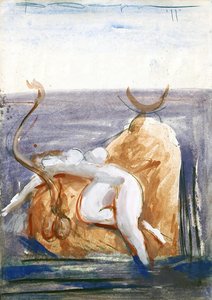
Khrushch’s own artwork is characterized by an expressionist style, often featuring bold colors, dynamic compositions, and emotionally charged subject matter. His paintings frequently explored themes of alienation, social critique, and the human condition. While his work evolved over time, it consistently reflected a commitment to artistic freedom and individual expression.International Recognition and Later Years
From the late 1970s onward, Khrushch’s name – along with those of other Odesa Nonconformists like Alexander Anufriev, Vladimir Strelnikov, Lyudmila Yastreb, Victor Marinyuk, Stanislav Sychov, and Valeriy Basanets – began to appear in international art catalogs and exhibitions. He participated in the unofficial exhibition “Contemporary Art from Ukraine” (Munich-London-Paris-New York) in 1979 and exhibited his work at UNESCO in Paris. In 1982, he relocated from Odesa to Moscow. His final years were spent in Kimry, Tver region, where he tragically passed away from cancer on January 24, 2005, and was buried near the St. Nicholas Church fence.Legacy and Historical Significance
Valentin Khrushch’s legacy extends beyond his own artistic output. He played a pivotal role in fostering a vibrant underground art community in Ukraine and challenging the constraints of Soviet censorship. His innovative exhibition practices – the ‘fence exhibitions’ and ‘apartment shows’ – provided crucial platforms for artists to connect with audiences and assert their creative independence. His work is now held in prestigious collections, including UNESCO in Paris, the National Museum of Vienna, and various Ukrainian museums, solidifying his place as a significant figure in 20th-century art history.Collections
- UNESCO, Paris
- National Museum of Vienna, Austria
- National Art Museum of Ukraine
- Odesa Fine Arts Museum
- Museum of Odesa Modern Art
- Zimmerli Art Museum (New Jersey, USA)
Q&A
Valentin Khrushch의 작품은 얼마나 인기가 있나요?
이 사이트에서 Valentin Khrushch의 작품에 관한 통계를 확인할 수 있는 방문 통계 페이지를 만나보세요.
Valentin Khrushch의 출생 도시와 국가는 어디인가요?
Valentin Khrushch은(는) Ukraine Odesa에서 태어났습니다.
Valentin Khrushch의 활동 시기는 어떻게 구분되어 있나요?
Valentin Khrushch의 작품 세계를 시간순으로 정리한 기록은 아티스트 연대기 페이지에서 확인하실 수 있으며, 이곳에서는 각 시기별로 분류된 챕터를 따라 작품들을 제작 순서대로 만나보실 수 있습니다.
특정 색상 팔레트의 Valentin Khrushch 작품은 어디에서 찾아볼 수 있나요?
컬러 팔레트별로 보기 페이지에서는 Valentin Khrushch의 작품들을 색상 팔레트별로 모아볼 수 있습니다.