Xi Gang: Weaver of Landscapes, Sculptor of Silence
Xi Gang (1746 – 1803), a name now synonymous with the serene beauty of late Qing Dynasty landscape painting and seal carving, was more than just an artist; he was a meticulous craftsman deeply rooted in tradition yet subtly pushing the boundaries of his art form. Born in Qiántáng, a bustling city within present-day Hangzhou, Xi Gang’s early life laid the foundation for a career dedicated to capturing the essence of nature through both brush and stone. His origins were humble – a commoner by birth – but his talent quickly distinguished him, leading him to study under Hua Yan, a master renowned for his evocative landscapes and meticulous attention to detail. This formative period instilled in Xi Gang a profound respect for the natural world and a commitment to mirroring its beauty with unwavering precision.
The Seal Carver’s Hand: A Dual Identity
Xi Gang's artistic journey was remarkably unique, defined by his simultaneous mastery of two distinct yet interconnected disciplines: landscape painting and seal carving. While many artists focused solely on one medium, Xi Gang seamlessly integrated these skills, creating a distinctive style characterized by both the fluidity of brushstrokes and the sharp, deliberate lines of carved seals. This duality wasn’t merely stylistic; it reflected a deep understanding of materiality and process. His seal carvings, often imbued with poetic inscriptions, served as visual anchors for his paintings, reinforcing themes of harmony, tranquility, and the cyclical nature of life. The Zhe School of carving, to which he belonged alongside Ding Jing, prized clarity and precision – qualities that directly informed his painting style, resulting in a remarkable consistency between his two artistic expressions. His method was considered cleaner and sharper than Ding Jing’s, reflecting a refined aesthetic sensibility.
A Southern School Master: Echoes of Tradition, Hints of Innovation
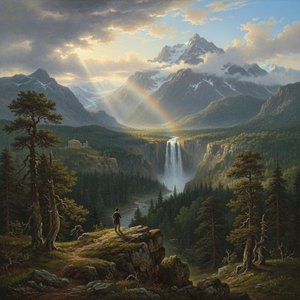
Xi Gang's work firmly places him within the Southern School of Chinese painting – a movement known for its emphasis on atmospheric perspective, subtle color palettes, and a deep appreciation for the natural world. Unlike the more rigid formalism of the Northern School, the Southern School embraced spontaneity and a sense of immediacy, capturing fleeting moments of beauty with remarkable skill. Xi Gang’s paintings often depict scenes of mountains, rivers, and forests bathed in soft light, evoking a profound sense of peace and contemplation. He skillfully employed techniques such as *shanshui* (mountain-water painting), layering washes of ink to create depth and texture, and utilizing subtle variations in tone to suggest atmospheric conditions. While deeply rooted in tradition, Xi Gang’s work demonstrates a quiet innovation – a willingness to experiment with brushwork and composition while remaining true to the core principles of the Southern School.
Notable Works and Legacy
Among Xi Gang's most celebrated works are “Bamboo and Plum Blossoms” (currently housed at the Minneapolis Institute of Art) and “Guanyin” (held by Yale University Art Gallery). These paintings exemplify his signature style: meticulously rendered landscapes imbued with a sense of quiet contemplation. “Bamboo and Plum Blossoms,” in particular, showcases his mastery of *shanshui* techniques, creating an illusion of depth and atmosphere through subtle variations in ink tone. His seals, often inscribed with evocative poetry or philosophical reflections, are equally remarkable for their precision and elegance. Xi Gang’s influence extended beyond his own lifetime, inspiring subsequent generations of artists who sought to emulate his mastery of landscape painting and seal carving. His work continues to be studied and admired today as a testament to the enduring power of traditional Chinese art.
A Lasting Impression: Beyond Technique
Xi Gang’s legacy transcends mere technical skill; he embodied a philosophy of artistic practice rooted in reverence for nature, discipline, and a deep understanding of material culture. His work is not simply beautiful to look at—it invites contemplation, prompting viewers to consider their place within the vastness of the natural world. He was a master of capturing the essence of tranquility, a skill that resonated deeply with audiences during his lifetime and continues to captivate art lovers today. Xi Gang remains a pivotal figure in Chinese artistic history, a testament to the enduring power of tradition and innovation.
Explore the rich history of landscape art with AllPaintingsStore. Discover renowned artists, movements like Impressionism & tonalism, and expert guidance for collecting timeless pieces. Find your perfect serene escape today!
Explore the captivating world of 19th-century landscape painting! Discover renowned artists like Friedrich & Monet, key movements, and find the perfect artwork to bring nature's serenity into your home. Expert insights at AllPaintingsStore.