


 Peržiūrėti realaus dydžio版
 Pasidalinti
 Dalintis
 Išsamiau
 Vadovas

 Atsisiųsti
 Panašūs eksponatai
 Rentgeno spindulių nuotrauka
 Automatinė diorama
 Q&A
Q&A Statistika
Poem
 Acrylic On Canvas
- WallArt
- Expressionism
 1910
1910 29.0 x 19.0 cm
 Skaityti daugiau
Giclée / Meno spausdinimas
Muziejų lygio „giclée“ arba drobos spausdinimas: greita gamyba ir lankstios apdailos parinktys. ( Pirkti rankų darbo tapybą Perejti prie skaitmeninių vaizdų)




P118B €10

P118H €10

P118W €10

P438Z €10

P508JH €12

P508YH €12

P805H €10

P805Z €10

P919BZ €10

P919G €10

P919XJ €10

P959ZH €10

P968JZ €12

W106C €8

W218G €10

W218JH €8

W218Y €10

W307PJ €10

W316G €10

W316PJ €8

W316Y €10

W398PJ €8

W4111J €10

W500HY €15

W500JH €15

W692G €12

W849H €8

W940BG €15

W953PJ €8




Pasirinkite iš mūsų nustatytų dydžių, atitinkančių originalaus meno kūrinio proporcijas.

Įveskite jums reikiamą plotį ir aukštį, kad atvaizdas derėtų prie jūsų rėmo ar sienos. Spausdiną galima tik sumažinti, bet nepadidinti virš originalaus paveikslėlio dydžio, todėl keičiant proporcijas, dalis vaizdo prarandama. Prieš spausdinimą atsiųsime jums skaitmeninį maketą patvirtinimui. Šioje puslapio nuotraukoje matomas pjūvis nėra tikslus – jį rodo tik maketas.
Pristatymas visame pasaulyje () per 2 weeks, o ne įprastas 4/5 savaičių laikotarpis. (30 spalis)

Nemokamas greitasis pristatymas visame pasaulyje

Aukštos kokybės lininis drobė

Pilnas siuntimo draudimas

Muitinės mokesčių grąžinimo garantija

Tikro spalvų atitikimo garantija

100 dienų grąžinimo politika (tik esant įtaigoms)

100% pinigų grąžinimo garantija

Nuolaida dideliems užsakymams
 Stiklo variantas prieinamas tik pasirinkus dydį iki 110 cm

Poem
Giclée / Meno spausdinimas
Reprodukcijos matmenys
-


Bendroji kaina
€ 56
A Fragment of Intensity: Examining Egon Schiele’s ‘Poem’
Egon Schiele’s “Poem,” completed in 1910, stands as a deceptively simple yet profoundly resonant testament to the artist's signature style and his preoccupation with themes of vulnerability and unspoken emotion. This unassuming watercolor—measuring 29 x 19 cm—captures a moment frozen in time: a sheet of paper bearing handwritten words, rendered in muted tones that amplify rather than diminish their impact.
The photograph itself presents a deliberate ambiguity. The blurry texture of the paper suggests age and preservation, hinting at a history unseen but felt nonetheless. It’s not merely an image of text; it's an emblem of communication—or perhaps its absence—a subtle invitation to contemplate what lies beneath the surface.
The Expressionist Palette: Technique and Style
- Watercolor Medium: Schiele favored watercolor for its ability to achieve delicate gradations of color and luminosity, qualities perfectly suited to conveying psychological states. Unlike oil paints which offer bolder hues and textural richness, watercolor allows for a softer, more ethereal quality that mirrors the artist’s introspective gaze.
- Linear Emphasis: Characteristic of Schiele's oeuvre is his masterful use of line—thick, agitated strokes that delineate forms with unsettling precision. These lines aren’t merely descriptive; they embody movement and tension, mirroring the inner turmoil he sought to express.
- Monochromatic Undertones: Despite its apparent simplicity, “Poem” employs a carefully considered monochromatic palette dominated by shades of grey and brown. This deliberate restraint serves to heighten the emotional intensity of the piece, focusing attention on the contours of the paper and the subtle nuances of light and shadow.
Historical Context: Vienna’s Artistic Crucible
Schiele's work emerged during Vienna’s vibrant artistic milieu—a period marked by experimentation and a fervent embrace of Expressionism. Influenced heavily by Gustav Klimt, Schiele wrestled with anxieties surrounding sexuality, mortality, and the human condition. The painting reflects this broader cultural preoccupation with confronting uncomfortable truths about existence.
Vienna at the turn of the century was undergoing rapid social change—industrialization, urbanization, and burgeoning intellectual currents challenged traditional values. Artists like Schiele responded to these shifts by rejecting academic conventions in favor of emotionally charged imagery that prioritized subjective experience over objective representation. “Poem” embodies this spirit of rebellion against established norms.
Symbolism Beyond the Surface: The Weight of Words
The handwritten words on the paper are deliberately obscured, adding another layer of complexity to the artwork’s symbolic significance. They represent unspoken thoughts—perhaps desires, fears, or confessions—that remain hidden from view. This deliberate concealment underscores Schiele's fascination with psychological depth and his ability to convey emotion through visual suggestion.
The paper itself serves as a metaphor for fragility—a vulnerable surface bearing the marks of time and experience. Like Schiele’s own life, “Poem” confronts us with the inevitability of decay and loss, prompting contemplation on the ephemeral nature of beauty and consciousness. It's a piece that lingers in the mind long after viewing, inviting repeated observation and rewarding careful consideration.
Klausimai ir atsakymai
Kaip aprašoma „Poem“ – Egon Šylė spalvų paletė?
„Poem“ – Egon Šylė kūryboje naudojama Pastels spalvų paletė, kuri apibūdina bendrą viso kūrinio spalvų charakterį.
Kokia buvo Egon Šylė amžius sukuriant „Poem"]?
Egon Šylė buvo 20 metų, kai 1910 m. sukūrė kūrinį „Poem“. Amžius apskaičiuotas remiantis gimimo metais 1890.
Kiek šviesos, kaip atrodo, atspindi „Poem“ spalvos?
„Poem“ spalvos pasižymi Luminous šviesos intensyvumu.
panašūs kūriniai


Autoriaus biografija
Egon Schiele
Austrijos pozicija dviejų pasaulinio karo horizonte buvo labai abejojanti: vienu metu ji buvo šiek tiek iš Šiaurės į rytus, lengvai įsitikinusi veiksmų vyrai. Mažėjęs šalis po 1918 m., beveik visiškai neišplitusi tarptautiniu pasauliu buvo lengvai įvykdinta Hitlerio Reichui 1938 m.; meno srityje tai reiškė kad modernizmo istorija buvo išvykstanti nuo Šiaurės iki pietų, su pagrindiniu dėmesiu į formą. Vokelių šiek tiek pripažino ekspresionizmą kaip svarbų meno srovę; jis buvo vienas iš žymiausius austrių artistas XX amžiaus pradžioje – kartu su Gustavu Klimtu ir Oskar Kokoschka išvykę į Vieną buvo laikomas vienu iš Žyduvo šimtmečio svarbiausių vizualinių menininkų.
Gyvenimas
Egonas Šylė gimė 1890 m. vasario 3 d. Tulne, Austrijoje. Jo tėvas Adolfas Šylė buvo Tulno geležinkelio stoties direktorius ir gimė 1851 m. Vienoje Adolfo Šyly tevai turėjo tris jaunesnes seseris: Elvirą, Melaniją ir Gertrūdą. Elvira mirė vaikyste dėl gimtinių sifiliso. Jo tėvas buvo užsikrėtęs sifiliu įsimėlynėje savo jaunystės metais po vienos jo naujosios žmonos išėjimo iš kambario.
Meno vystymasis
Šylė mokytojo Christian Griepenkerl įtaką išgyveno Vienoje 1907 m. ir G. Klimtas tapo jo svarbiu rėmėju. Šylė paliko akademiją 1906 m., nes jos mokymo metodai buvo labai konservatyvus, ir įkūrė Naują austrių dailės grupę 1909 m. Grupėje vyravo ekspresionistinė estetika, kuri iššūkiant šiuolaikinėms kultūros normas.
Žymūs kūriniai
Šylė buvo vienas iš žymiausius austrių artistas XX amžiaus pradžioje – kartu su Gustavu Klimtu ir Oskar Kokoschka išvykę į Vieną buvo laikomas vienu iš Žyduvo šimtmečio svarbiausių vizualinių menininkų. Šylė buvo ekspresionizmo meno srovės atstovas.
Žymūs veiksniai
Šylė buvo žinomas dėl savo iššūkiantį įžiūrą į pasaulio problemas ir šiuolaikinę estetika, kuri iššūkiant šiuolaikinėms kultūros normas. Šylė buvo ekspresionizmo meno srovės atstovas.
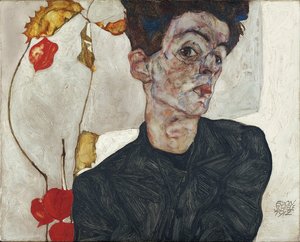
Egon Šylė
1890 - 1918 , Austrija
Trumpa informacija
- Artistic Movement Or Style: Ekspresionizmas
- Artists Who Influenced This Artist: ['Gustavas Klimtas']
- Date Of Birth: 1890 m.
- Date Of Death: 1918 m.
- Full Name: Egon Schiele
- Nationality: Austras
- Notable Artworks:
- Savęs portretas su fizižalis
- Porą įemčianti
- Žemės apėjimų kraštovaizdis
- Place Of Birth: Tulnas, Austrija
Susiję straipsniai

The Vienna Secession: A Rebellion of Form & Spirit in Fin-de-Siècle Art
Discover the revolutionary Vienna Secession art movement! Explore Klimt, Olbrich & more. Learn about its history, characteristics & lasting influence on modern art. High-quality reproductions available.
Egon Schiele: 25 Šedevrai, Atspindintys Menininko Sielą | AllPaintingsStore.lt
Atraskite 25 įspūdingiausius Egon Schiele šedevrus! Gilinkitės į ekspresionizmo pasaulį, portretų istorijas ir unikalią menininko spalvų paletę. Aukštos kokybės reprodukcijos interjerui – AllPaintingsStore.lt
Expressionist Painting: 10 Masterpieces That Defined a Movement | AllPaintingsStore
Explore 10 Expressionist paintings that revolutionized art! Discover Munch, Kirchner & Kandinsky's iconic works. Find museum-quality reproductions and vibrant canvas prints to elevate your home decor on AllPaintingsStore.com.

Ekspresionizmo Deimantai: 10 Šedevrai Jūsų Namų Dekorui
Atraskite ekspresionizmo šedevrus! 10 įtakingiausių meno kūrinių, atskleisiančių Muncho, Kirchnerio ir kitų meistrų emocijas. Išmokite apie tapybos stilius bei spalvų paletę. Aukščiausios kokybės dailės reprodukcijos jūsų namams – AllPaintingsStore.com.

Egon Schiele: Expressionism, Anxiety & the Modern Condition – A Comprehensive Exploration
Explore the emotionally charged world of Egon Schiele (1890-1918). Discover his Expressionist masterpieces, psychological themes, and lasting impact on modern art. A comprehensive guide for collectors & enthusiasts.


