


 Peržiūrėti realaus dydžio版
 Siųsti
 Dalintis
 Išsamiau
 Vadovas

 Atsisiųsti
 Panašūs eksponatai
 Rentgeno spindulių nuotrauka
 Diaporama
 Statistika
The Dancer
 Acrylic On Canvas
- WallArt
- Expressionist Movement
 1913
1913 323.0 x 483.0 cm
 Leopold Museum
 Rodyti daugiau
Rankų darbo aliejinės reprodukcijos
Rankiniu būdu tapytas aliejus ant droblio jūsų pageidaujamame dydį ir rėmuose – mūsų menininkų darbas pagal užsakymą. ( Perjungti į spausdinimą Perejti prie skaitmeninių vaizdų)




P118B €10

P118H €10

P118W €10

P438Z €10

P508JH €12

P508YH €12

P805H €10

P805Z €10

P919BZ €10

P919G €10

P919XJ €10

P959ZH €10

P968JZ €12

W106C €8

W218G €10

W218JH €8

W218Y €10

W307PJ €10

W316G €10

W316PJ €8

W316Y €10

W398PJ €8

W4111J €10

W500HY €15

W500JH €15

W692G €12

W849H €8

W940BG €15

W953PJ €8




Pasirinkite iš mūsų nustatytų dydžių, atitinkančių originalaus meno kūrinio proporcijas.

Įveskite jums reikiamą plotį ir aukštį, kad paveikslas atitiktų jūsų rėmą ar sieną. Kadangi šis darbas yra rankinio darbo, siekiant išgauti kitokio formos dydį, paveikslas gali būti šiek tiek didesnis (nuo kraštų bus palikta daugiau erdvės) arba mažesnis – pasirinkite jums patogiausią variantą. Prieš pradedant tapyti, atsiųsime jums skaitmeninį maketą patvirtinimui. Šioje puslapio nuotraukoje matomas vaizdas nėra galutinis rezultatas – jį parodys tik sukurtas maketas.
Gavus užsakymą, AllPaintingsStore.com komanda susisieks su klientu el. paštu dėl instrukcijų ir pateiks maketo pavyzdį
Pristatymas visame pasaulyje () per 3–4 savaites, o ne įprastai – per 5 savaites. (22 spalis). Kokybė lieka nepakeičiama.

Nemokamas greitasis pristatymas visame pasaulyje

Aukštos kokybės lininis drobė

Pilnas siuntimo draudimas

Muitinės mokesčių grąžinimo garantija

Tikro spalvų atitikimo garantija

100 dienų grąžinimo politika (tik esant įtaigoms)

100% pinigų grąžinimo garantija

Nuolaida dideliems užsakymams
 Stiklo variantas prieinamas tik pasirinkus dydį iki 110 cm

The Dancer
Reprodukcijos technika
Reprodukcijos dydis
-


Visų pasirinktų variantų kaina
€ 226
A Study in Raw Emotion: Egon Schiele’s “The Dancer”
Egon Schiele's "The Dancer," painted in 1913, isn’t merely a depiction of a man mid-performance; it’s a visceral exploration of the human condition – a raw and unsettling meditation on mortality, vulnerability, and the inherent drama within existence. Measuring an imposing 323 x 483 cm, this monumental work immediately commands attention, drawing the viewer into its intensely personal space. The painting captures a figure in a loincloth, his posture suggesting both exertion and a strange, almost defiant stillness. His hand rests casually on his hip, a gesture simultaneously vulnerable and assertive, anchoring him within the composition while hinting at an underlying tension.
Schiele’s artistic journey was profoundly shaped by personal tragedy. The early death of his father due to syphilis cast a long shadow over his life and work, fueling a preoccupation with themes of illness, decay, and the fleeting nature of beauty. This is acutely felt in “The Dancer.” The figure's face, rendered with an unsettling ambiguity – a slight distortion, a hint of pain – speaks volumes about this underlying anxiety. It’s not a celebratory depiction of dance; rather, it feels like a captured moment of intense feeling, perhaps even bordering on despair.
Decoding the Expressionist Style
Painted during his most intensely productive and emotionally charged period, “The Dancer” is a quintessential example of Schiele's unique brand of expressionism. He rejected academic conventions in favor of a brutally honest portrayal of the inner self. His technique is characterized by rapid, gestural brushstrokes – visible lines that convey movement and emotion with remarkable immediacy. The figure’s musculature isn’t idealized; it’s rendered with a stark realism, emphasizing the physical strain of the performance. Notice how Schiele uses contrasting values—dark shadows against bright highlights—to heighten the drama and create a sense of depth and volume.
Schiele's use of color is equally significant. The palette is muted, dominated by earthy tones – ochres, browns, and greys – punctuated by flashes of crimson and violet. These colors aren’t decorative; they contribute to the painting’s overall mood of unease and introspection. The limited range reinforces the feeling that we are witnessing a private, intensely felt moment.
Symbolism and the Dance of Mortality
Beyond its immediate visual impact, “The Dancer” is rich in symbolic meaning. The loincloth itself can be interpreted as a stripping away of societal constraints, exposing the raw physicality of the human form. It’s a deliberate rejection of conventional notions of beauty and decorum. The dancer's posture, with his hand on his hip, suggests both strength and vulnerability – a precarious balance that mirrors the complexities of life itself. The act of dancing, often associated with joy and celebration, is here transformed into something far more ambiguous, hinting at an underlying struggle.
Considering Schiele’s biography, it's reasonable to interpret the dancer as a self-portrait in disguise. The painting becomes a visual representation of his own internal turmoil – his anxieties about mortality, his struggles with identity, and his relentless pursuit of artistic expression. The dance, then, represents a desperate attempt to grapple with these profound emotions, a performance enacted not for an audience but for the silent witness within.
A Timeless Masterpiece: Reproduction Possibilities
AllPaintingsStore offers meticulously crafted hand-painted reproductions of “The Dancer,” allowing you to bring this powerful and evocative artwork into your home or office. Our skilled artisans replicate Schiele’s distinctive style with exceptional accuracy, capturing the painting's raw emotion and textural nuances. Whether you are an art collector, a design enthusiast, or simply someone seeking a piece that speaks to the depths of human experience, our reproduction provides an authentic connection to this seminal work of expressionism. Choose from various sizes and canvas materials to perfectly complement your space – each reproduction is created with archival quality pigments for lasting beauty and vibrancy.
问答 (or more naturally for a website heading): Klausimai ir atsakymai
Kokia yra „The Dancer“, autorius – Egon Šylė spalvų identowość?
„The Dancer“, autorius – Egon Šylė spalvų identitetas: Neutrals paletė, kurioje dominuoja Putty (#eae2d0).
Ar „The Dancer“ spalvos atrodo ryškios ar švelnios?
„The Dancer“ spalvų intensyvumas yra Balanced. Intensyvumas apibūdina, koks spalvų ryškumas yra suvokiamas.
Kokia yra originalaus kūrinio „The Dancer“, autorius – Egon Šylė technika ir dydis?
„The Dancer“ sukurta naudojant Acrylic On Canvas, o jos originalus matmuvas yra 323 x 483 cm.
Susiję kūriniai


Autoriaus biografija
Egon Schiele
Austrijos pozicija dviejų pasaulinio karo horizonte buvo labai abejojanti: vienu metu ji buvo šiek tiek iš Šiaurės į rytus, lengvai įsitikinusi veiksmų vyrai. Mažėjęs šalis po 1918 m., beveik visiškai neišplitusi tarptautiniu pasauliu buvo lengvai įvykdinta Hitlerio Reichui 1938 m.; meno srityje tai reiškė kad modernizmo istorija buvo išvykstanti nuo Šiaurės iki pietų, su pagrindiniu dėmesiu į formą. Vokelių šiek tiek pripažino ekspresionizmą kaip svarbų meno srovę; jis buvo vienas iš žymiausius austrių artistas XX amžiaus pradžioje – kartu su Gustavu Klimtu ir Oskar Kokoschka išvykę į Vieną buvo laikomas vienu iš Žyduvo šimtmečio svarbiausių vizualinių menininkų.
Gyvenimas
Egonas Šylė gimė 1890 m. vasario 3 d. Tulne, Austrijoje. Jo tėvas Adolfas Šylė buvo Tulno geležinkelio stoties direktorius ir gimė 1851 m. Vienoje Adolfo Šyly tevai turėjo tris jaunesnes seseris: Elvirą, Melaniją ir Gertrūdą. Elvira mirė vaikyste dėl gimtinių sifiliso. Jo tėvas buvo užsikrėtęs sifiliu įsimėlynėje savo jaunystės metais po vienos jo naujosios žmonos išėjimo iš kambario.
Meno vystymasis
Šylė mokytojo Christian Griepenkerl įtaką išgyveno Vienoje 1907 m. ir G. Klimtas tapo jo svarbiu rėmėju. Šylė paliko akademiją 1906 m., nes jos mokymo metodai buvo labai konservatyvus, ir įkūrė Naują austrių dailės grupę 1909 m. Grupėje vyravo ekspresionistinė estetika, kuri iššūkiant šiuolaikinėms kultūros normas.
Žymūs kūriniai
Šylė buvo vienas iš žymiausius austrių artistas XX amžiaus pradžioje – kartu su Gustavu Klimtu ir Oskar Kokoschka išvykę į Vieną buvo laikomas vienu iš Žyduvo šimtmečio svarbiausių vizualinių menininkų. Šylė buvo ekspresionizmo meno srovės atstovas.
Žymūs veiksniai
Šylė buvo žinomas dėl savo iššūkiantį įžiūrą į pasaulio problemas ir šiuolaikinę estetika, kuri iššūkiant šiuolaikinėms kultūros normas. Šylė buvo ekspresionizmo meno srovės atstovas.
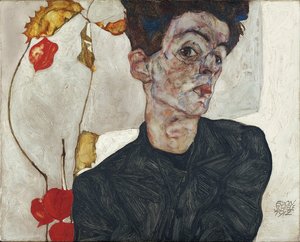
Egon Šylė
1890 - 1918 , Austrija
Trumpa informacija apie kūrėją
- Artistic Movement Or Style: Ekspresionizmas
- Artists Who Influenced This Artist: ['Gustavas Klimtas']
- Date Of Birth: 1890 m.
- Date Of Death: 1918 m.
- Full Name: Egon Schiele
- Nationality: Austras
- Notable Artworks:
- Savęs portretas su fizižalis
- Porą įemčianti
- Žemės apėjimų kraštovaizdis
- Place Of Birth: Tulnas, Austrija
Susiję straipsniai
Egon Schiele: 25 Šedevrai, Atspindintys Menininko Sielą | AllPaintingsStore.lt
Atraskite 25 įspūdingiausius Egon Schiele šedevrus! Gilinkitės į ekspresionizmo pasaulį, portretų istorijas ir unikalią menininko spalvų paletę. Aukštos kokybės reprodukcijos interjerui – AllPaintingsStore.lt

Ekspresionizmo Deimantai: 10 Šedevrai Jūsų Namų Dekorui
Atraskite ekspresionizmo šedevrus! 10 įtakingiausių meno kūrinių, atskleisiančių Muncho, Kirchnerio ir kitų meistrų emocijas. Išmokite apie tapybos stilius bei spalvų paletę. Aukščiausios kokybės dailės reprodukcijos jūsų namams – AllPaintingsStore.com.

Egon Schiele: Expressionism, Anxiety & the Modern Condition – A Comprehensive Exploration
Explore the emotionally charged world of Egon Schiele (1890-1918). Discover his Expressionist masterpieces, psychological themes, and lasting impact on modern art. A comprehensive guide for collectors & enthusiasts.
Expressionist Painting: 10 Masterpieces That Defined a Movement | AllPaintingsStore
Explore 10 Expressionist paintings that revolutionized art! Discover Munch, Kirchner & Kandinsky's iconic works. Find museum-quality reproductions and vibrant canvas prints to elevate your home decor on AllPaintingsStore.com.
Figurative Expressionism: Emotional Intensity & Subjective Reality in 20th-Century Art
Explore the powerful world of Figurative Expressionism with AllPaintingsStore. Discover key artists like Kirchner & Beckmann, understand its emotional depth, and learn how to collect this influential 20th-century art movement.


