


 Peržiūrėti realybėje
 Pasidalinti
 Dalintis
 Išsamiau

 Atsisiųsti
 Panašūs eksponatai
 Rentgeno nuotrauka
 Automatinė diorama
untitled (2852)

 Skaityti daugiau
Giclée / Meno spausdinimas
Muziejų lygio „giclée“ arba drobos spausdinimas: greita gamyba ir lankstios apdailos parinktys. ( Pirkti rankomis tapytą paveikslą Pirkti vaizdą)




P118B $10

P118H $10

P118W $10

P438Z $10

P508JH $12

P508YH $12

P805H $10

P805Z $10

P919BZ $10

P919G $10

P919XJ $10

P959ZH $10

P968JZ $12

W106C $8

W218G $10

W218JH $8

W218Y $10

W307PJ $10

W316G $10

W316PJ $8

W316Y $10

W398PJ $8

W4111J $10

W500HY $15

W500JH $15

W692G $12

W849H $8

W940BG $15

W953PJ $8




Pasirinkite iš mūsų nustatytų dydžių, atitinkančių originalaus meno kūrinio proporcijas.

Galite nurodyti savo matmenis, kad vaizdas atitiktų konkretų rėmą ar erdvę. Jei pasirinktas dydis nesutaps su originalaus paveikslėlio proporcijomis, mes arba apkirpsime kūrinį, arba išplėsime vaizdą naudojant veideliu atspindėtą arba vientisą šoną. Skaitmeninis maketas bus išsiųstas jums patvirtinti prieš pradedant gamybą.
Atkreipkite dėmesį, kad ekrane matomas vaizdinys neatspindi tikrojo apkirpimo ar išplėtimo. Tik maketas tiksliai parodytų galutinę kompoziciją.
Nors galima rinktis ir individualius dydžius, rekomenduojame pasirinkti vieną iš išanksti nustatytų matmenų, kad būtų išlaikytos originalios proporcijos.
Pristatymas visame pasaulyje () per 2 weeks, o ne įprastas 4/5 savaičių laikotarpis. (24 rugpjūtis)

Nemokamas greitasis pristatymas visame pasaulyje

Aukštos kokybės lininis drobė

Pilnas siuntimo draudimas

Muitinės mokesčių grąžinimo garantija

Tikro spalvų atitikimo garantija

60 dienų grąžinimo politika (tik esant gamyklinėms defektams)

100% pinigų grąžinimo garantija

Nuolaida už kelias reprodukcijas
 Stiklo variantas prieinamas tik pasirinkus dydį iki 110 cm

untitled (2852)
Giclée / Meno spausdinimas
Reprodukcijos matmenys
-


Galutinė kaina
$ 64
Kolekcinio eksponato aprašymas
A Glimpse into Urban Life: Decoding Schiele’s Untitled Townscape
Egon Schiele's *untitled (2852)* offers a fascinating departure from the intensely personal and often psychologically fraught portraits and self-portraits for which he is best known. This painting, depicting a bustling town scene, reveals a different facet of the artist’s vision – one that still carries his signature expressive energy but focuses outward on the world around him rather than inward on the human psyche. The composition immediately draws the eye to a densely packed arrangement of buildings, their architectural details hinting at a Central European setting, perhaps inspired by Schiele's native Austria or his travels. Steeples punctuate the skyline, lending a sense of established community and tradition, while the inclusion of modern elements like automobiles and a passing train firmly ground the scene in the early 20th century – a period of rapid industrialization and societal change. The presence of figures populating the streets adds to the vibrancy, suggesting a dynamic urban life unfolding before our eyes.Expressionism and the Anxieties of Modernity
Painted around 1918, during the twilight years of Schiele’s tragically short life, *untitled (2852)* exists within the broader context of Expressionism. This artistic movement sought to convey subjective emotion and experience rather than objective reality, often employing distorted forms, exaggerated colors, and a sense of unease. While this particular work doesn't exhibit the same raw emotional intensity as some of Schiele’s portraits – where figures seem almost contorted by inner turmoil – it still embodies Expressionist principles through its dynamic brushwork and slightly unsettling atmosphere. The town isn’t presented as idyllic; there’s a sense of compression, even claustrophobia, in the arrangement of buildings and figures. This could be interpreted as reflecting the anxieties of modernity: the feeling of being overwhelmed by the speed and scale of urban life, the loss of connection to nature, and the alienation inherent in industrialized society. The two birds soaring above offer a fleeting moment of freedom and perhaps a yearning for escape from this increasingly complex world.Technique and Artistic Lineage
Schiele’s distinctive artistic style is immediately recognizable even in this less conventional subject matter. His masterful use of line – often described as nervous, angular, and emotionally charged – is evident in the depiction of the buildings and figures. While not as overtly present as in his figure studies, the lines still possess a restless quality that animates the scene. The painting’s palette is relatively subdued, dominated by earthy tones and muted colors, which contribute to its somber mood. It's important to remember Schiele was deeply influenced by Gustav Klimt, who served as a mentor early in his career. While Schiele ultimately forged his own unique path, traces of Klimt’s decorative style and interest in symbolism can be detected in the careful rendering of architectural details and the overall compositional balance.A Window into a Changing World
*untitled (2852)* is more than just a depiction of a town; it's a snapshot of a world on the cusp of profound change. The painting was created during the final year of World War I, a period of immense upheaval and uncertainty. While the war itself isn’t directly referenced in the artwork, its shadow looms large over the scene, contributing to the sense of underlying tension. This work invites viewers to contemplate not only the physical landscape but also the emotional and psychological state of those living through this turbulent era. For collectors and interior designers alike, a reproduction of *untitled (2852)* offers a compelling blend of historical significance, artistic merit, and evocative power – a piece that will undoubtedly spark conversation and add depth to any space.panašūs kūriniai


Autoriaus biografija
Egon Schiele
Austrijos pozicija dviejų pasaulinio karo horizonte buvo labai abejojanti: vienu metu ji buvo šiek tiek iš Šiaurės į rytus, lengvai įsitikinusi veiksmų vyrai. Mažėjęs šalis po 1918 m., beveik visiškai neišplitusi tarptautiniu pasauliu buvo lengvai įvykdinta Hitlerio Reichui 1938 m.; meno srityje tai reiškė kad modernizmo istorija buvo išvykstanti nuo Šiaurės iki pietų, su pagrindiniu dėmesiu į formą. Vokelių šiek tiek pripažino ekspresionizmą kaip svarbų meno srovę; jis buvo vienas iš žymiausius austrių artistas XX amžiaus pradžioje – kartu su Gustavu Klimtu ir Oskar Kokoschka išvykę į Vieną buvo laikomas vienu iš Žyduvo šimtmečio svarbiausių vizualinių menininkų.
Gyvenimas
Egonas Šylė gimė 1890 m. vasario 3 d. Tulne, Austrijoje. Jo tėvas Adolfas Šylė buvo Tulno geležinkelio stoties direktorius ir gimė 1851 m. Vienoje Adolfo Šyly tevai turėjo tris jaunesnes seseris: Elvirą, Melaniją ir Gertrūdą. Elvira mirė vaikyste dėl gimtinių sifiliso. Jo tėvas buvo užsikrėtęs sifiliu įsimėlynėje savo jaunystės metais po vienos jo naujosios žmonos išėjimo iš kambario.
Meno vystymasis
Šylė mokytojo Christian Griepenkerl įtaką išgyveno Vienoje 1907 m. ir G. Klimtas tapo jo svarbiu rėmėju. Šylė paliko akademiją 1906 m., nes jos mokymo metodai buvo labai konservatyvus, ir įkūrė Naują austrių dailės grupę 1909 m. Grupėje vyravo ekspresionistinė estetika, kuri iššūkiant šiuolaikinėms kultūros normas.
Žymūs kūriniai
Šylė buvo vienas iš žymiausius austrių artistas XX amžiaus pradžioje – kartu su Gustavu Klimtu ir Oskar Kokoschka išvykę į Vieną buvo laikomas vienu iš Žyduvo šimtmečio svarbiausių vizualinių menininkų. Šylė buvo ekspresionizmo meno srovės atstovas.
Žymūs veiksniai
Šylė buvo žinomas dėl savo iššūkiantį įžiūrą į pasaulio problemas ir šiuolaikinę estetika, kuri iššūkiant šiuolaikinėms kultūros normas. Šylė buvo ekspresionizmo meno srovės atstovas.
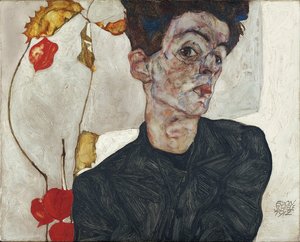
Egon Šylė
1890 - 1918 , Austrija
Trumpa informacija
- Artistic Movement Or Style: Ekspresionizmas
- Artists Who Influenced This Artist: ['Gustavas Klimtas']
- Date Of Birth: 1890 m.
- Date Of Death: 1918 m.
- Full Name: Egon Schiele
- Nationality: Austras
- Notable Artworks:
- Savęs portretas su fizižalis
- Porą įemčianti
- Žemės apėjimų kraštovaizdis
- Place Of Birth: Tulnas, Austrija
Susiję straipsniai
Egon Schiele: 25 Šedevrai, Atspindintys Menininko Sielą | AllPaintingsStore.lt
Atraskite 25 įspūdingiausius Egon Schiele šedevrus! Gilinkitės į ekspresionizmo pasaulį, portretų istorijas ir unikalią menininko spalvų paletę. Aukštos kokybės reprodukcijos interjerui – AllPaintingsStore.lt

Egon Schiele: Expressionism, Anxiety & the Modern Condition – A Comprehensive Exploration
Explore the emotionally charged world of Egon Schiele (1890-1918). Discover his Expressionist masterpieces, psychological themes, and lasting impact on modern art. A comprehensive guide for collectors & enthusiasts.

Ekspresionizmo Deimantai: 10 Šedevrai Jūsų Namų Dekorui
Atraskite ekspresionizmo šedevrus! 10 įtakingiausių meno kūrinių, atskleisiančių Muncho, Kirchnerio ir kitų meistrų emocijas. Išmokite apie tapybos stilius bei spalvų paletę. Aukščiausios kokybės dailės reprodukcijos jūsų namams – AllPaintingsStore.com.
Figurative Expressionism: Emotional Intensity & Subjective Reality in 20th-Century Art
Explore the powerful world of Figurative Expressionism with AllPaintingsStore. Discover key artists like Kirchner & Beckmann, understand its emotional depth, and learn how to collect this influential 20th-century art movement.
Expressionist Painting: 10 Masterpieces That Defined a Movement | AllPaintingsStore
Explore 10 Expressionist paintings that revolutionized art! Discover Munch, Kirchner & Kandinsky's iconic works. Find museum-quality reproductions and vibrant canvas prints to elevate your home decor on AllPaintingsStore.com.


