


 Peržiūrėti realaus dydžio版
 Pasidalinti
 Dalintis
 Išsamiau
 Vadovas

 Atsisiųsti
 Panašūs eksponatai
 Rentgeno spindulių nuotrauka
 Automatinė diorama
 Q&A
Q&A Statistika
untitled (5265)

 Skaityti daugiau
Giclée / Meno spausdinimas
Muziejų lygio „giclée“ arba drobos spausdinimas: greita gamyba ir lankstios apdailos parinktys. ( Pirkti rankų darbo tapybą Perejti prie skaitmeninių vaizdų)




P118B €10

P118H €10

P118W €10

P438Z €10

P508JH €12

P508YH €12

P805H €10

P805Z €10

P919BZ €10

P919G €10

P919XJ €10

P959ZH €10

P968JZ €12

W106C €8

W218G €10

W218JH €8

W218Y €10

W307PJ €10

W316G €10

W316PJ €8

W316Y €10

W398PJ €8

W4111J €10

W500HY €15

W500JH €15

W692G €12

W849H €8

W940BG €15

W953PJ €8




Pasirinkite iš mūsų nustatytų dydžių, atitinkančių originalaus meno kūrinio proporcijas.

Įveskite jums reikiamą plotį ir aukštį, kad atvaizdas derėtų prie jūsų rėmo ar sienos. Spausdiną galima tik sumažinti, bet nepadidinti virš originalaus paveikslėlio dydžio, todėl keičiant proporcijas, dalis vaizdo prarandama. Prieš spausdinimą atsiųsime jums skaitmeninį maketą patvirtinimui. Šioje puslapio nuotraukoje matomas pjūvis nėra tikslus – jį rodo tik maketas.
Pristatymas visame pasaulyje () per 2 weeks, o ne įprastas 4/5 savaičių laikotarpis. (31 spalis)

Nemokamas greitasis pristatymas visame pasaulyje

Aukštos kokybės lininis drobė

Pilnas siuntimo draudimas

Muitinės mokesčių grąžinimo garantija

Tikro spalvų atitikimo garantija

100 dienų grąžinimo politika (tik esant įtaigoms)

100% pinigų grąžinimo garantija

Nuolaida dideliems užsakymams
 Stiklo variantas prieinamas tik pasirinkus dydį iki 110 cm

untitled (5265)
Giclée / Meno spausdinimas
Reprodukcijos matmenys
-


Bendroji kaina
€ 57
A Portrait of Anxiety: Unpacking Egon Schiele’s “Untitled (5265)”
Egon Schiele's "Untitled (5265)," a stark black and white depiction of a provincial town scene, isn’t merely a snapshot; it’s a meticulously crafted distillation of the artist’s deeply felt anxieties about mortality, isolation, and the precariousness of human existence. Painted during a turbulent period in his life – just before his untimely death in 1918 – this work embodies the core tenets of Expressionism, prioritizing emotional intensity over realistic representation. The photograph itself presents a somewhat faded, almost vintage quality, reminiscent of an early 20th-century illustration or perhaps a forgotten newsprint image, lending it an immediate sense of historical weight and quiet melancholy.
The composition is deceptively simple: a cluster of buildings – houses, shops, and possibly a small public space – populate the foreground. Scattered throughout this urban landscape are figures: individuals going about their daily routines, some standing in contemplation, others engaged in seemingly mundane activities like walking or perhaps waiting. Two automobiles, symbols of modernity and progress, punctuate the scene, adding an element of tension to the otherwise static tableau. A fire hydrant, a small detail that nonetheless grounds the image in a recognizable reality, subtly anchors the scene while simultaneously hinting at vulnerability – a potential source of disruption within this carefully constructed composition.
The Shadow of Schiele’s Biography
To fully appreciate “Untitled (5265),” it's crucial to understand the context of Egon Schiele’s life. Born in Tulln an der Donau, Austria, in 1890, his early years were marked by profound loss and instability. His father, a railway station master, succumbed to syphilis when Schiele was just fourteen – a tragedy that irrevocably shaped the artist's worldview and fueled a lifelong preoccupation with themes of death, decay, and the fragility of human life. Raised primarily by his mother and then under the watchful eye of his uncle, Schiele’s childhood lacked conventional stability, fostering within him an independent spirit tempered by a deep-seated sense of loneliness and vulnerability. The early loss of his sister Elvira further compounded these emotional wounds, contributing to the pervasive atmosphere of melancholy that permeates much of his work.
This biographical backdrop is powerfully reflected in “Untitled (5265).” The figures within the painting seem lost and disconnected, their faces largely obscured, suggesting a profound sense of isolation. The muted tones and lack of vibrant color contribute to this feeling of detachment, creating an atmosphere of quiet desperation. The artist’s own struggles with mental health and his self-destructive tendencies are subtly woven into the fabric of the image, making it a poignant reflection of his internal turmoil.
Expressionist Techniques & Symbolic Resonance
Schiele's masterful use of line is immediately apparent in “Untitled (5265).” The figures are rendered with bold, angular strokes that convey both movement and a sense of unease. His lines aren’t meant to depict reality faithfully; instead, they serve as conduits for emotional expression, capturing the artist’s subjective experience of the world. The flattened perspective and simplified forms further emphasize this expressive intent, pushing the image beyond mere representation and into the realm of psychological portraiture.
The inclusion of the cars is particularly significant. While representing modernity, they also subtly introduce a sense of alienation – individuals trapped within their own private worlds, disconnected from one another. The fire hydrant, a commonplace object, becomes a symbol of potential disruption, hinting at the fragility of order and the ever-present threat of chaos. The overall composition feels deliberately unbalanced, mirroring the emotional instability that characterized Schiele’s life and work.
A Window into the Soul: Reproduction & Interpretation
AllPaintingsStore offers meticulously crafted hand-painted reproductions of “Untitled (5265),” allowing art lovers to experience the raw emotion and psychological depth of this iconic image. Each reproduction is created by skilled artists who painstakingly recreate Schiele’s distinctive style, capturing the nuances of his line work and the evocative atmosphere of the original painting. Whether displayed in a contemporary interior or as part of a classic collection, this artwork offers a powerful glimpse into the mind of one of the 20th century's most tormented yet brilliant artists – a testament to Schiele’s enduring legacy and his profound exploration of the human condition.
Klausimai ir atsakymai
Ar „untitled (5265)“ galima įsigyti kaip aukščiausios kokybės spausdinį?
Šio kūrinio „untitled (5265)“ – Egon Šylė spausdinį galite užsakyti tiesiogiai jo Kūrinio spausdinimas aukščiausia kokybe puslapio: aukščiausios kokybės spausdinys ant medžio siuvinėjamų audinių arba archyvinio kanvas tipo popieriaus.
Kaip meno kryptis ir epocha susilieja kūryboje „untitled (5265)“ – Egon Šylė?
„untitled (5265)“ priklauso Expressionist Anxiety krypčiai, o jo kūrėjas dirbo Modernizmas laikotarpiu.
Kam rekomenduojamas naudojimui „untitled (5265)“ spausdinys?
Rekomenduojamas „untitled (5265)“ spausdinio naudojimas yra Statement.
panašūs kūriniai


Autoriaus biografija
Egon Schiele
Austrijos pozicija dviejų pasaulinio karo horizonte buvo labai abejojanti: vienu metu ji buvo šiek tiek iš Šiaurės į rytus, lengvai įsitikinusi veiksmų vyrai. Mažėjęs šalis po 1918 m., beveik visiškai neišplitusi tarptautiniu pasauliu buvo lengvai įvykdinta Hitlerio Reichui 1938 m.; meno srityje tai reiškė kad modernizmo istorija buvo išvykstanti nuo Šiaurės iki pietų, su pagrindiniu dėmesiu į formą. Vokelių šiek tiek pripažino ekspresionizmą kaip svarbų meno srovę; jis buvo vienas iš žymiausius austrių artistas XX amžiaus pradžioje – kartu su Gustavu Klimtu ir Oskar Kokoschka išvykę į Vieną buvo laikomas vienu iš Žyduvo šimtmečio svarbiausių vizualinių menininkų.
Gyvenimas
Egonas Šylė gimė 1890 m. vasario 3 d. Tulne, Austrijoje. Jo tėvas Adolfas Šylė buvo Tulno geležinkelio stoties direktorius ir gimė 1851 m. Vienoje Adolfo Šyly tevai turėjo tris jaunesnes seseris: Elvirą, Melaniją ir Gertrūdą. Elvira mirė vaikyste dėl gimtinių sifiliso. Jo tėvas buvo užsikrėtęs sifiliu įsimėlynėje savo jaunystės metais po vienos jo naujosios žmonos išėjimo iš kambario.
Meno vystymasis
Šylė mokytojo Christian Griepenkerl įtaką išgyveno Vienoje 1907 m. ir G. Klimtas tapo jo svarbiu rėmėju. Šylė paliko akademiją 1906 m., nes jos mokymo metodai buvo labai konservatyvus, ir įkūrė Naują austrių dailės grupę 1909 m. Grupėje vyravo ekspresionistinė estetika, kuri iššūkiant šiuolaikinėms kultūros normas.
Žymūs kūriniai
Šylė buvo vienas iš žymiausius austrių artistas XX amžiaus pradžioje – kartu su Gustavu Klimtu ir Oskar Kokoschka išvykę į Vieną buvo laikomas vienu iš Žyduvo šimtmečio svarbiausių vizualinių menininkų. Šylė buvo ekspresionizmo meno srovės atstovas.
Žymūs veiksniai
Šylė buvo žinomas dėl savo iššūkiantį įžiūrą į pasaulio problemas ir šiuolaikinę estetika, kuri iššūkiant šiuolaikinėms kultūros normas. Šylė buvo ekspresionizmo meno srovės atstovas.
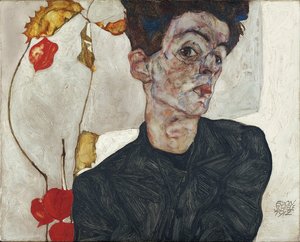
Egon Šylė
1890 - 1918 , Austrija
Trumpa informacija
- Artistic Movement Or Style: Ekspresionizmas
- Artists Who Influenced This Artist: ['Gustavas Klimtas']
- Date Of Birth: 1890 m.
- Date Of Death: 1918 m.
- Full Name: Egon Schiele
- Nationality: Austras
- Notable Artworks:
- Savęs portretas su fizižalis
- Porą įemčianti
- Žemės apėjimų kraštovaizdis
- Place Of Birth: Tulnas, Austrija
Susiję straipsniai

White on Canvas: 10 Masterpieces & Timeless Elegance for Your Home Decor
Explore 10 iconic white paintings by Monet, Whistler & Rothko! Discover the stories behind these serene masterpieces and their impact on art history. Find museum-quality reproductions for your home decor at .

Ekspresionizmo Deimantai: 10 Šedevrai Jūsų Namų Dekorui
Atraskite ekspresionizmo šedevrus! 10 įtakingiausių meno kūrinių, atskleisiančių Muncho, Kirchnerio ir kitų meistrų emocijas. Išmokite apie tapybos stilius bei spalvų paletę. Aukščiausios kokybės dailės reprodukcijos jūsų namams – AllPaintingsStore.com.

Dark Masterpieces: 10 Iconic Paintings Dominated by Black Tones |
Explore 10 iconic paintings dominated by black tones, from Rembrandt’s chiaroscuro to Goya's dark expressions. Discover the stories behind these masterpieces & find museum-quality art reproductions for your home at .

Egon Schiele: Expressionism, Anxiety & the Modern Condition – A Comprehensive Exploration
Explore the emotionally charged world of Egon Schiele (1890-1918). Discover his Expressionist masterpieces, psychological themes, and lasting impact on modern art. A comprehensive guide for collectors & enthusiasts.
Egon Schiele: 25 Šedevrai, Atspindintys Menininko Sielą | AllPaintingsStore.lt
Atraskite 25 įspūdingiausius Egon Schiele šedevrus! Gilinkitės į ekspresionizmo pasaulį, portretų istorijas ir unikalią menininko spalvų paletę. Aukštos kokybės reprodukcijos interjerui – AllPaintingsStore.lt


