


 Peržiūrėti realaus dydžio版
 Pasidalinti
 Dalintis
 Išsamiau
 Vadovas

 Atsisiųsti
 Panašūs eksponatai
 Rentgeno spindulių nuotrauka
 Automatinė diorama
 Q&A
Q&A Statistika
untitled (6645)


 Skaityti daugiau
Giclée / Meno spausdinimas
Muziejų lygio „giclée“ arba drobos spausdinimas: greita gamyba ir lankstios apdailos parinktys. ( Pirkti rankų darbo tapybą Perejti prie skaitmeninių vaizdų)




P118B €10

P118H €10

P118W €10

P438Z €10

P508JH €12

P508YH €12

P805H €10

P805Z €10

P919BZ €10

P919G €10

P919XJ €10

P959ZH €10

P968JZ €12

W106C €8

W218G €10

W218JH €8

W218Y €10

W307PJ €10

W316G €10

W316PJ €8

W316Y €10

W398PJ €8

W4111J €10

W500HY €15

W500JH €15

W692G €12

W849H €8

W940BG €15

W953PJ €8




Pasirinkite iš mūsų nustatytų dydžių, atitinkančių originalaus meno kūrinio proporcijas.

Įveskite jums reikiamą plotį ir aukštį, kad atvaizdas derėtų prie jūsų rėmo ar sienos. Spausdiną galima tik sumažinti, bet nepadidinti virš originalaus paveikslėlio dydžio, todėl keičiant proporcijas, dalis vaizdo prarandama. Prieš spausdinimą atsiųsime jums skaitmeninį maketą patvirtinimui. Šioje puslapio nuotraukoje matomas pjūvis nėra tikslus – jį rodo tik maketas.
Pristatymas visame pasaulyje () per 2 weeks, o ne įprastas 4/5 savaičių laikotarpis. (28 spalis)

Nemokamas greitasis pristatymas visame pasaulyje

Aukštos kokybės lininis drobė

Pilnas siuntimo draudimas

Muitinės mokesčių grąžinimo garantija

Tikro spalvų atitikimo garantija

100 dienų grąžinimo politika (tik esant įtaigoms)

100% pinigų grąžinimo garantija

Nuolaida dideliems užsakymams
 Stiklo variantas prieinamas tik pasirinkus dydį iki 110 cm

untitled (6645)
Giclée / Meno spausdinimas
Reprodukcijos matmenys
-


Bendroji kaina
€ 56
A Haunting Encounter with Expressionist Rawness
To stand before Egon Schiele’s untitled (6645) is to enter a realm where the boundaries between the physical body and the psychological soul dissolve into a singular, breathless moment. This striking black and white composition serves as a profound testament to the anxieties of the early 20th century, capturing a scene that feels less like a captured moment and more like an unearthed memory. At its heart, the painting presents two figures seated upon the earth, locked in an embrace that is simultaneously intimate and fraught with an unspoken tension. Schiele, a master of the Austrian Expressionist movement, eschews the comfort of traditional beauty to instead offer a visual distillation of existential dread and human vulnerability.
The composition is masterfully orchestrated to direct the viewer’s gaze through a landscape of stark contrasts. While the central figures command our attention with their raw, naked presence, Schiele subtly anchors the scene with a solitary chair positioned in the upper left corner. This element introduces a sense of domesticity that feels strangely displaced, heightening the feeling of isolation within a minimal, almost void-like environment. The presence of other figures, partially obscured or receding into the background, adds layers of complexity to the narrative, suggesting a world that is watching, yet remains fundamentally disconnected from the central intimacy.
The Language of Line and Distorted Form
Schiele’s technique is nothing short of revolutionary, characterized by an expressive line that seems to vibrate with nervous energy. Eschewing the soft, blended transitions of his contemporaries, he utilizes bold, jagged contours to define the anatomy of his subjects. The bodies are often rendered with a deliberate distortion—elongated limbs and exaggerated musculature that amplify the emotional weight of the piece. This is not mere anatomical inaccuracy; it is a purposeful use of form to convey internal psychological states. The skin tones, even when interpreted through the monochrome lens, suggest a sickly pallor, hinting at the fragility of life and the pervasive presence of mortality that haunted Schoup’s personal history.
For the discerning collector or interior designer, this piece offers a sophisticated interplay of light and shadow. The absence of color forces the eye to focus on the structural integrity of the drawing and the dramatic tension created by the heavy blacks against the stark whites. This monochromatic palette lends the work a timeless, archival quality, making it an ideal centerpiece for spaces that value intellectual depth and avant-garde elegance. It is a work that does not merely decorate a wall; it commands the atmosphere of a room, inviting contemplation and deep emotional resonance.
Symbolism in an Age of Uncertainty
Created during the turbulent years surrounding 1916-1918, this work is deeply embedded in the historical zeitgeist of World War I. The pervasive sense of instability and the looming shadow of death are woven into the very fabric of the painting. Schiele’s obsession with the intersection of Eros and Thanatos—sexuality and death—finds its most potent expression here. The nakedness of the figures represents a total lack of defense, a stripping away of societal pretenses to reveal the primal truth of human existence. In an era defined by the collapse of old empires and the rise of psychoanalysis, Schiele’s work mirrors the collective psyche of a generation grappling with loss and the fragmentation of identity.
Investing in a high-quality reproduction of this masterpiece allows one to bring this profound dialogue between beauty and anguish into a modern setting. Whether placed in a curated gallery-style living room or a quiet study, untitled (6645) serves as a window into the turbulent heart of Modernism. It remains an enduring icon for those who find inspiration in the raw, unvarnished truth of the human condition and seek art that challenges, moves, and lingers in the mind long after the first encounter.
Klausimai ir atsakymai
Kokios temos atsispindi kūrynioje „untitled (6645)“ – Egon Šylė?
„untitled (6645)“ – Egon Šylė temos apima human figure, intimacy, vulnerability, nakedness, emotion, darkness, minimalism. Kartu jie apibendrina šio kūrinio tematiką.
Kokia yra „untitled (6645)“ – Egon Šylė dominuojanti spalva?
Dominuojanti „untitled (6645)“ – Egon Šylė spalva yra Ochre to Sepia. Šis tonas yra pagrindinė paletės spalva.
Ar galima atsisiųsti „untitled (6645)“ vaizdą?
„untitled (6645)“ – Egon Šylė galite atsisiųsti iš kūrinio Atsisiųsti skaitmeninį vaizdą puslapio kaip aukštos raiškos skaitmeninio vaizdo atsisiuntimas.
panašūs kūriniai


Autoriaus biografija
Egon Schiele
Austrijos pozicija dviejų pasaulinio karo horizonte buvo labai abejojanti: vienu metu ji buvo šiek tiek iš Šiaurės į rytus, lengvai įsitikinusi veiksmų vyrai. Mažėjęs šalis po 1918 m., beveik visiškai neišplitusi tarptautiniu pasauliu buvo lengvai įvykdinta Hitlerio Reichui 1938 m.; meno srityje tai reiškė kad modernizmo istorija buvo išvykstanti nuo Šiaurės iki pietų, su pagrindiniu dėmesiu į formą. Vokelių šiek tiek pripažino ekspresionizmą kaip svarbų meno srovę; jis buvo vienas iš žymiausius austrių artistas XX amžiaus pradžioje – kartu su Gustavu Klimtu ir Oskar Kokoschka išvykę į Vieną buvo laikomas vienu iš Žyduvo šimtmečio svarbiausių vizualinių menininkų.
Gyvenimas
Egonas Šylė gimė 1890 m. vasario 3 d. Tulne, Austrijoje. Jo tėvas Adolfas Šylė buvo Tulno geležinkelio stoties direktorius ir gimė 1851 m. Vienoje Adolfo Šyly tevai turėjo tris jaunesnes seseris: Elvirą, Melaniją ir Gertrūdą. Elvira mirė vaikyste dėl gimtinių sifiliso. Jo tėvas buvo užsikrėtęs sifiliu įsimėlynėje savo jaunystės metais po vienos jo naujosios žmonos išėjimo iš kambario.
Meno vystymasis
Šylė mokytojo Christian Griepenkerl įtaką išgyveno Vienoje 1907 m. ir G. Klimtas tapo jo svarbiu rėmėju. Šylė paliko akademiją 1906 m., nes jos mokymo metodai buvo labai konservatyvus, ir įkūrė Naują austrių dailės grupę 1909 m. Grupėje vyravo ekspresionistinė estetika, kuri iššūkiant šiuolaikinėms kultūros normas.
Žymūs kūriniai
Šylė buvo vienas iš žymiausius austrių artistas XX amžiaus pradžioje – kartu su Gustavu Klimtu ir Oskar Kokoschka išvykę į Vieną buvo laikomas vienu iš Žyduvo šimtmečio svarbiausių vizualinių menininkų. Šylė buvo ekspresionizmo meno srovės atstovas.
Žymūs veiksniai
Šylė buvo žinomas dėl savo iššūkiantį įžiūrą į pasaulio problemas ir šiuolaikinę estetika, kuri iššūkiant šiuolaikinėms kultūros normas. Šylė buvo ekspresionizmo meno srovės atstovas.
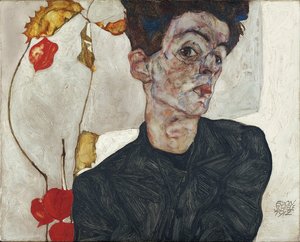
Egon Šylė
1890 - 1918 , Austrija
Trumpa informacija
- Artistic Movement Or Style: Ekspresionizmas
- Artists Who Influenced This Artist: ['Gustavas Klimtas']
- Date Of Birth: 1890 m.
- Date Of Death: 1918 m.
- Full Name: Egon Schiele
- Nationality: Austras
- Notable Artworks:
- Savęs portretas su fizižalis
- Porą įemčianti
- Žemės apėjimų kraštovaizdis
- Place Of Birth: Tulnas, Austrija
Susiję straipsniai

The Enduring Allure of the Nude: A Historical & Artistic Exploration of the Human Form
Explore the captivating history of nude art! Discover iconic paintings & artists from classical to modern eras. Uncover symbolism, techniques & find museum-quality reproductions at AllPaintingsStore.
Paul Cézanne: 25 Šedevrai, Keičiantys Meno Pasaulį | AllPaintingsStore.lt
Atraskite 25 Paul Cézanno šedevrus! Išsami analizė, istorijos ir įkvėpimas interjero dekorui. Modernus menas, impresionizmas, natiurmortai – viskas AllPaintingsStore.com. Explore the full collection online!

Kazimiro Malevičiaus Šedevrai: 25 Išskirtiniai Kūriniai Jūsų Interjerui
Atraskite 25 įspūdingiausius Kazimiro Malevičiaus kūrinius! Suprematizmo meistras, Juodas kvadratas ir kiti šedevrai. Įkvėpkite interjero idėjų su abstraktaus meno reprodukcijomis – AllPaintingsStore.com

Dark Masterpieces: 10 Iconic Paintings Dominated by Black Tones |
Explore 10 iconic paintings dominated by black tones, from Rembrandt’s chiaroscuro to Goya's dark expressions. Discover the stories behind these masterpieces & find museum-quality art reproductions for your home at .

White on Canvas: 10 Masterpieces & Timeless Elegance for Your Home Decor
Explore 10 iconic white paintings by Monet, Whistler & Rothko! Discover the stories behind these serene masterpieces and their impact on art history. Find museum-quality reproductions for your home decor at .


