


 Peržiūrėti realaus dydžio版

 Pasidalinti
 Dalintis
 Išsamiau
 Vadovas


 Atsisiųsti
 Panašūs eksponatai
 Rentgeno spindulių nuotrauka
 Automatinė diorama
 问答
 Statistika
Before

 Skaityti daugiau
Gaukite spausdinimui paruoštą failą, kurio kokybė gerokai viršija internetinę peržiūrą. Kiekvienas mūsų parduodamas skaitmeninis vaizdas yra ištrauktas iš aukštos raiškos pagrindinio failo mūsų duomenų bazėje — paprastai jis siekia nuo 5 000 iki 15 000 pikselių plotio — todėl galite drąsiai spausdinti didelius formatus, apkirpti vaizdą ar reprodukcija užtikrins visas smulkias detales.
Mūsų studijoje nė viena kopija nelieka neapdorota. Skaitmeninio vaizdo ekspertas, lygiu su originaliu paveikslu, patikrina spalvas ir, jei reikia, jas koreguoja, o tada profesionaliais retušavimo įrankiais padidina aiškumą bei detales — visada išlaikydamas ištikimybę autoriaus teptuko traukoms ir stiliui. Rezultatas – vaizdas, kuris atrodo kaip tikras paveikslas, o ne kaip su filtrais apdorotas skenavimas.
Patvirtinate prieš užsakymo pabaigą: mūsų ekspertas per 72 valandas el. laišku atsiųsta vaizdą jūsų peržiūrai. Nepasitenkinate rezultatu? Paprašykite patobulinimų ar pataisymų arba prašykite pinigų grąžinimo, jei kokybė neatitinka jūsų lūkesčių.
Ši kokybė yra patikima leidybos įstaigoms, dizaino studijoms, galerijoms ir spaudos įmonėms.
Skaitmeninis vaizdas
Atsisiųskite didelės raiškos failą asmeniniam naudojimui, spausdinimui ir kūrybiniams projektams. ( Perjungti į spausdinamus版作品 Pirkti rankų darbo tapybą)
Kiekvieną skaitinio vaizdo užsakymą papildė
Profesionalus skaitmeninis vaizdų pristatymas, garantuotas
Pasirinkę AllPaintingsStore.com, jūs ne tik gaunate paveikslėlį – jūs gaunate profesionaliai patobudintą skaitmeninį kūrinį, sukurtą itin tikniai ir užtikrinantį pasitenkinimą. Štai viską, kas automatiškai pritékia jūsų užsakymui:

Greitas pristatymas el. paštu
Jūsų aukštos raiškos skaitmeninis vaizdo failas bus išsiųstas el. paštu per 72 valandas nuo užsakymo – jis bus paruoštas naudoti be jokių papildomų veiksmų.

Dirbtiniu intelektu tobulintas skaitmeninis failas
Jūsų meno kūrinys profesionaliai optimizuojamas naudojant pažangius dirbtinio intelekto įrankius ir rankinį redagavimą, užtikrinant maksimalią detalę, aiškumą ir spalvų tikslumą.

Nemokamas visam laikui pakartotinis siuntimas
Atsitiktinai ištrytikote ar praradote savo failą? Nebijokite – bet kuriuo metu atsiųsime jį jums vėl nemokamai.

Jokio importo mokesčio – niekada
Mėgaukitės savo meno kūrynu be jokių muitinės mokesčių, įkainų ar pristatymo išlaidų – skaitiniai failai visada yra neapmokestinami.

Spalvų tikslumo garantija
Naudodami profesionalią įrangą ir spalvų valdymo sistemas, užtikriname, kad jūsų skaitmeninis vaizdas kuo tiksliau atspindėtų originalias spalvas.

100 dienų patikimumo garantija
Jei nebuvosite patenkinti įsigyto skaitmeninio vaizdo, mes jį tališkai koreguosime arba grąžinsime 100% sumą per 100 dienų – be jokių klausimų.

100% pinigų grąžinimo garantija
Nesitenkinate? Gaukite visą sumokėtą sumą per 100 dienų nuo skaitmeninio failo gavimo – be jokių papildomų klausimų.

Nuolaidos dideliems užsakymams
Pirkti 3 nuotraukas – 10% nuolaida – Pirkti 5 – 15% nuolaida – Pirkti 10 ir daugiau – 20% nuolaida. Puikiai tinka kūrybiniams projektams, galerijoms bei agentūroms.
A Study in Domestic Discord: Unpacking William Hogarth’s “Before”
William Hogarth's "Before," painted circa 1753, isn’t merely a depiction of a domestic scene; it’s a meticulously crafted tableau of social commentary and psychological insight. This remarkable work, rendered in oil on canvas, captures a moment of intense tension within a seemingly ordinary room – a bedroom dominated by the uneasy dynamic between a seated woman and a standing one. The stark black and white palette immediately establishes a formal, almost theatrical quality, reminiscent of Hogarth’s earlier engravings, yet imbued with a raw emotionality rarely seen in his more polished portraiture.
The composition is deliberately unsettling. The posture of the standing figure – her hand raised, poised to strike – speaks volumes about suppressed anger and simmering resentment. Her face, partially obscured, conveys a mixture of defiance and vulnerability. Conversely, the seated woman’s expression suggests resignation or perhaps even complicity. The inclusion of the cat and dog, seemingly oblivious to the drama unfolding around them, further emphasizes the isolation and detachment within this domestic sphere. The mirror reflects not just the room's interior but also hints at a deeper, unresolved narrative – a sense of self-reflection and hidden truths.
Hogarth’s Satirical Vision: A Window into 18th Century London
To fully appreciate “Before,” it’s crucial to understand Hogarth's broader artistic project. He was a pioneer in using art as a vehicle for social critique, meticulously documenting the realities of life in 18th-century London – its excesses, hypocrisies, and moral failings. His "modern moral subjects," as he termed them, weren’t simply portraits; they were carefully constructed narratives designed to expose societal ills. Hogarth's work reflects a deep engagement with the social and political currents of his time, mirroring the anxieties surrounding class divisions, marriage customs, and the rise of consumerism.
The scene itself is laden with symbolism. The umbrella, a symbol of protection and status, lies discarded on the floor, suggesting a disruption of order and perhaps even a loss of control. The bed, a central element of domesticity, becomes a site of conflict rather than comfort. Hogarth’s meticulous attention to detail – from the texture of the fabrics to the arrangement of objects – reinforces the painting's narrative power, inviting viewers to decipher the unspoken tensions and underlying meanings.
Technique and Legacy: Hogarth’s Masterful Approach
Hogarth’s technique is characterized by a remarkable level of realism and precision. He employed a method of “optical mixing,” layering thin washes of paint to create subtle gradations of tone and texture, a technique that lends the image an almost photographic quality. His use of chiaroscuro – the dramatic contrast between light and shadow – further heightens the emotional impact of the scene, drawing attention to key elements and creating a sense of unease. The starkness of the monochrome palette amplifies the drama and focuses the viewer’s attention on the figures and their interaction.
“Before” stands as a testament to Hogarth's artistic genius and his profound understanding of human nature. It remains a powerful example of satirical art, offering a timeless glimpse into the complexities of domestic relationships and the social realities of 18th-century London. AllPaintingsStore’s hand-painted reproductions capture the essence of this iconic work, allowing you to experience its intricate details and emotional depth in stunning fidelity.
Klausimai ir atsakymai
Kam rekomenduojamas naudojimui „Before“ – William Hogarth?
Rekomenduojamas naudojimo būdas kūriniui „Before“ – William Hogarth yra Statement. Jis taip pat gali būti naudojamas kitoms paskritis.
Kur galiu įsigyti „Before“ – William Hogarth spausdinį?
Norėdami užsisakyti „Before“ – William Hogarth spausdinį, tiesiog jį užsisakykite puslapio Kūrinio spausdinimas aukščiausia kokybe skiltyje: aukščiausios kokybės spausdinys ant medžio siuvinėjamų audinių arba archyvinio kanvas tipo popieriaus.
Atsižvelgiant į spalvų paletę, kur rekomenduojama eksponuoti kūrinį „Before"]?
Dėl savo Earthy paletės, „„Before“ – William Hogarth“ rekomenduojamas Living Room. Spalvų derinys yra viena iš šios rekomendacijos priežasčių.
panašūs kūriniai


Autoriaus biografija
The Life of William Hogarth
London, 1697. The air in Bartholomew Close is thick with the sounds of a growing metropolis. Here, William Hogarth enters a world of precarious stability. His father, Richard Hogarth, struggles to make a living as a Latin schoolmaster and textbook writer. The family's finances fluctuate; at one point, Richard faces the harsh reality of imprisonment for debt in the Fleet Prison. This early exposure to the instability of urban life leaves a mark. William Hogarth grows up watching the gap between the social classes, a perspective that will eventually define his career as a painter, engraver, satirist, cartoonist, and writer.
The boy's path is not one of inherited wealth or easy patronage. Instead, it is a life shaped by the grit of the city. He moves through the streets of London, observing the characters that populate the coffee houses and the fairs. His mother, Anne Gibbons, provides the domestic anchor to a life often marked by the economic shifts of the era. By the time he begins to make his mark, he is already a man of many disciplines, using ink and paint to dissect the very society that raised him.
- A Harlot's Progress (1731/1732)
- A Rake's Progress (1735)
- Marriage A-la-Mode (1743–1745)
Early Life, Family and Training
London, 1697. The son of Richard Hogarth, a Latin schoolmaster and occasional writer, William grows up amidst the shifting fortunes of a man struggling to maintain a footing in the city. The instability of the household takes a sharp turn when Richard is imprisoned in the Fleet Prison for five years due to unpaid debts. This period of hardship, marked by the precariousness of the family's finances, leaves a lasting impression on the young observer of the metropolis.
By 1714, the focus shifts to the technicalities of craft. Hogarth enters an apprenticeship with Ellis Gamble, a gold and silver engraver operating in Leicester Fields. He learns the precision required for trade cards and similar products, developing a fundamental command of the copper plate. This technical grounding provides the tools for a career that will eventually move beyond mere commercial reproduction.
The trajectory changes as he moves toward formal artistic study. In 1720, he enrolls at the St Martin's Lane Academy. His training expands further under Sir James Thornhill, the serjeant painter to George I. Under Thornhill, the focus shifts from the small-scale precision of engraving to the broader complexities of painting and composition. He moves from the meticulous work of a craftsman toward the grander scale of fine art.
Technique and Artistic Style
Hogarth moves between the precision of realistic portraiture and the rapid, sequential energy of comic strip-like series. He does not merely paint; he constructs narratives. This approach finds its peak in his development of "modern moral subjects," a method where he uses visual storytelling to critique the social fabric. He treats the canvas and the copper plate as stages for unfolding drama, often utilizing a blend of humor and biting satire to drive his points home.
The technical foundation of his work lies in his mastery of engraving. He understands the weight of a line and the power of a print to reach a mass audience. In 1753, he shifts from the visual to the theoretical with the publication of his Analysis of Beauty. Here, he moves beyond mere observation to codify his aesthetic theories, specifically stressing the importance of the "serpentine line" as a fundamental principle of beauty and movement.
- A Harlot's Progress (1731/1732)
- A Rake's Progress (1735)
- Marriage A-la-Mode (1743–1745)
Key Works and Series
The narrative power of his work finds its peak in the "modern moral subjects," a series of paintings designed to function like visual novels. In 1731/1732, A Harlot's Progress traces the tragic downfall of a young woman arriving in London, only to succumb to the city's temptations. This pattern of social descent continues in 1735 with A Rake's Progress, which follows Tom Rakewell as he squanders an inheritance on gambling and debauchery. These works do not merely depict scenes; they chart the consequences of moral decay through meticulous detail and symbolic elements.
The focus shifts from individual ruin to the collision of social classes in the series Marriage A-la-Mode, produced between 1743 and 1745. Here, the artist skewers the disastrous results of arranged marriages and the pursuit of status. The tension between the opulent interiors of the wealthy and the squalid realities of the poor becomes a recurring theme. Even in his later years, the commentary remains sharp. In 1748, O the Roast Beef of Old England addresses national identity, while 1750's The March of the Guards to Finchley presents a chaotic, boisterous view of military life, contrasting disciplined ranks in the distance with the raucous behavior of soldiers in the foreground.
- A Harlot's Progress (1731/1732)
- A Rake's Progress (1735)
- Marriage A-la-Mode (1743–1745)
- O the Roast Beef of Old England (1748)
- The March of the Guards to Finchley (1750)
Legacy and Lasting Impact
The 18th century sees the emergence of a distinctly British school of art, a movement helped into being by Hogarth's refusal to rely on Continental models. He moves beyond the mere imitation of foreign styles to establish a visual language rooted in the streets of London. This shift is significant; he becomes the most important English artist of his generation. His influence is so pervasive that the term "Hogarthian" enters the lexicon to describe his specific brand of satirical observation.
The commercial reality of his success brings a new kind of conflict. As his prints gain massive popularity, they also attract a wave of unauthorized reproductions. Plagiarism becomes a constant threat to his livelihood. This tension forces a legal confrontation that changes the landscape of intellectual property. He lobbies for the Copyright Act of 1735, a move that secures the rights of creators against those who would profit from their labor without permission.
His method of storytelling through sequential imagery creates a blueprint for future media. He functions as a direct precursor to the modern political cartoon and the comic strip. By using a series of images to dissect social behavior, he provides a template for visual narratives that rely on reading rather than just looking. His influence stretches from the satirical prints of the 1700s into the very foundations of popular culture.
Where to See the Works Today
The physical traces of Hogarth's social critiques remain scattered across major institutions. In London, the National Gallery houses pieces from the Marriage à la Mode series, where the visual narrative of social decay is preserved. Nearby, Tate Britain holds Satan, Sin and Death (A Scene from Milton), a work that highlights his ability to translate complex literary themes into visual form. The Foundling Museum also maintains a presence in the city, holding The March of the Guards to Finchley, a piece that captures the chaotic energy of 18th-century military life.
The reach of his work extends beyond the United Kingdom. In New York City, the Frick Collection preserves Miss Mary Edwards, a portrait that reflects his skill in capturing individual character. These collections offer a way to encounter the specific details of his engravings and paintings in their original contexts. Visitors can find his influence in the way these institutions manage the tension between fine art and popular satire.
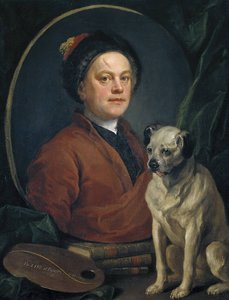
William Hogarth
1697 - 1764 , Jungtinė Karalystė
Trumpa informacija
- Artistic Movement Or Style: Modernios moralinės temos
- Artists Or Movements Influenced By This Artist:
- James Gillray
- George Cruikshank
- Artists Who Influenced This Artist:
- Pieter de Hooch
- Sir James Thornhill
- Date Of Birth: 1697
- Date Of Death: 1764
- Full Name: William Hogarth
- Nationality: Anglų
- Notable Artworks:
- A Harlot's Progress
- A Rake's Progress
- Marriage à la Mode
- Place Of Birth: Londonas, Jungtinė Karalienija