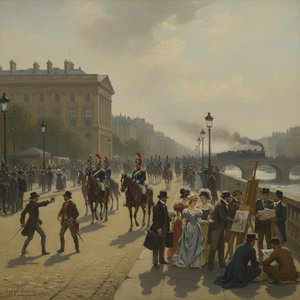
Maurice Bompard (1857–1936): Capturing the Soul of Algeria and Venice
Jean Maurice Bompard (February 11, 1857 – April 7, 1936) stands as a pivotal figure in French Orientalist painting, renowned for his meticulous depictions of daily life in North Africa and particularly captivating views of Venice. Born in Rodez, France, Bompard’s artistic journey began with formal training at the École Nationale Supérieure des Beaux-Arts under luminaries like Gustave Boulanger and Jules Lefebvre, establishing him firmly within the influential Boulanger School.
- Early Life & Education: Bompard's formative years were marked by a relocation to Marseille where he pursued his artistic ambitions with unwavering dedication. His academic pursuits honed his skills and exposed him to groundbreaking artistic ideas that would shape his distinctive style.
- The Influence of Boulanger & Lefebvre: Gustave Boulanger’s emphasis on expressive brushwork and dramatic composition profoundly impacted Bompard's technique, fostering a bold approach to color and texture—a hallmark of his oeuvre. Lefebvre instilled in him a deep understanding of historical narrative and artistic tradition, enriching his visual vocabulary.
- Orientalist Exploration: Inspired by the burgeoning interest in exotic landscapes and cultures during the Belle Époque, Bompard embarked on extensive expeditions to Algeria and Tunisia. These voyages served as catalysts for his artistic creativity, resulting in iconic paintings that capture the essence of Saharan life—particularly “Les Bouchers de Chetma,” which exemplifies Boulanger’s style with its dynamic brushstrokes and vibrant palette.
- Venetian Visions: Bompard's fascination with Venice persisted throughout his life, yielding a series of stunning canvases that immortalize the city's canals, palaces, and atmospheric subtleties. His Venetian paintings demonstrate an exceptional sensitivity to light and color, reflecting Lefebvre’s influence and establishing him as one of the foremost Venetian painters of his era.
- Legacy & Recognition: Bompard’s artistic legacy extends beyond individual masterpieces; he founded the Société des Peintres Orientalistes Français, fostering a collaborative environment that propelled the genre forward. His works are celebrated in prominent museums worldwide—including Musée d'Orsay and Musée des Beaux-Arts de Marseille—solidifying his place as an enduring icon of French Impressionism and Orientalist art.
Bompard’s artistic output is characterized by a masterful blend of observation and imagination, resulting in images that resonate with both realism and poetic beauty. His paintings continue to inspire admiration for their evocative portrayal of human experience within extraordinary environments—a testament to his enduring contribution to the history of art.
Klausimai ir atsakymai
Kiek Maurice Bompard kūrinių galima peržiūrėti?
Visi kūriniai puslapio kataloge galite peržiūrėti 36 kūriniai kūrinius, autoriaus: Maurice Bompard.
Kuriame istoriniame laikotarpyje kūrė Maurice Bompard?
Maurice Bompard kūrė 19th Century laikotarpiu. Šis laikotarpis leidžia įvertinti kūrybinę veiklą istoriniame kontekste.
Kokias nuota išreiškia Maurice Bompard kūryba?
Autoriaus Nuotaudų kambarys puslapio kūriniai yra sugrupuoti pagal Maurice Bompard darbų atmosferą.