Geld-terug-garantie · 100 dagen Gratis wereldwijde verzending
449.587kunstwerken 30.613kunstenaars 4.660musea 32talen
Valuta
    Taal
      Atelier · Sinds 2015 · Parijs, Frankrijk
      AllPaintingsStore
      allpaintingsstore.com
      Catalogue entry

      Roman Ruins Hand-painted oil painting – standard and custom sizes

      1760. Oil On Canvas. Worcester Art Museum.

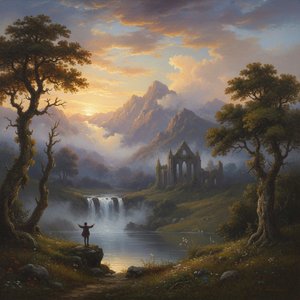
      Fig. 1. Hubert Robert, Roman Ruins, 1760. Shown as the reproduction you are specifying: , .

      § 1Catalogue data

      § 2Abstract

      Beschrijving verzamelobject

      Discover "Roman Ruins" by Hubert Robert (1760). A Romantic masterpiece showcasing crumbling architecture & pastoral life. Oil on canvas, dramatic lighting & serene beauty. Perfect for art lovers!

      Biografie kunstenaar

      Hubert Robert (1733-1808): Een Franse schilder van sfeervolle landschappen & 'capriccio' ruïnes, die geschiedenis, verval en fantasie combineren. Ontdek zijn kunst!

      § 3Commentary

      A Symphony of Decay and Eternal Beauty

      In the quietude of Hubert Robert’s Roman Ruins, one finds more than a mere depiction of crumbling stone; one encounters a profound meditation on the relentless passage of time. Created around 1760, this masterpiece serves as a window into the heart of the Romantic imagination, where the grandeur of antiquity meets the soft, persistent embrace of nature. The canvas invites the viewer to wander through a landscape where monumental architecture—once the pride of an empire—now yields to the slow, rhythmic pulse of vegetation and light. It is a scene that captures a fleeting moment of ethereal beauty, frozen in the amber of oil on canvas, offering a sense of pastoral tranquility that resonates deeply with the modern soul seeking refuge from the frenetic pace of contemporary life.

      The composition is masterfully orchestrated to draw the eye deep into a world of architectural wonder and quiet human drama. A majestic, weathered archway stands as the central protagonist, its heavy columns and fractured masonry framing a vista that stretches toward an infinite horizon. Through this portal, the viewer perceives a vast, open space where the boundaries between man-made structures and the wild landscape begin to blur. The foreground is alive with the gentle rhythms of everyday existence: figures engaged in quiet contemplation, a woman tending to livestock, and children playing amidst the rocky outcrops. This juxtaposition—the monumental scale of the ruins against the intimate, humble activities of life—establishes a poignant dialogue between historical glory and the enduring continuity of the human spirit.

      The Artistry of the Romantic Capriccio

      Robert’s technical prowess is most evident in his command of light and texture, elements that elevate this work from a topographical study to a capriccio—a genre of imaginative fantasy. Utilizing the rich, versatile medium of oil paint, the artist achieves a remarkable tonal range that breathes life into the scene. Warm ochres, deep browns, and radiant golds dominate the palette, bathing the ruins in a sun-drenched glow that evokes a sense of nostalgic warmth. His brushwork is both deliberate and expressive; while the architectural elements are defined by structured lines, the foliage and distant clouds are rendered with a looser, more spontaneous touch. This interplay of precision and fluidity creates a dynamic atmosphere, where the light seems to dance across the textured surfaces of stone and leaf alike.

      For the discerning collector or interior designer, Roman Ruins offers an unparalleled emotional depth that transcends mere decoration. The painting functions as a symbolic vessel, carrying themes of memory, loss, and the sublime power of nature. It evokes a sense of "melancholic grandeur"—a feeling of being moved by the beauty of what has passed while finding peace in the persistence of life. Integrating such a high-quality reproduction into a curated space provides more than just a visual focal point; it introduces a narrative of timelessness and sophistication. Whether placed in a sunlit library or a grand salon, Robert’s vision of the Roman past serves as an enduring inspiration, reminding us that even amidst decay, there is a profound and lasting splendor to be found.

      Veelgestelde vragen

      Wie heeft "Roman Ruins" gemaakt en in welk jaar?

      Hubert Robert maakte "Roman Ruins" in 1760.

      Wordt "Roman Ruins" door Hubert Robert bewaard in het land van herkomst van de kunstenaar?

      Nee - het kunstwerk wordt in het buitenland bewaard. "Roman Ruins" bevindt zich in Verenigde Staten van Amerika, terwijl Hubert Robert werd geboren in Frankrijk.

      Waar kan ik de afbeelding van "Roman Ruins" door Hubert Robert downloaden?

      Er is een download beschikbaar voor "Roman Ruins": de Downloaden pagina van het kunstwerk biedt de mogelijkheid om een digitale afbeelding in hoge resolutie om te downloaden.

      § 4The artist

      Hubert Robert

      Hubert Robert

      1733 - 1808, Frankrijk

      Quick facts about Hubert Robert

      • Artistic Movement Or Style: Romantiek, Neoklassiek
      • Artists Or Movements Influenced By This Artist: ['Romantiek']
      • Artists Who Influenced This Artist:
        • Giovanni Panini
        • Piranesi
      • Date Of Birth: 22 mei 1733
      • Date Of Death: 15 april 1808
      • Full Name: Hubert Robert
      • Nationality: Frans
      • Notable Artworks:
        • De Haven van Rome
        • Vlucht van Galatea
      • Place Of Birth: Parijs, Frankrijk

      Biografie kunstenaar

      Hubert Robert: A Painter of Ruins and Visions

      Hubert Robert, a name inextricably linked to the evocative beauty of ruins and the romantic allure of bygone eras, stands as a singular figure in 18th-century French art. Born in Paris in 1733, his life unfolded against a backdrop of profound artistic transformation—a journey from the ornate elegance of the Rococo to the nascent spirit of Neoclassicism, all while navigating the tumultuous currents of the French Revolution. Robert’s genius wasn't merely in replicating decay; it resided in crafting meticulously detailed visions that resonated with both a poignant nostalgia for the past and an anticipation of the future—a delicate balance between observation and imaginative reconstruction. His formative years were spent within the structured environment of artistic training, initially under the tutelage of the sculptor Michel-Ange Slodtz, who recognized Robert’s innate talent but wisely steered him towards painting, sensing a deeper calling in capturing light, atmosphere, and the subtle poetry inherent in form.

      Roman Reveries: Shaping an Artistic Identity

      The defining moment in Robert's artistic development arrived with his extended sojourn to Rome between 1754 and 1765. Accompanying Étienne-François de Choiseul, he immersed himself completely within the ancient city’s captivating world—a realm steeped in history, architectural grandeur, and a palpable sense of timelessness. This wasn't simply a matter of documenting what he saw; it was an act of profound interpretation, reimagining Rome through his own artistic lens. He spent countless hours sketching the crumbling temples, majestic arches, and overgrown gardens of the Eternal City, absorbing its essence with an almost obsessive intensity. His work during this period is profoundly influenced by Giovanni Paolo Panini, whose meticulous depictions of Roman ruins served as a crucial foundation. However, Robert quickly transcended mere imitation, developing his own distinctive style characterized by an unparalleled level of detail, masterful atmospheric perspective, and a remarkable sensitivity to the interplay of light and shadow—qualities that elevated his *capriccio* compositions – fanciful views juxtaposing classical ruins with contemporary life – into something truly exceptional. His sketchbook pages from this period are invaluable windows into his creative process, revealing not just drawings but also a deep understanding of architectural nuance and landscape composition.

      Parisian Acclaim and Royal Patronage

      Robert’s return to Paris in 1765 marked a significant turning point in his career trajectory. He swiftly gained recognition within the established artistic circles, securing admission to the Académie Royale de Peinture et de Sculpture with “The Port of Rome, Ornamented with Different Monuments of Architecture, Ancient and Modern.” This painting, showcasing his newfound mastery of capturing atmosphere and detail, immediately captivated audiences. His subsequent exhibitions at the Salon – the official art exhibition of the French Academy – garnered widespread acclaim, drawing considerable attention to his evocative depictions of ruins and picturesque landscapes. The critic Denis Diderot, a leading figure of the Enlightenment, famously lauded Robert’s ability to transport viewers to another time and place, recognizing in his work a profound connection between history, memory, and artistic vision. This success swiftly led to royal patronage; he was commissioned to design decorative projects for various palaces and estates, and later appointed as “Designer of the King's Gardens” – a prestigious position reflecting his growing influence within the court. He became a highly sought-after artist, not only for his easel paintings but also for his innovative designs for gardens and palatial interiors—demonstrating a remarkable versatility and an understanding of how art could enhance and elevate the spaces around it.

      Revolution, Resilience, and Lasting Legacy

      The French Revolution presented Robert with unprecedented challenges. As the political landscape shifted dramatically, many artists struggled to navigate the turbulent times. However, Robert demonstrated remarkable resilience, continuing to paint prolifically despite the upheaval. He even experienced a harrowing period of imprisonment during the Reign of Terror, an ordeal that profoundly impacted his work and ultimately fueled a series of drawings documenting his confinement—testaments to both his artistic spirit and his enduring commitment to truth. Following the Revolution, Robert was appointed curator of the newly established Muséum Central des Arts – later known as the Louvre – a testament to his expertise and dedication to preserving France’s cultural heritage. He played a crucial role in organizing and cataloging the museum's vast collection, ensuring that its artistic treasures were safeguarded for future generations. Hubert Robert died in Paris in 1808, leaving behind an extraordinary body of work—a legacy that continues to captivate and inspire with its evocative beauty, technical mastery, and profound understanding of the relationship between art, history, and memory.
      • Key Influences: Giovanni Paolo Panini, Piranesi, the architectural landscape of Rome.
      • Major Themes: Ruins, landscapes, *capriccio* paintings, historical memory, the passage of time.
      • Artistic Style: Meticulous detail, atmospheric perspective, evocative lighting, blending observation with imagination.

      § 5Comparanda

      § 6Questions

      Snelle feiten

      • Title: Roman Ruins
      • Medium: Oil on Canvas
      • Subject or theme: Ancient Architecture & Pastoral Life
      • Movement: Romanticism
      • Year: 1760

      Kunstquiz

      Er is slechts één goed antwoord op elke vraag.

      Vraag 1:
      What artistic movement is Hubert Robert’s "Roman Ruins" primarily associated with?
      Vraag 2:
      Describe the dominant color palette used in "Roman Ruins". How does it contribute to the overall mood of the artwork?
      Vraag 3:
      What is a key characteristic of Hubert Robert’s painting technique – specifically regarding the brushstrokes?
      Vraag 4:
      The image description mentions ‘atmospheric perspective,’ what does this technique achieve?
      Vraag 5:
      What symbolic element is present in "Roman Ruins" that reflects broader themes related to time and memory?

      § 7Cite this entry

      AllPaintingsStore.com, “Hubert Robert, Roman Ruins (1760)”, https://allpaintingsstore.com/nl/art/hubert-robert-roman-ruins-8YDS5F-en/ArtistReproduction/ (accessed 1 oktober 2026).

      § 8The reproduction

      Handgemaakte olieverfreproductie

      Met de hand geschilderd in olieverf op canvas in uw gewenste maat en lijst, op bestelling gemaakt door onze kunstenaars. ( Schakel over naar print Schakel over naar digitale afbeeldingen)

      It is specified on the order sheet in the margin; the present state of that sheet reads as follows.

      Roman Ruins

      Druktechniek

      Afmetingen reproductie

      -

      Geselecteerde topkunstenaars

      Meer detail, verfijning en extra productietijd

      -

      Lijst voor reproductie

      -

      -

      Voor kunstwerken of reproducties die aan één zijde groter zijn dan 105 cm (ongeveer 41 inch), wordt de lijst als een losse set verzonden. Deze methode garandeert een veilige levering en voorkomt schade tijdens het transport.

      Professionele montage vereist - dit is geen doe-het-zelfproduct.
      De set moet worden gemonteerd en het canvas moet worden gespannen door een ervaren professionele lijstenmaker, met gebruik van houtlijm (niet inbegrepen), een doekspanter en klemmen om de sponningen recht te houden terwijl de lijm droogt. Onjuiste montage of een ongelijkmatige spanning op het canvas kan het kunstwerk permanent beschadigen en wordt niet gedekt door onze garantie.

      • Alle massief houten onderdelen zijn inbegrepen, nauwkeurig op maat gesneden voor montage.

      • Te monteren met de meegeleverde schroeven, plus houtlijm voor de hoekverbindingen, die niet wordt meegeleverd en door uw lijstenmaker moet worden aangeschaft.

      • Professioneel gereedschap is vereist en niet inbegrepen: een spanner voor canvas en klemmen om de latten recht te houden terwijl de lijm droogt.

      Belangrijk:
      De hoekverbindingen vereisen houtlijm, de latten moeten met lijmklemmen worden vastgehouden tot de lijm volledig is opgedroogd, en het spannen van het canvas op het samengestelde frame vereist een doekspanter. Geen van deze artikelen is inbegrepen in de set. Wij adviseren u om een ervaren professionele lijstenmaker te raadplegen voordat u deze maat bestelt.

      Naamplaatje

      -

      -

      Beschermende vernislaag

      Glanzende vernis (versterkt de kleuren en biedt bescherming tegen licht en vocht)

      -

      Mijn kunstwerk aanpassen

      Voorbeelden van aanpassingen: vervang het gezicht door een eigen foto; voeg een huisdier toe (bijv. vervang de kat door een hond); verwerk een verborgen boodschap in de achtergrond; wijzig het landschap of andere elementen op de achtergrond.

      -

      Spoedlevering

      Wereldwijde levering () binnen 3 tot 4 weken in plaats van de standaard 5 weken. (29 oktober). Geen concessies aan de kwaliteit.

      -

      Spoedlevering

      Wereldwijde levering naar binnen 5 weken. (5 november).

      Inbegrepen

      Eindtotaal

      € 227

      Included with every order

      • Gratis wereldwijde expressverzending
      • Hoogwaardig linnen canvas
      • Volledige verzendverzekering
      • Garantie op terugbetaling van invoerrechten
      • Garantie op exacte kleurweergave
      • Retourbeleid van 100 dagen (alleen bij defecten)
      • 100% Geld-terug-garantie
      • Korting bij meerdere afnames
      Order sheet