


 Se i rommet
 Del som digitalt kort
 Del
Del
 Detaljer
 Studentguide

 Last ned
 Liknende objekter
 Røntgen
 Lysbildefremvisning
 Besøksstatistikk
Untitled 2

 Les mer
Håndlaget oljereproduksjon
Håndmalt olje på lerret i din valgte størrelse og ramme, laget på bestilling av våre kunstnere. ( Bytt til trykkversjon Gå til digitalt bilde)




































Velg mellom våre forhåndsdefinerte størrelser som bevarer kunstverkets opprinnelige proporsjoner.

Skriv inn bredden og høyden du trenger, slik at den passer til din ramme eller vegg. Dette er håndmalt, så for en størrelse med en annen form kan kunstneren male litt mer rundt bildet, eller beskjære det noe — du velger selv. Vi sender deg en digital mockup for godkjenning før maleriet påbegynnes. Bildet som vises på denne siden viser ikke det faktiske resultatet — kun mockuppen gjør det.
Etter bestilling vil AllPaintingsStore.com-teamet sende e-post til kunden for instruksjoner og sende et utkast (mockup) som forhåndsvisning.
Verdensomspennende levering () på 3–4 uker i stedet for standard 5 uker. (27 October). Ingen kompromisser med kvaliteten.

Gratis ekspressfrakt over hele verden

Lerretsduk av høykvalitets lin

Full transportforsikring

Garanti for refusjon av toll og importavgifter

Garantert fargeekthet

100 dagers returrett ved fabrikasjonsfeil

100% pengene tilbake-garanti

Mengderabatt
 Glassalternativet er kun tilgjengelig i størrelser under 110 cm

Untitled 2
Reproduksjonsmetode
Format på reproduksjon
-


Totalpris
Nkr 2458
William Blake’s “The Poet” – A Symphony of Visionary Symbolism
Blake's "The Poet," completed in 1820, stands as an emblem of Romantic idealism and a testament to the artist's unparalleled ability to translate inner experience into visual form. It depicts a solitary figure—often interpreted as Blake himself—seated upon a stone throne amidst a landscape dominated by towering mountains and swirling clouds. This image transcends mere representation; it embodies a profound meditation on creativity, solitude, and the transformative power of imagination.- Subject Matter: The central figure is presented in profile, gazing upwards with an expression of serene contemplation. He wears a robe adorned with symbols—a laurel wreath signifying poetic honor, and a serpent coiled around his thigh representing both temptation and divine wisdom.
- Style: Blake’s style is unmistakably Romantic, characterized by its dramatic use of color, expressive brushstrokes, and an emphasis on emotional intensity. The composition deliberately isolates the Poet against the vastness of nature, reinforcing the theme of inner contemplation.
Technique – Engraving and Watercolor Collaboration
Blake’s masterful technique involved a collaborative effort between engraving and watercolor. Initially conceived as a printmaking project, Blake painstakingly etched the image onto copper plates using intricate burr tools—a method he perfected during his apprenticeship with James Basire. These engraved lines established the foundational structure of the composition, while subsequent washes of watercolor added depth, luminosity, and atmospheric haze to create an immersive visual experience. The resulting print is remarkably detailed, capturing the textures of stone, fabric, and cloud formations with astonishing accuracy.- Engraving Process: Blake’s engraving technique demanded exceptional precision and patience—a reflection of his unwavering commitment to artistic excellence. He employed a burr tool to create microscopic ridges on the copper plate surface, ensuring that every line etched into the metal would faithfully reproduce in the final print.
- Watercolor Layering: Blake skillfully layered watercolor pigments onto the engraved plates, achieving subtle gradations of color and capturing the ethereal quality of the mountainous landscape. This technique allowed him to convey not only visual beauty but also emotional resonance—a palpable sense of grandeur and spiritual aspiration.
Historical Context – The Spirit of Romantic Rebellion
“The Poet” emerged during a period of fervent intellectual and artistic ferment—the Romantic Age in England. This era witnessed a rejection of Enlightenment rationalism in favor of emotion, intuition, and imagination as guiding forces for understanding the human condition. Blake’s work aligns seamlessly with these Romantic ideals, articulating a vision of art as a conduit for spiritual enlightenment and challenging conventional notions of beauty and morality.- Romantic Ideals: The Romantic movement championed individualism, spontaneity, and an appreciation for the sublime—experiences that transcend ordinary sensory perception. Blake’s depiction of the Poet embodies these ideals, portraying him as a figure who dwells in communion with nature and pursues truth through contemplation.
- Blake's Influence: Blake’s artistic innovations profoundly impacted subsequent generations of artists and writers. His pioneering use of engraving and watercolor techniques served as inspiration for countless printmakers and painters alike, establishing him as a cornerstone of Romantic art history.
Symbolism – Layers of Meaning Beyond Appearances
The artwork is replete with symbolic imagery—each element contributing to a complex tapestry of meaning. The stone throne symbolizes stability and authority, yet it also represents the Poet’s vulnerability—his precarious position amidst the forces of nature. The laurel wreath signifies poetic honor but simultaneously acknowledges the serpent's influence—the inescapable presence of temptation and doubt.- Iconography: Blake meticulously crafted his iconography to convey profound spiritual truths. The serpent, for instance, embodies both destructive impulses and transformative potential—a reminder that darkness can illuminate the path toward enlightenment.
- Emotional Resonance: Ultimately, “The Poet” evokes a powerful emotional response—inspiring awe at the majesty of creation and prompting reflection on the enduring quest for inner peace and artistic integrity.
Conclusion – An Enduring Legacy of Imagination
William Blake’s “The Poet” remains an unparalleled achievement of Romantic art—a masterpiece that continues to captivate audiences worldwide. Its masterful technique, evocative symbolism, and profound historical context solidify its place as a cornerstone of artistic heritage. More than simply a depiction of a solitary figure, it is an invitation to embark on a journey into the depths of imagination—a timeless reminder of the transformative power of art to illuminate the human spirit.Spørsmål og svar
Bruker "Untitled 2" av William Blake sterke kontraster eller myke harmonier?
Fargeanalysen av "Untitled 2" av William Blake viser en Statement kontrast og en Softly Mixed Palette harmoni.
Hvilket rom anbefales "Untitled 2" av William Blake for, med tanke på fargene?
Med sine Earthy farger, anbefales "Untitled 2" for et Living Room.
Hvilken teknikk ble brukt for "Untitled 2" av William Blake?
William Blake brukte Acrylic On Canvas-teknikken i "Untitled 2". Teknikken definerer det materielle uttrykket til det originale verket.
Relaterte kunstverk


Kunstnerbiografi
A Visionary’s Journey: The Life and Art of William Blake
William Blake, born in London on November 28, 1757, was a figure perpetually out of step with his time, yet destined to become one of the most celebrated artists and poets of the Romantic Age. His life unfolded against the backdrop of a rapidly changing England—a world grappling with industrialization, political upheaval, and shifting spiritual beliefs. From humble beginnings as the son of a hosier, Blake’s early years were marked by an intensely vivid imagination and a propensity for visionary experiences that would profoundly shape his artistic trajectory. Though largely self-taught in formal academics, he received drawing instruction at a young age, quickly revealing a talent that hinted at the extraordinary path ahead. His apprenticeship with engraver James Basire proved pivotal, providing him not only with technical mastery but also an understanding of printmaking techniques he would later revolutionize. These early influences—the Gothic grandeur of Westminster Abbey, the classical forms of Raphael and Michelangelo—served as foundational elements in his developing aesthetic, though Blake was never one to remain bound by convention.The Early Years: A Spark of Imagination
Blake’s formative years instilled within him a remarkable sensitivity to beauty and an unwavering belief in the power of imagination. Growing up in Soho, London, he absorbed the artistic currents of his era—particularly the ornate style of Gothic architecture—which fostered a fascination with elaborate ornamentation and storytelling. Despite lacking formal training, Blake possessed an innate aptitude for drawing, honing his skills through self-directed study and experimentation. His apprenticeship under James Basire, a respected engraver, provided invaluable experience in printmaking, equipping him with the technical tools necessary to realize his ambitious artistic visions. This early exposure to craftsmanship combined with a burgeoning inner life would become central to Blake’s distinctive creative process.Illuminated Printing: A Revolutionary Technique
Blake’s artistic innovation wasn't merely about subject matter; it resided fundamentally in *how* he created. Dissatisfied with conventional engraving methods—which he considered sterile and incapable of conveying the full richness of his imagination—he developed a unique process known as “illuminated printing.” This involved etching both text and illustrations onto copper plates, then painstakingly hand-coloring the resulting prints—a laborious but deeply personal undertaking that allowed for complete artistic control. It wasn’t simply illustration accompanying poetry; it was an integrated art form where image and verse were inextricably linked, each enhancing the meaning of the other. Blake's breakthrough came from a profound spiritual experience following his brother’s death—an event that spurred him to explore visionary techniques rooted in alchemy and symbolism. This method allowed for unparalleled textural depth and color vibrancy, elevating printmaking beyond mere reproduction into a form of artistic expression akin to painting.Major Works: Visions of Innocence and Experience
Blake's oeuvre encompasses a vast range of poetic and visual works—each imbued with symbolic significance and reflecting his unwavering commitment to exploring the complexities of human consciousness. Among his most celebrated achievements are *Songs of Innocence and of Experience* (1794), a dual collection that presents contrasting depictions of childhood—one characterized by purity and joy, the other marred by corruption and disillusionment. These poems are accompanied by exquisitely detailed engravings that amplify their emotional impact and reinforce their thematic unity. Equally remarkable is *The Marriage of Heaven & Hell* (1793)—a provocative prose poem that challenges conventional morality and celebrates energy, desire, and rebellion against restrictive doctrines. Blake’s illustrations for Dante's *Divine Comedy*, commissioned by John Flaxman, demonstrate his mastery of dramatic composition and his ability to translate complex narratives into powerful visual imagery—works that continue to captivate audiences today. Furthermore, *Jerusalem* (1804-1820), a sprawling epic poem exploring themes of prophecy, redemption, and the struggle between good and evil, stands as testament to Blake’s enduring imaginative power.Legacy: An Influence That Endures
Blake's artistic vision profoundly impacted subsequent generations of artists and writers—particularly the Pre-Raphaelites, who embraced his style and symbolism as inspiration for their own creative endeavors. His rejection of academic conventions and his insistence on subjective experience paved the way for movements like Symbolism and Modernism, which recognized him as a precursor to avant-garde artistic expression. Blake’s enduring influence can be seen in contemporary artists who grapple with themes of mythology, spirituality, and social critique—artists who strive to capture the essence of human emotion and imagination through unconventional mediums. William Blake remains an artist whose work continues to provoke contemplation and inspire awe—a beacon of visionary creativity in a world increasingly dominated by rational thought. He died August 12, 1827, leaving behind a legacy that transcends time and borders, securing his place as one of the most important figures in British Romanticism.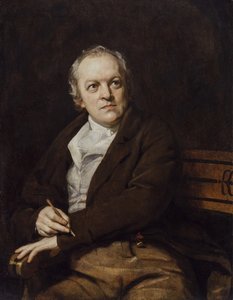
William Blake
1757 - 1827 , Storbritannia
Kort om kunstneren
- Artistic Movement Or Style: Romantikk
- Artists Who Influenced This Artist:
- Rafael
- Michelangelo
- Date Of Birth: 1757
- Date Of Death: 1827
- Full Name: William Blake
- Nationality: Britisk
- Notable Artworks:
- Lieder eines Innocents und einer Erfahrenen
- Die Hochzeit von Himmel und Erde
- Der Tiger
- Jerusalem
- Place Of Birth: London, UK
Relaterte artikler

Romantic Realism's Finest: 10 Masterpieces for Your Home | AllPaintingsStore
Explore 10 defining masterpieces of Romantic Realism! Discover Courbet, Millet & Daumier's powerful paintings—capturing emotion and social realities. Find museum-quality reproductions for your home at AllPaintingsStore.com.

Romantiske landskap: Topp 10 mesterverk for hjemmet – Kunst fra AllPaintingsStore.com
Oppdag de 10 mest ikoniske romantiske landskapsmaleriene! Fra Caspar David Friedrich til Turner – utforsk kunsthistorien, stemningen og fargepalettene. Finn museumskvalitets reproduksjoner på AllPaintingsStore.com.

De 10 mest åndelige kunstverkene: Finn ro og inspirasjon til hjemmet
Opplev de 10 mest åndelige kunstverkene gjennom tidene! Fra Munch til Van Gogh – utforsk historien, symbolikken og følelsene bak ikoniske malerier. Finn inspirasjon til hjemmet ditt med museumskvalitets reproduksjoner på AllPaintingsStore.com

William Blake: Romantic Visionary & Mystical Genius of the Imagination
Explore the mystical art & poetic genius of William Blake (1757-1827). Discover his revolutionary illuminated printing, rich symbolism, and lasting influence on Romanticism. Find handmade reproductions at AllPaintingsStore.

Kandinskys 25 Mesterverk: En Reise i Abstrakt Kunst og Fargeharmoni | AllPaintingsStore.no
Utforsk Wassily Kandinskys 25 mest ikoniske malerier! Oppdag historien bak abstrakt kunst, ekspresjonisme og fargeharmoni. Finn inspirasjon til interiøret – museumskvalitet reproduksjoner på AllPaintingsStore.com.


