

1964. Acrylic On Canvas, 30.0 x 31.0 cm. Muzeum Sztuki Nowoczesnej (MoMA).
§ 1Catalogue data

- 30.0 x 31.0 cm


Ten utwór podlega ochronie prawem autorskim
Dzieło sztuki prezentowane na tej stronie podlega ochronie prawem autorskim, co oznacza, że nie mamy prawa do tworzenia ani sprzedaży jego identycznej reprodukcji. Ochrona ta jest egzekwowana na mocy umów międzynarodowych, takich jak Konwencja berneńska oraz przez przepisy prawa krajowego, w tym te określone w Prawo autorskie USA – Tytuł 17.
Jako pełną szacunku i legalną alternatywę oferujemy personalizowane, malowane ręcznie dzieła sztuki inspirowane oryginałem. Nasi wykwalifikowani i profesjonalni artyści starannie analizują styl, nastrój oraz artystyczną esencję pierwowzoru, aby stworzyć nowe, unikalne dzieło, które przywołuje te same emocje – pozostając jednocześnie w pełni oryginalną kreacją.
Metoda ta jest w pełni zgodna z przepisami prawa autorskiego, ponieważ nie polega na kopiowaniu ani powielaniu chronionego dzieła. Stanowi ona kreatywną reinterpretację – nowy obraz, który czerpie inspirację z oryginału, ale nie jest z nim tożsamy.
 Dowiedz się więcej
§ 2Abstract
Opis obiektu
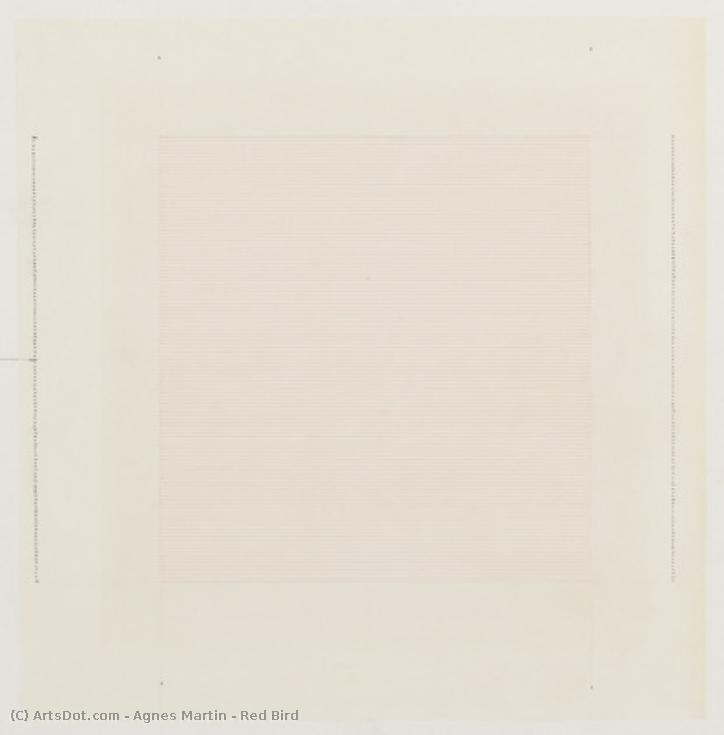
Experience the serene minimalism of Agnes Martin's 1964 grid painting, featuring delicate horizontal lines evoking quiet contemplation; discover this piece of abstract art today.
Biografia artysty
Agnes Martin (1912-2004) – amerykańska malarka minimalistyczna i abstrakcjonistka, której delikatne siatki oraz pastelowe kolory wprowadzają spokój i refleksję. Odkryj jej ikoniczne dzieła sztuki!
§ 3Commentary
The Quiet Architecture of Being
To stand before this piece is to enter a space of profound stillness. It is not an image that demands attention through drama or vibrant color; rather, it invites the viewer into a hushed conversation with structure itself. The canvas unfolds as a field of subtle cream and off-white, dominated by a meticulous yet seemingly effortless grid. These horizontal lines are the very breath of the composition—thin, rhythmic, and repeating across the surface. They suggest an underlying order, a quiet architecture that supports nothing more than contemplation. This work speaks in whispers, using line not as a boundary, but as a meditation.
A Dialogue with Minimalism and Abstraction
This piece belongs to a lineage of reductive art, echoing the profound explorations of Agnes Martin. Her commitment was always to stripping away the superfluous until only the essential remained: the mark, the plane, the breath between things. The style is pure minimalism, yet it resists being merely decorative. It possesses an intellectual rigor that speaks to decades of artistic inquiry into perception. The slight variations in line thickness and spacing—the subtle imperfections that betray the human hand—are crucial. They prevent the grid from becoming cold or mechanical; instead, they imbue the structure with a palpable sense of life lived through careful attention.
Technique and Materiality: The Hand's Signature
The execution is deceptively simple. Using what appears to be fine acrylic paint on canvas, the artist has employed a technique that requires immense patience and unwavering focus. One can almost hear the soft scratch of the brush against the prepared surface as the horizontal passages are laid down one after another. The resulting texture is whisper-light, catching the diffused light without glare. This mastery over restraint—the ability to create such depth and pattern using only near-monochromatic tones—is what elevates this work from mere drawing to profound artistic statement.
Symbolism of Order and Introspection
What does this grid symbolize? For many, it represents the comforting framework of human understanding: routine, structure, or perhaps even the gentle limitations that define our experience. Yet, because these lines are so delicate, they never feel restrictive. Instead, they act as a visual guide toward introspection. They suggest the quiet moments between thoughts, the necessary pauses in a busy life. Owning this piece is not simply decorating a wall; it is curating an atmosphere of serenity, a visual anchor for moments requiring deep thought and calm repose.
Bringing Stillness Home
For the collector or designer seeking to infuse a space with sophisticated tranquility, this reproduction offers unparalleled depth. It pairs beautifully in environments that value understated luxury—a modern library, a quiet sitting room, or an art-focused gallery wall. It is a piece that does not shout for attention but rather deepens the ambiance, allowing the natural light and the conversation within the room to become the true focal points. It is wearable calm, rendered beautifully on canvas.
Pytania i odpowiedzi
Jaka jest technika i wymiary oryginału „Red Bird” – Agnes Martin?
Technika wykonania dzieła „Red Bird” – Agnes Martin to Acrylic On Canvas, a jego wymiary to 30 x 31 cm.
Jaki kolor najbardziej dominuje w "Red Bird"?
Kolorem, który najbardziej wyróżnia się w "Red Bird", jest Putty (#e7e3d9). Dominujący kolor ułatwia dopasowanie dzieła sztuki do wnętrza.
Jaki rozmiar wydruku jest zalecany dla „Red Bird” – Agnes Martin?
Dla dzieła „Red Bird” – Agnes Martin sugerowana jest reprodukcja w formacie Medium. Rozmiar można dostosować, zachowując proporcje.


 Przełącz na wydania drukowane


 W przypadku dzieł sztuki lub reprodukcji, których którykolwiek z boków przekracza 105 cm (około 41 cali), rama zostanie wysłana w formie zestawu do samodzielnego montażu. Metoda ta zapewnia bezpieczną dostawę i zapobiega uszkodzeniom podczas transportu.


