Gwarancja zwrotu pieniędzy · 100 dni Darmowa dostawa na cały świat
449 564dzieła sztuki 30 613artyści 4 660muzea 32język
Catalogue entry

Lovers

1530. Fresco, 36.0 x 40.0 cm. Muzeum Sztuki w Budapeszcie.

Fig. 1. Albrecht Altdorfer, Lovers, 1530. Shown as the reproduction you are specifying: , .

§ 1Catalogue data

Wymiary
36.0 x 40.0 cm

§ 2Abstract

Opis obiektu

Experience the serene intimacy of Albrecht Altdorfer's 1530 Danube School masterpiece, capturing nature's sublime beauty; discover this Renaissance vision today.

Biografia artysty

Albrecht Altdorfer (1480-1538) – pionier malarstwa krajobrazowego epoki renesansu, wybitny grafik i architekt. Jego dzieła fascynują bogactwem barw i emocjami.

§ 3Commentary

A Tender Encounter in the Heart of the Danube School

In the quiet intimacy of Albrecht Altdorfer’s Lovers, painted around 1530, we are invited into a private moment that transcends the centuries. This masterpiece of the Northern Renaissance does not rely on grand, sweeping landscapes to command attention; instead, it finds its power in the subtle, magnetic pull between two souls. The painting captures a man and a woman caught in a delicate dance of connection, their presence nestled within the verdant embrace of a dense forest. As they stand close, engaged in an intimate moment, the viewer is drawn into a world where human emotion and the natural environment are inextricably linked.

Housed in the Budapest Museum of Fine Arts, this fresco fragment serves as a profound emblem of the Danube School—an artistic movement that revolutionized landscape painting. Altdorfer, a pioneer of this era, moved away from the flat, stylized backgrounds of previous Byzantine conventions to embrace a technique defined by meticulous observation. He painstakingly rendered the textures of foliage, bark, and stone, capturing not just the physical reality of the forest, but the way light dances across every surface. This mastery of atmospheric perspective creates a sense of depth that makes the scene feel alive, breathing with a quiet, spiritual significance.

Symbolism and the Eternal Strength of Nature

Beyond its immediate romantic appeal, Lovers is laden with symbolic resonance rooted in medieval tradition. The composition uses the surrounding landscape to mirror the internal state of the subjects. The towering trees, rendered with Altdorfer's signature attention to detail, represent strength and resilience—symbols deeply ingrained in Christian iconography that suggest the enduring power of love. As the dappled sunlight filters through the thick canopy, it evokes biblical references to divine illumination, hinting at a transformative grace descending upon this earthly union.

For the discerning collector or interior designer, this piece offers more than mere decoration; it provides a window into a meditative state. The interplay of light and shadow creates a rhythmic, almost musical quality that can bring a sense of profound serenity to any space. Whether viewed as a study in Renaissance technique or as a poetic tribute to intimacy, the artwork possesses a monumental impact that belies its modest dimensions of 36 x 40 cm.

An Inspiration for Modern Interiors

Integrating a high-quality reproduction of Altdorfer’s work into a contemporary setting allows for a sophisticated dialogue between history and modern aesthetics. The organic textures and earthy color harmonies found in the Danube School style complement a wide array of decor, from classical European estates to minimalist modern apartments. The painting's ability to evoke wonder and contemplation makes it an ideal focal point for rooms designed for reflection, such as libraries, study alcoves, or quiet sitting rooms.

Owning a piece that captures such a delicate balance of realism and expressive impulse is a rare opportunity. It allows the inhabitant of a space to surround themselves with the legacy of the Northern Renaissance—a period where the landscape first became an independent subject, capable of expressing the deepest nuances of the human spirit.

Pytania i odpowiedzi

Jaki klimat wprowadziłaby do wnętrza reprodukcja „Lovers” – Albrecht Altdorfer?

Dzięki swojemu Romantic nastrojowi, "Lovers" idealnie sprawdzi się w Living Room.

Do jakiego wnętrza polecane jest dzieło „Lovers” – Albrecht Altdorfer?

Dzieło „Lovers” – Albrecht Altdorfer jest rekomendowane do Living Room. Sugestia ta opiera się na tematyce, kolorystyce oraz nastroju pracy.

W jaki sposób German Renaissance Landscape Painting dzieła „Lovers” nawiązuje do kraju pochodzenia artysty?

"Lovers" łączy nurt German Renaissance Landscape Painting z Niemcy poprzez miejsce urodzenia jego twórcy.
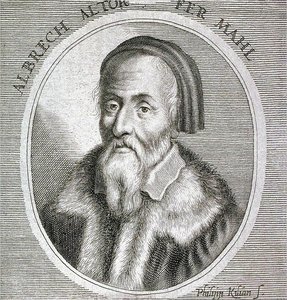
§ 4The artist

Albrecht Altdorfer

Albrecht Altdorfer

1480 - 1538, Niemcy

Quick facts about Albrecht Altdorfer

  • Artistic Movement Or Style: Szkoła Dunajska, Renesans
  • Artists Or Movements Influenced By This Artist: ['Romantyzm Niemiecki']
  • Artists Who Influenced This Artist:
    • Giorgione
    • Cranach
  • Date Of Birth: c. 1480
  • Date Of Death: 1538
  • Full Name: Albrecht Altdorfer
  • Nationality: Niemiec
  • Notable Artworks:
    • Bitwa Aleksandra
    • Krajobraz
  • Place Of Birth: Regensburg, Niemcy

Biografia artysty

A Pioneer of the Northern Renaissance Landscape

Albrecht Altdorfer, born around 1480 in Regensburg, Germany, stands as a pivotal figure bridging the late Gothic period and the burgeoning German Renaissance. He wasn’t merely an artist *of* his time; he actively reshaped its artistic trajectory, particularly in the realm of landscape painting. Coming from a family deeply rooted in artistic tradition—his father, Ulrich Altdorfer, was a painter and miniaturist—the younger Altdorfer quickly distinguished himself not as a follower, but as an innovator. Regensburg, a free imperial city strategically positioned on the Danube River, provided a vibrant cultural backdrop for his formative years. This location profoundly shaped his artistic sensibilities, fostering a connection to the natural world that would become central to his oeuvre. Beyond his artistry, Altdorfer was a man of civic duty, serving as both town architect and council member—a testament to his versatile talents. However, it was through his art—particularly his early engravings and drawings from around 1506, such as *Stygmata of St. Francis* and *St. Jerome*—that he first revealed a unique artistic voice, hinting at the emotional intensity and meticulous detail that would characterize his mature style. His work reflects a deep engagement with the spiritual and the natural, often blending religious themes with evocative depictions of the landscape.

The Danube School and a Revolutionary Vision

Altdorfer is most prominently recognized as a leading member of the Danube School, an influential group of artists active in southern Germany during the early 16th century. This artistic circle shared a common fascination with exploring the expressive potential of landscape, elevating it from a mere backdrop to become a central subject in its own right. Before Altdorfer, landscapes primarily served as settings for religious or historical narratives; he dared to depict nature *for itself*, imbued with atmosphere and emotional resonance. A transformative journey down the Danube River and into the Alps around 1511 proved crucial to his artistic development. The dramatic vistas, dense forests, and imposing mountains ignited within him a passion for depicting nature with unprecedented fidelity and feeling. He became, arguably, the first modern landscape painter, not simply replicating what he saw but conveying an emotional response—a sense of awe, mystery, and even spiritual connection. This wasn’t topographical accuracy alone; it was about capturing the *experience* of being within a landscape. His work, like “The Large Spruce,” exemplifies this shift, offering a serene and intricate depiction of nature's beauty. The Danube School artists, including Cranach and Huber, shared Altdorfer’s interest in portraying the natural world with an unprecedented level of detail and emotional depth, moving away from the purely functional role landscapes had previously held in art.

Masterpieces and Artistic Influences

Throughout his career, Altdorfer produced a diverse body of work encompassing paintings, engravings, drawings, and architectural designs. Among his most celebrated achievements is *The Battle of Alexander at Issus* (1529), commissioned by Duke William IV of Bavaria. This monumental painting showcases not only his mastery of composition and detail but also his innovative use of landscape to heighten the dramatic tension of the battle scene. The swirling clouds, jagged mountains, and chaotic melee of soldiers create a sense of overwhelming energy and spectacle. The depiction is far from a simple historical record; it’s a carefully constructed drama where the landscape actively participates in the unfolding events. His collaboration with Emperor Maximilian I in Innsbruck from 1513 further expanded his artistic horizons and provided opportunities for large-scale projects. Altdorfer’s style wasn’t formed in isolation; he absorbed influences from various sources. The poetic lyricism of Giorgione, the expressive figures of Lucas Cranach the Elder, and the meticulous detail of Albrecht Dürer all left their mark on his work. However, he synthesized these influences into a uniquely personal vision, characterized by its emotional intensity, dramatic lighting, and evocative landscapes. His engravings, such as “Venus after the Bath,” demonstrate his skill in this medium, showcasing delicate lines and intricate details. The influence of Italian Renaissance art is particularly evident in his use of color and composition, while the Northern German tradition contributed to his meticulous attention to detail and his ability to capture the subtle nuances of light and shadow.

Legacy and Lasting Impact

Albrecht Altdorfer’s artistic legacy extends far beyond the 55 panels, 120 drawings, and numerous engravings he created during his lifetime. He fundamentally altered the way artists approached landscape painting, paving the way for future generations to explore its expressive possibilities. His influence can be seen in the works of later German Romantic painters who similarly sought to capture the sublime beauty and emotional power of nature. Today, Altdorfer’s art is represented in major museum collections worldwide, including the Museum Ostdeutsche Galerie in Germany—which houses his *Madonna (Beautiful Maria of Regensburg)*—and the Kunstsammlungen und Museen Augsburg in Austria. His innovative spirit, technical skill, and profound connection to the natural world continue to inspire artists and captivate audiences centuries after his death in 1538. He remains a towering figure of the German Renaissance, a true pioneer who dared to see landscape not merely as scenery but as a powerful force capable of evoking deep emotion and spiritual meaning. His work serves as a testament to the enduring power of art to transform our perception of the world around us—a legacy that continues to resonate with viewers today.

Exploring Altdorfer’s Diverse Works

Beyond his iconic landscapes and battle scenes, Altdorfer's artistic range encompassed religious subjects, mythological narratives, and even architectural designs. His depictions of biblical stories, such as “Abraham’s Sacrifice,” are imbued with a dramatic intensity and emotional depth that set them apart from earlier interpretations. He wasn’t simply illustrating scripture; he was exploring the human condition through the lens of faith. His works often feature complex allegorical elements interwoven within the natural setting, adding layers of meaning to his compositions. His engravings, particularly those depicting biblical figures, demonstrate a remarkable command of line and texture, creating images that are both visually striking and emotionally resonant. Altdorfer’s ability to seamlessly blend technical skill with emotional depth solidified his position as a leading artist of the Renaissance.
  • Religious Works: His depictions of scenes from the Bible, such as "Abraham's Sacrifice," demonstrate a profound engagement with religious themes and a willingness to explore complex theological ideas through evocative imagery.
  • Mythological Narratives: Altdorfer also created works inspired by classical mythology, often incorporating elements of symbolism and allegory into his compositions.
  • Architectural Designs: As town architect of Regensburg, Altdorfer contributed to the city’s fortifications and urban planning, showcasing his practical as well as artistic talents. His designs reflect a blend of Gothic and Renaissance styles.
His ability to seamlessly blend technical skill with emotional depth solidified his position as a leading artist of the Renaissance. Altdorfer's work continues to be studied and admired for its innovative approach to landscape painting and its profound exploration of human emotion.

§ 5Comparanda

§ 6Questions

Najważniejsze informacje

  • Subject or theme: Romantic encounter
  • Influences: Danube School
  • Artistic style: Realistic portrayal
  • Dimensions: 36 x 40 cm
  • Location: Szépmûvészeti Múzeum, Budapest
  • Artist: Albrecht Altdorfer

Quiz o sztuce

Do każdego pytania dotyczy tylko jedna poprawna odpowiedź.

Pytanie 1:
What is the title of this artwork?
Pytanie 2:
In what museum is Albrecht Altdorfer's 'Lovers' currently housed?
Pytanie 3:
What artistic movement does Albrecht Altdorfer belong to?
Pytanie 4:
Approximately when was 'Lovers' painted?
Pytanie 5:
What is a prominent feature of Altdorfer’s artistic style, evident in 'Lovers'?

§ 7Cite this entry

AllPaintingsStore.com, “Albrecht Altdorfer, Lovers (1530)”, https://allpaintingsstore.com/pl/art/albrecht-altdorfer-lovers-8XZ8UM-en/ArtistReproduction/ (accessed 5 Październik 2026).

§ 8The reproduction

Ręcznie malowana reprodukcja olejowa

Ręcznie malowany obraz olejny na płótnie, wykonany na zamówienie przez naszych artystów w wybranym przez Ciebie wymiarze i oprawie. ( Przełącz na wydania drukowane Przejdź do wersji cyfrowej)

It is specified on the order sheet in the margin; the present state of that sheet reads as follows.

Lovers

Technika reprodukcji

Wymiary reprodukcji

-

Wybitny mistrz artystyczny

Większa szczegółowość, finezja i dodatkowy czas na realizację

-

Opcje oprawy reprodukcji

-

-

W przypadku dzieł sztuki lub reprodukcji, których którykolwiek z boków przekracza 105 cm (około 41 cali), rama zostanie wysłana w formie zestawu do samodzielnego montażu. Metoda ta zapewnia bezpieczną dostawę i zapobiega uszkodzeniom podczas transportu.

Wymagany profesjonalny montaż – nie jest to produkt typu DIY.
Zestaw musi zostać złożony, a płótno naciągnięte przez doświadczonego profesjonalnego ramiarza, przy użyciu kleju do drewna (brak w zestawie), kleszczy do naciągania płótna oraz ścisków, które utrzymają krosna w równej pozycji podczas schnięcia kleju. Nieprawidłowy montaż lub nierównomierne napięcie płótna może trwale uszkodzić dzieło sztuki i nie podlega naszej gwarancji.

  • W zestawie znajdują się wszystkie listwy z litego drewna, precyzyjnie docięte do wymiarów.

  • Montaż odbywa się przy użyciu dołączonych wkrętów oraz kleju do drewna do łączenia narożników, którego zestaw nie zawiera i który musi zostać dostarczony przez ramiarza.

  • Wymagane są profesjonalne narzędzia, których nie ma w zestawie: kleszcze do naciągania płótna (napinacz) oraz zaciski, które pozwolą utrzymać listwy w równej pozycji podczas schnięcia kleju.

Ważne:
Do połączenia narożników niezbędny jest klej do drewna, listwy należy unieruchomić za pomocą ścisków do momentu całkowitego wyschnięcia kleju, a naciągnięcie płótna na złożoną ramę wymaga użycia kleszczy do naciągania płótna. Żaden z tych elementów nie jest dołączony do zestawu. Przed zamówieniem tego rozmiaru zalecamy konsultację z doświadczonym ramiarzem.

Etykieta obiektu

-

-

Lakier ochronny

Lakier z połyskiem (pogłębia kolory, chroni przed światłem i wilgocią)

-

Personalizacja dzieła

Przykłady możliwości personalizacji: zastąp twarz zdjęciem klienta; dodaj zwierzę domowe (np. zamień kota na psa); umieść ukrytą wiadomość w tle; zmień krajobraz lub elementy tła.

-

Ekspresowa

Dostawa na cały świat () w ciągu 3–4 tygodni zamiast standardowych 5 tygodni. (2 Listopad). Bez kompromisów w kwestii jakości.

-

Przesyłka ekspresowa

Dostawa na cały świat () w ciągu 5 tygodni. (9 Listopad).

W cenie

Cena całkowita

zł 1005

Included with every order

  • Bezpłatna ekspresowa wysyłka na cały świat
  • Wysokiej jakości płótno lniane
  • Pełne ubezpieczenie przesyłki
  • Gwarancja zwrotu należności celnych i podatków importowych
  • Gwarancja wiernego odwzorowania kolorów
  • 100-dniowa polityka zwrotów (tylko w przypadku wad)
  • Gwarancja 100% zwrotu pieniędzy
  • Zniżka przy zakupie wielu sztuk
Order sheet