Gwarancja zwrotu pieniędzy · 100 dni Darmowa dostawa na cały świat
449 564dzieła sztuki 30 613artyści 4 660muzea 32język
Catalogue entry

Landscape at Cassis

1907. .

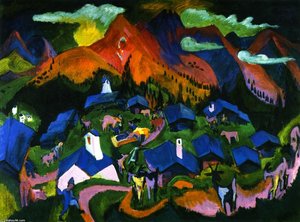
Fig. 1. André Derain, Landscape at Cassis, 1907. Shown as the reproduction you are specifying: , .

§ 1Catalogue data

§ 2Abstract

Opis obiektu

Biografia artysty

André Derain (1880-1954): pionier fowizmu, znany z odważnych kolorów i ekspresyjnego stylu. Odkryj jego ikoniczne obrazy londyńskie oraz ewolucję w kierunku klasycizmu.

§ 3Commentary

The Landscape at Cassis is a captivating oil on canvas painting created by the renowned French artist André Derain in 1907. This artwork exemplifies the essence of Fauvism, a style characterized by vivid colors and energetic brushstrokes. The painting is currently housed at the New Orleans Museum of Art in the United States.

The Artist and His Style

André Derain was a key figure in the Fauvist movement, which emerged in France around 1903-04. He was influenced by the works of Paul Cézanne and Henri Matisse, and his paintings often featured bold colors and simplified forms. The Landscape at Cassis is a prime example of Derain's unique style, with its vibrant colors and flat, geometric shapes.
  • The painting features a house with a red roof on top of a hillside, surrounded by trees and several people enjoying the scenery.
  • The overall atmosphere is peaceful and serene, with a sense of tranquility emanating from the image.
  • The use of color is characteristic of Fauvism, with bold and vibrant hues used to create a sense of energy and movement.
Fauvism was a short-lived but influential art movement that emphasized the use of bold colors and energetic brushstrokes. The Landscape at Cassis is one of the most important works of this period, and it continues to be celebrated for its beauty and innovation. For more information on André Derain and his works, visit https://AllPaintingsStore.com. To see more paintings by Derain, including the The Cypresses at Cassis and Deerstalking, visit /art/list/?Filter=8XXK85-Andre-Derain-Landscape-at-Cassis.
The New Orleans Museum of Art is home to an impressive collection of artworks from around the world, including the Landscape at Cassis. For more information on the museum and its collections, visit /art/list/?Filter=A@D3AR9F-The-Museum-of-Art-New-Orleans-United-States-A-Comprehensive-Guide.

Pytania i odpowiedzi

Czy mogę zobaczyć „Landscape at Cassis” – André Derain na własnej ścianie przed zakupem?

Dzieło „Landscape at Cassis” – André Derain możesz zobaczyć na własnej ścianie dzięki stronie Podgląd w AR, wykorzystując rozszerzoną rzeczywistość na kompatybilnym urządzeniu.

Do jakiego nurtu należy "Landscape at Cassis"?

Nurt związany z „Landscape at Cassis” – André Derain to Fauvism. Ta klasyfikacja sytuuje dzieło wśród pokrewnych artystów i dzieł sztuki.

Czy kolory dzieła "Landscape at Cassis" są intensywne czy stonowane?

Dzieło „Landscape at Cassis” – André Derain charakteryzuje się nasyceniem na poziomie Balanced Soft oraz intensywnością Balanced.

§ 4The artist

André Derain

André Derain

1880 - 1954, Francja

Quick facts about André Derain

  • Artistic Movement Or Style: Fauvizm, Kubizm
  • Artists Or Movements Influenced By This Artist:
    • Matisse
    • Kubizm
  • Artists Who Influenced This Artist:
    • Van Gogh
    • Cézanne
  • Date Of Birth: 10 czerwca 1880
  • Date Of Death: 8 września 1954
  • Full Name: André Derain
  • Nationality: Francuz
  • Notable Artworks:
    • Góry w Collioure
    • Harlequin i Pierrot
    • Most londyński
  • Place Of Birth: Chatou, Francja

Biografia artysty

Early Life and the Seeds of Fauvism

André Derain, born in 1880 in the charming village of Chatou near Paris, wasn’t initially destined for a life steeped in paint and canvas. Contrary to some narratives suggesting an immediate artistic awakening through encounters with fellow painters like Vlaminck or Matisse, Derain embarked on his artistic journey independently around 1895. These early explorations were often undertaken alongside Father Jacomin and his sons during countryside excursions—a formative experience that instilled a deep appreciation for the natural world. He briefly pursued engineering at the Académie Camillo in 1898, where fatefully, he crossed paths with Henri Matisse, initiating a pivotal artistic partnership. Further studies under Eugène Carrière honed his foundational skills, but it was military service from 1901 to 1904 that temporarily interrupted his burgeoning career. Upon his return, persuaded by the unwavering belief of Matisse, Derain decisively abandoned engineering and fully committed himself to painting, continuing his education at the Académie Julian. This commitment marked a turning point, setting him on a path toward becoming a central figure in one of modern art’s most revolutionary movements.

The Explosive Birth of Color: Fauvism

The summer of 1905 proved to be an explosive moment for Derain and Matisse as they collaborated in the sun-drenched coastal village of Collioure. This period birthed works like “Mountains at Collioure,” characterized by a radical departure from representational color. The landscapes weren’t merely depictions of places; they were expressions of feeling, rendered through intensely vibrant, non-naturalistic hues. When their work was exhibited at the Salon d'Automne that same year, it provoked outrage and astonishment. Critic Louis Vauxcelles famously dubbed them “Les Fauves”—the wild beasts—a name initially intended as derisive but ultimately embraced by the artists themselves. Derain’s contribution to this movement wasn’t merely stylistic; he possessed a unique ability to translate emotional intensity into pure color. In 1906, Ambroise Vollard commissioned him to paint London, resulting in a series of striking canvases depicting the Thames and Tower Bridge. These weren't conventional cityscapes; they were bold interpretations, capturing the energy and atmosphere of London through an unconventional lens—a testament to Derain’s innovative vision. Influenced by artists like Van Gogh and Cézanne, he pushed the boundaries of color and form, laying the groundwork for future generations of expressionist painters.

Beyond Fauvism: A Shifting Aesthetic

The initial fervor of Fauvism didn't define Derain’s entire artistic trajectory. Around 1907, his style began a significant evolution, moving away from the unrestrained chromatic exuberance toward more subdued tones and an increased emphasis on form. This period, often referred to as his “gothic” phase (1911-1914), reflected a growing interest in structure and composition. He immersed himself in the study of Old Masters, incorporating elements of Cubism while simultaneously seeking inspiration from classical forms. This wasn’t a rejection of his earlier work but rather an expansion of his artistic vocabulary. Derain's versatility extended beyond painting; in 1919, he designed the ballet “La Boutique Fantasque” for Sergei Diaghilev’s Ballets Russes, demonstrating his aptitude for theatrical design and further showcasing his diverse talents. Key works from this era, such as "Harlequin and Pierrot" and the monumental mural "Return of Ulysses," exemplify this stylistic shift—a move toward a more controlled and intellectually rigorous approach to artmaking.

Major Achievements and Legacy

André Derain’s legacy is firmly rooted in his pivotal role in establishing Fauvism and his subsequent exploration of diverse artistic styles. His early London paintings, characterized by their bold color palettes and dynamic compositions, remain iconic examples of the movement's revolutionary spirit. Beyond this, he made significant contributions to Cubist development alongside Picasso and Braque, demonstrating a remarkable ability to adapt and synthesize various influences. His work as a set designer for the Ballets Russes showcased his versatility and artistic vision beyond the canvas. Despite facing controversy later in life due to his association with Nazi Germany during World War II, Derain’s impact on 20th-century art is undeniable. His paintings are held in major museums worldwide, including the Musée d'Orsay in Paris, the Metropolitan Museum of Art in New York, and the Tate Gallery in London—testaments to his enduring artistic significance.

Key Works

Here are some of André Derain’s most celebrated works:
  • Mountains at Collioure (1905-06)
  • Harlequin and Pierrot (1906)
  • The Cup of Tea (1907)
  • London Paintings (series, 1906-07) – including "Big Ben" and “Most London”
  • Return of Ulysses (1914)

§ 5Comparanda

§ 6Questions

§ 7Cite this entry

AllPaintingsStore.com, “André Derain, Landscape at Cassis (1907)”, https://allpaintingsstore.com/pl/art/andre-derain-landscape-at-cassis-8XXK85-en/ArtistReproduction/ (accessed 5 Październik 2026).

§ 8The reproduction

Ręcznie malowana reprodukcja olejowa

Ręcznie malowany obraz olejny na płótnie, wykonany na zamówienie przez naszych artystów w wybranym przez Ciebie wymiarze i oprawie. ( Przełącz na wydania drukowane Przejdź do wersji cyfrowej)

It is specified on the order sheet in the margin; the present state of that sheet reads as follows.

Landscape at Cassis

Technika reprodukcji

Wymiary reprodukcji

-

Wybitny mistrz artystyczny

Większa szczegółowość, finezja i dodatkowy czas na realizację

-

Opcje oprawy reprodukcji

-

-

W przypadku dzieł sztuki lub reprodukcji, których którykolwiek z boków przekracza 105 cm (około 41 cali), rama zostanie wysłana w formie zestawu do samodzielnego montażu. Metoda ta zapewnia bezpieczną dostawę i zapobiega uszkodzeniom podczas transportu.

Wymagany profesjonalny montaż – nie jest to produkt typu DIY.
Zestaw musi zostać złożony, a płótno naciągnięte przez doświadczonego profesjonalnego ramiarza, przy użyciu kleju do drewna (brak w zestawie), kleszczy do naciągania płótna oraz ścisków, które utrzymają krosna w równej pozycji podczas schnięcia kleju. Nieprawidłowy montaż lub nierównomierne napięcie płótna może trwale uszkodzić dzieło sztuki i nie podlega naszej gwarancji.

  • W zestawie znajdują się wszystkie listwy z litego drewna, precyzyjnie docięte do wymiarów.

  • Montaż odbywa się przy użyciu dołączonych wkrętów oraz kleju do drewna do łączenia narożników, którego zestaw nie zawiera i który musi zostać dostarczony przez ramiarza.

  • Wymagane są profesjonalne narzędzia, których nie ma w zestawie: kleszcze do naciągania płótna (napinacz) oraz zaciski, które pozwolą utrzymać listwy w równej pozycji podczas schnięcia kleju.

Ważne:
Do połączenia narożników niezbędny jest klej do drewna, listwy należy unieruchomić za pomocą ścisków do momentu całkowitego wyschnięcia kleju, a naciągnięcie płótna na złożoną ramę wymaga użycia kleszczy do naciągania płótna. Żaden z tych elementów nie jest dołączony do zestawu. Przed zamówieniem tego rozmiaru zalecamy konsultację z doświadczonym ramiarzem.

Etykieta obiektu

-

-

Lakier ochronny

Lakier z połyskiem (pogłębia kolory, chroni przed światłem i wilgocią)

-

Personalizacja dzieła

Przykłady możliwości personalizacji: zastąp twarz zdjęciem klienta; dodaj zwierzę domowe (np. zamień kota na psa); umieść ukrytą wiadomość w tle; zmień krajobraz lub elementy tła.

-

Ekspresowa

Dostawa na cały świat () w ciągu 3–4 tygodni zamiast standardowych 5 tygodni. (2 Listopad). Bez kompromisów w kwestii jakości.

-

Przesyłka ekspresowa

Dostawa na cały świat () w ciągu 5 tygodni. (9 Listopad).

W cenie

Cena całkowita

zł 1005

Included with every order

  • Bezpłatna ekspresowa wysyłka na cały świat
  • Wysokiej jakości płótno lniane
  • Pełne ubezpieczenie przesyłki
  • Gwarancja zwrotu należności celnych i podatków importowych
  • Gwarancja wiernego odwzorowania kolorów
  • 100-dniowa polityka zwrotów (tylko w przypadku wad)
  • Gwarancja 100% zwrotu pieniędzy
  • Zniżka przy zakupie wielu sztuk
Odkryj dzieła sztuki uporządkowane według tematów, stylów i cech charakterystycznych.
Order sheet