

.

§ 1Catalogue data
§ 2Abstract
Biografia artysty
Cornelis Cort: Dutch engraver & draughtsman (1533-1578). Known for Italian prints, influenced by Titian & Raphael. Explore his legacy in art history.
.
Cornelis Cort: Dutch engraver & draughtsman (1533-1578). Known for Italian prints, influenced by Titian & Raphael. Explore his legacy in art history.

1533 - 1578, Netherlands
Cornelis Cort, a name that resonates with the precision of a master’s burin, stands as a pivotal figure in the history of Dutch engraving and printmaking during the transition from the Renaissance to the Baroque. Born around 1533 in the Netherlands, likely in Hoorn or Edam, Cort’s life was a journey of profound artistic migration. While his roots were firmly planted in the Northern tradition, his soul was captured by the luminous grandeur of Italy. Known in the Italian peninsula as Cornelio Fiammingo, he became much more than a mere craftsman; he was a vital conduit through which the majesty of Venetian art flowed back into the heart of Europe.
The early years of Cort’s development were shaped by the rigorous traditions of the Northern Renaissance. It is believed that his formative training may have occurred under the guidance of Dirck Volckertsz Coornhert in Haarlem, or perhaps within the influential workshop of the publisher Hieronymous Cock in Antwerp. This period of apprenticeship provided him with a foundational mastery of line and detail, a skill set that would later allow him to translate the painterly textures of great masters into the stark, yet nuanced, medium of copperplate engraving. His early works, published around 1553, already hinted at a burgeoning talent for capturing complex narratives with clarity and grace.
The true metamorphosis of Cort’s style occurred when he ventured south to Italy, a move that would redefine his artistic trajectory. His time in Venice was nothing short of transformative. Living in the very house of Titian during the mid-1560s, Cort breathed the same air as the masters of color and light. This proximity allowed him to embark on a monumental endeavor: the reproduction of Venetian masterpieces. Through his meticulous engravings, he captured the essence of works by Titian and Raphael, translating their sweeping compositions and atmospheric depth into a language of intricate hatching and stippling.
This period of intense study saw Cort developing a sophisticated command of chiaroscuro—the dramatic interplay between light and shadow. He did not merely copy; he interpreted. By employing a highly refined technique of varying line weights, he was able to simulate the tonal gradations found in oil paintings, giving his prints a sculptural quality that felt remarkably alive. His ability to render the soft glow of skin or the heavy drape of fabric through nothing but black ink on white paper cemented his reputation as one of the most skilled engravers of his era.
As Cort’s travels took him from Venice to Bologna, Florence, and eventually Rome, his influence expanded alongside his repertoire. In Rome, he became a central figure in a burgeoning school of engraving, where he modified the simpler linear traditions of earlier masters with a brilliant, more textured touch. This innovation would later inspire subsequent generations of artists, including Agostino Carracci. His work served as a bridge between the classical restraint of the High Renaissance and the emotive, dynamic energy of the Baroque.
The historical significance of Cornelis Cort lies in his role as an international disseminator of style. Through his prolific output, the aesthetic triumphs of the Italian masters reached audiences across the continent, fueling the artistic dialogues that defined European culture. His oeuvre remains a testament to the power of printmaking to transcend borders:
Though his life was relatively short, ending in Rome around 1578, the impact of Cornelis Cort remains etched in the history of art. He remains a master of the delicate balance between detail and atmosphere, a craftsman who used the sharp edge of a tool to capture the infinite nuances of the human experience.

AllPaintingsStore.com, “Cornelis Cort, Dialectics”, https://allpaintingsstore.com/pl/art/cornelis-cort-dialectics-A2A2WD-en/ArtistReproduction/ (accessed 5 Październik 2026).
Ręcznie malowany obraz olejny na płótnie, wykonany na zamówienie przez naszych artystów w wybranym przez Ciebie wymiarze i oprawie. ( Przełącz na wydania drukowane Przejdź do wersji cyfrowej)
It is specified on the order sheet in the margin; the present state of that sheet reads as follows.
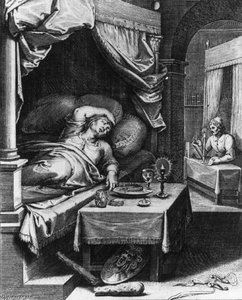
Dialectics
Wymiary reprodukcji
Większa szczegółowość, finezja i dodatkowy czas na realizację
-
W przypadku dzieł sztuki lub reprodukcji, których którykolwiek z boków przekracza 105 cm (około 41 cali), rama zostanie wysłana w formie zestawu do samodzielnego montażu. Metoda ta zapewnia bezpieczną dostawę i zapobiega uszkodzeniom podczas transportu.
Wymagany profesjonalny montaż – nie jest to produkt typu DIY.
Zestaw musi zostać złożony, a płótno naciągnięte przez doświadczonego profesjonalnego ramiarza, przy użyciu kleju do drewna (brak w zestawie), kleszczy do naciągania płótna oraz ścisków, które utrzymają krosna w równej pozycji podczas schnięcia kleju. Nieprawidłowy montaż lub nierównomierne napięcie płótna może trwale uszkodzić dzieło sztuki i nie podlega naszej gwarancji.
W zestawie znajdują się wszystkie listwy z litego drewna, precyzyjnie docięte do wymiarów.
Montaż odbywa się przy użyciu dołączonych wkrętów oraz kleju do drewna do łączenia narożników, którego zestaw nie zawiera i który musi zostać dostarczony przez ramiarza.
Wymagane są profesjonalne narzędzia, których nie ma w zestawie: kleszcze do naciągania płótna (napinacz) oraz zaciski, które pozwolą utrzymać listwy w równej pozycji podczas schnięcia kleju.
Ważne:
Do połączenia narożników niezbędny jest klej do drewna, listwy należy unieruchomić za pomocą ścisków do momentu całkowitego wyschnięcia kleju, a naciągnięcie płótna na złożoną ramę wymaga użycia kleszczy do naciągania płótna. Żaden z tych elementów nie jest dołączony do zestawu. Przed zamówieniem tego rozmiaru zalecamy konsultację z doświadczonym ramiarzem.
-
Lakier z połyskiem (pogłębia kolory, chroni przed światłem i wilgocią)
Przykłady możliwości personalizacji: zastąp twarz zdjęciem klienta; dodaj zwierzę domowe (np. zamień kota na psa); umieść ukrytą wiadomość w tle; zmień krajobraz lub elementy tła.
Dostawa na cały świat () w ciągu 3–4 tygodni zamiast standardowych 5 tygodni. (3 Listopad). Bez kompromisów w kwestii jakości.
Dostawa na cały świat () w ciągu 5 tygodni. (10 Listopad).
Included with every order
 Rozwiń treść




 W przypadku dzieł sztuki lub reprodukcji, których którykolwiek z boków przekracza 105 cm (około 41 cali), rama zostanie wysłana w formie zestawu do samodzielnego montażu. Metoda ta zapewnia bezpieczną dostawę i zapobiega uszkodzeniom podczas transportu.


