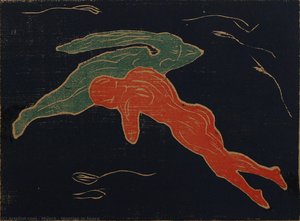
1902. Oil.

§ 1Catalogue data


§ 2Abstract
Opis obiektu
Experience Edvard Munch's haunting 'Fertility II,' a powerful Expressionist painting exploring themes of life, nature, and the human condition. A masterpiece to own.
 Rozwiń treść
Biografia artysty
Edvard Munch – norweski malarz, twórcja pełna lęków i emocji. 'Krzyk' to ikona współczesności. Odkryj świat jego mrocznych wizji i symboli! #Munch #art #Norwegia
§ 3Commentary
Fertility II: A Descent into Emotional Landscape
Edvard Munch’s “Fertility II,” completed in 1902, stands as a cornerstone of Expressionism—a movement that sought to convey inner psychological states rather than objective reality. Held at the Von Der Heydt Museum in Wuppertal, Germany, this oil on canvas transcends mere depiction; it plunges viewers into a realm of profound unease and contemplation.
- Subject Matter: The painting portrays two figures seated beneath a solitary tree within an expansive field. A woman holds a basket, while a man sits beside her, suggesting a moment of quiet companionship amidst the natural world.
- Style & Technique: Munch’s masterful use of Expressionist technique is immediately apparent. Bold brushstrokes dominate the canvas, creating textured surfaces that convey movement and dynamism. The artist eschews meticulous realism in favor of conveying emotion—a palpable tension radiating from the scene.
- Color Palette: Dominated by muted browns and greens, punctuated by splashes of crimson – notably in the woman’s dress – Munch employs color symbolically. These hues contribute to the overall atmosphere of melancholy and foreshadowing impending darkness.
Symbolism Beyond Representation
More than just a visual record of a pastoral setting, “Fertility II” is laden with symbolic significance. The tree itself represents resilience and connection to nature—a fragile bastion against encroaching anxieties. However, its isolation underscores the vulnerability inherent in human relationships. The apples scattered across the canvas serve as potent emblems of temptation and decay, hinting at the darker side of existence.
- The Apples: These fruits symbolize both beauty and mortality—a reminder that even amidst idyllic landscapes, life is inevitably shadowed by death’s inevitability.
- Emotional Resonance: Munch's intention was to capture not just what he saw but how he *felt*. The painting embodies the pervasive sense of dread and melancholy characteristic of his oeuvre, reflecting his own personal struggles with illness and loss.
Historical Context & Artistic Legacy
"Fertility II" emerged during a period of intense artistic experimentation—the burgeoning Expressionist movement was challenging conventional aesthetic norms. Munch’s work aligns closely with the broader philosophical currents of the time, grappling with themes of existential angst and the human condition. It anticipates many of the stylistic innovations that would define subsequent art movements.
- Expressionism's Influence: Munch’s unflinching portrayal of emotion paved the way for artists like Ernst Ludwig Kirchner and Emil Nolde, who similarly explored psychological landscapes in their paintings.
- A Timeless Exploration: “Fertility II” continues to resonate with audiences today because it speaks directly to universal anxieties about life, death, and the complexities of human connection—a testament to Munch’s enduring artistic vision.
Discover a breathtaking reproduction of Edvard Munch's "Fertility II" at AllPaintingsStore.com – where artistry meets exceptional quality. Explore more masterpieces by Munch: Edvard Munch
Pytania i odpowiedzi
Czy „Fertility” – Edvard Munch to jasne czy ciemne dzieło?
Ogólnie rzecz biorąc, poziom jasności dzieła „Fertility” określany jest jako balanced. Postrzegana jasność opisuje, jak jasne lub ciemne wydaje się dane dzieło.
Kiedy powstało i w jakim nurcie utrzymane jest dzieło „Fertility” – Edvard Munch?
Dzieło "Fertility" powstało w 1902 roku i reprezentuje nurt Expressionism.
Czy mogę przyjrzeć się bliżej dziełu "Fertility"?
Widok rentgenowski dzieła „Fertility” – Edvard Munch jest dostępny na stronie Analiza rentgenowska: to interaktywna analiza obrazu obejmująca jedenaście warstw optycznych.


 Przełącz na wydania drukowane


 W przypadku dzieł sztuki lub reprodukcji, których którykolwiek z boków przekracza 105 cm (około 41 cali), rama zostanie wysłana w formie zestawu do samodzielnego montażu. Metoda ta zapewnia bezpieczną dostawę i zapobiega uszkodzeniom podczas transportu.