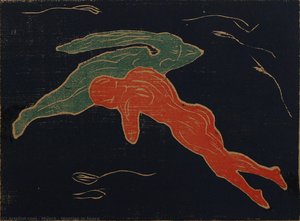
1906. Akryl na płótnie.

§ 1Catalogue data


§ 2Abstract
Opis obiektu
"Śmierć" - Edvard Munch's haunting masterpiece captures existential dread and psychological torment with bold colors and symbolic imagery—a cornerstone of Expressionism."
 Rozwiń treść
Biografia artysty
Edvard Munch – norweski malarz, twórcja pełna lęków i emocji. 'Krzyk' to ikona współczesności. Odkryj świat jego mrocznych wizji i symboli! #Munch #art #Norwegia
§ 3Commentary
The Killer
Edvard Munch, a Norwegian artist renowned for his contributions to Expressionism, created "The Killer" in 1906. This painting is a testament to Munch’s ability to evoke powerful emotions and introspection through his art. It stands as a cornerstone of Expressionist aesthetics, capturing the anxieties and psychological complexities characteristic of the era.Expressionist Elements
“The Killer” exemplifies the Expressionist style, characterized by exaggerated forms and vibrant colors that convey intense emotional experiences. The woman in the painting sits on a bed, her back turned to the viewer, creating an air of mystery and contemplation. This deliberate positioning disrupts conventional portraiture, prioritizing psychological impact over realistic representation. The dining table with fruit and birds adds a sense of tranquility, contrasting sharply with the title's ominous tone—a juxtaposition that underscores Munch’s exploration of duality within human experience. These elements are rendered in bold hues – reds, yellows, and blues – reflecting the turbulent inner landscape of the artist.Symbolism and Interpretation
The painting can be interpreted as a profound reflection of Munch’s own emotional turmoil following the tragic loss of his sister Sophie. The woman's turned back symbolizes isolation or introspection, mirroring Munch’s preoccupation with grief and vulnerability. The fruit represents life and vitality—a poignant counterpoint to mortality—while the birds could signify freedom or, perhaps more subtly, the observer’s perspective on this internal struggle. This complex interplay of symbols invites viewers to ponder the deeper meaning behind “The Killer,” prompting contemplation about themes of loss, fear, and existential questioning. Munch himself described his inspiration as stemming from a vivid vision during a sunset walk—a moment of overwhelming terror that he sought to translate onto canvas.Artistic Influences
Munch was significantly influenced by various art movements, including Fauvism, which is evident in his use of bold colors and expressive brushstrokes. Artists like Henri Matisse championed this stylistic approach, prioritizing emotional resonance over accurate depiction. His work also reflects the influence of Die Brücke, a group of German Expressionist artists who sought to break away from traditional representational art and forge their own path toward artistic innovation. They rejected academic conventions in favor of raw emotion and distorted forms—a spirit that aligns perfectly with Munch’s artistic vision.Relevance in Modern Art
“The Killer” remains significant in modern art for its emotional depth and symbolic richness. It continues to inspire contemporary artists and captivate audiences with its enigmatic presence, serving as a reminder of the enduring power of art to communicate profound psychological truths. Its influence can be seen in works exploring themes of trauma, anxiety, and vulnerability—demonstrating Munch’s lasting legacy as a pioneer of Expressionism.- Edvard Munch's "The Killer" is a prime example of Expressionist art.
- The painting’s symbolism invites multiple interpretations, making it a subject of ongoing artistic discussion.
- Munch's influence can be seen in the works of other notable artists, such as Hermann Max Pechstein and Egon Schiele.
For those interested in exploring more works by Edvard Munch and other Expressionist artists, visit Edvard Munch: The Killer on AllPaintingsStore. Additionally, learn about the artistic movements that influenced Munch's work at Die Brücke.
Pytania i odpowiedzi
Czy mogę użyć rozszerzonej rzeczywistości, aby zobaczyć „Śmierć” – Edvard Munch w swoim pokoju?
Dzieło „Śmierć” – Edvard Munch możesz zobaczyć na własnej ścianie dzięki stronie Podgląd w AR, wykorzystując rozszerzoną rzeczywistość na kompatybilnym urządzeniu.
Jaki nastrój oddaje styl Expressionism w dziele „Śmierć”?
"Śmierć" emanuje Melancholijny emocjonalnym ładunkiem, wpisując się w nurt Expressionism.
Czy kolory dzieła "Śmierć" są intensywne czy stonowane?
Kolory dzieła „Śmierć” – Edvard Munch charakteryzują się Umiarkowane i łagodne nasycenie nasyceniem oraz Zrównoważony intensywnością.


 Przełącz na wydania drukowane


 W przypadku dzieł sztuki lub reprodukcji, których którykolwiek z boków przekracza 105 cm (około 41 cali), rama zostanie wysłana w formie zestawu do samodzielnego montażu. Metoda ta zapewnia bezpieczną dostawę i zapobiega uszkodzeniom podczas transportu.