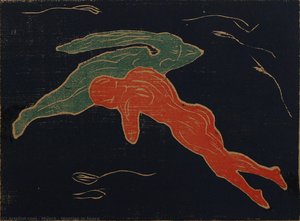
1893. Oil On Canvas.

§ 1Catalogue data


§ 2Abstract
Opis obiektu
Explore Edvard Munch’s ‘Voice,’ a powerful Expressionist masterpiece capturing raw emotion & psychological depth. Discover its unique style, symbolism, & impact on modern art.
 Rozwiń treść
Biografia artysty
Edvard Munch – norweski malarz, twórcja pełna lęków i emocji. 'Krzyk' to ikona współczesności. Odkryj świat jego mrocznych wizji i symboli! #Munch #art #Norwegia
§ 3Commentary
Introduction to the Artist and Title
Edvard Munch, a pivotal figure in modern art, was born on 12 December 1863 in Norway. He is globally renowned for his iconic 1893 masterpiece, The Scream. The painting we will discuss today, Voice, is another powerful example of Munch's Expressionist style and was created around the same time as The Scream.Style: Expressionism
Expressionism is a modernist movement that emerged in the early 20th century, characterized by its emphasis on emotional experience and subjective interpretation. Munch's work falls under this category, with his distinctive style reflecting his personal emotions and psychological state. The bold use of color and form in Voice exemplifies Expressionism's focus on the artist's interior vision rather than outward-facing realism.Date: 1893
The year 1893 was a significant one for Munch, as it marked the creation of two of his most famous works: The Scream and Voice. Both paintings reflect Munch's emotional state during this period, which was heavily influenced by personal tragedies, illness, and a fear of inheriting a mental condition.Context and Influences
Munch's travels to Paris and Berlin exposed him to various artistic styles and movements, including the works of Paul Gauguin, Vincent van Gogh, Henri de Toulouse-Lautrec, and August Strindberg. These influences can be seen in Munch's bold use of color and form, as well as his exploration of deeply-felt themes such as love, anxiety, jealousy, and betrayal.The Voice: A Deeper Look
In Voice, Munch depicts a figure with an agonized expression, similar to that seen in The Scream. This painting is part of Munch's major series called The Frieze of Life, which explores the human condition and its emotional complexities.Conclusion
Edvard Munch's Voice (1893) is a powerful example of Expressionism, showcasing the artist's unique style and his exploration of deeply-felt themes. To learn more about Edvard Munch and other Expressionist artists, visit our dedicated page on Top 5 Famous Expressionism Artists of All Time. Additionally, you can explore more of Munch's works, including The Scream, on our website: Discover the beauty and emotion of Expressionist art with our hand-made oil painting reproductions at AllPaintingsStore.com.Pytania i odpowiedzi
W jaki sposób nurt i epoka przenikają się w „Voice” – Edvard Munch?
W „Voice” – Edvard Munch nurt Expressionism łączy się z epoką – Wiek XIX.
Z czego wynika obecny status praw autorskich dzieła "Voice"?
„Voice” – Edvard Munch jest należy do domeny publicznej – autorskie prawa majątkowe wygasły. Okres ochrony praw autorskich liczony jest od śmierci artysty, która nastąpiła w 1944.
Kiedy powstało i w jakim nurcie utrzymane jest dzieło „Voice” – Edvard Munch?
„Voice” – Edvard Munch datowane jest na 1893 rok i reprezentuje nurt Expressionism.


 Przełącz na wydania drukowane


 W przypadku dzieł sztuki lub reprodukcji, których którykolwiek z boków przekracza 105 cm (około 41 cali), rama zostanie wysłana w formie zestawu do samodzielnego montażu. Metoda ta zapewnia bezpieczną dostawę i zapobiega uszkodzeniom podczas transportu.